
EPISODE · Jul 24, 2025 · 1H
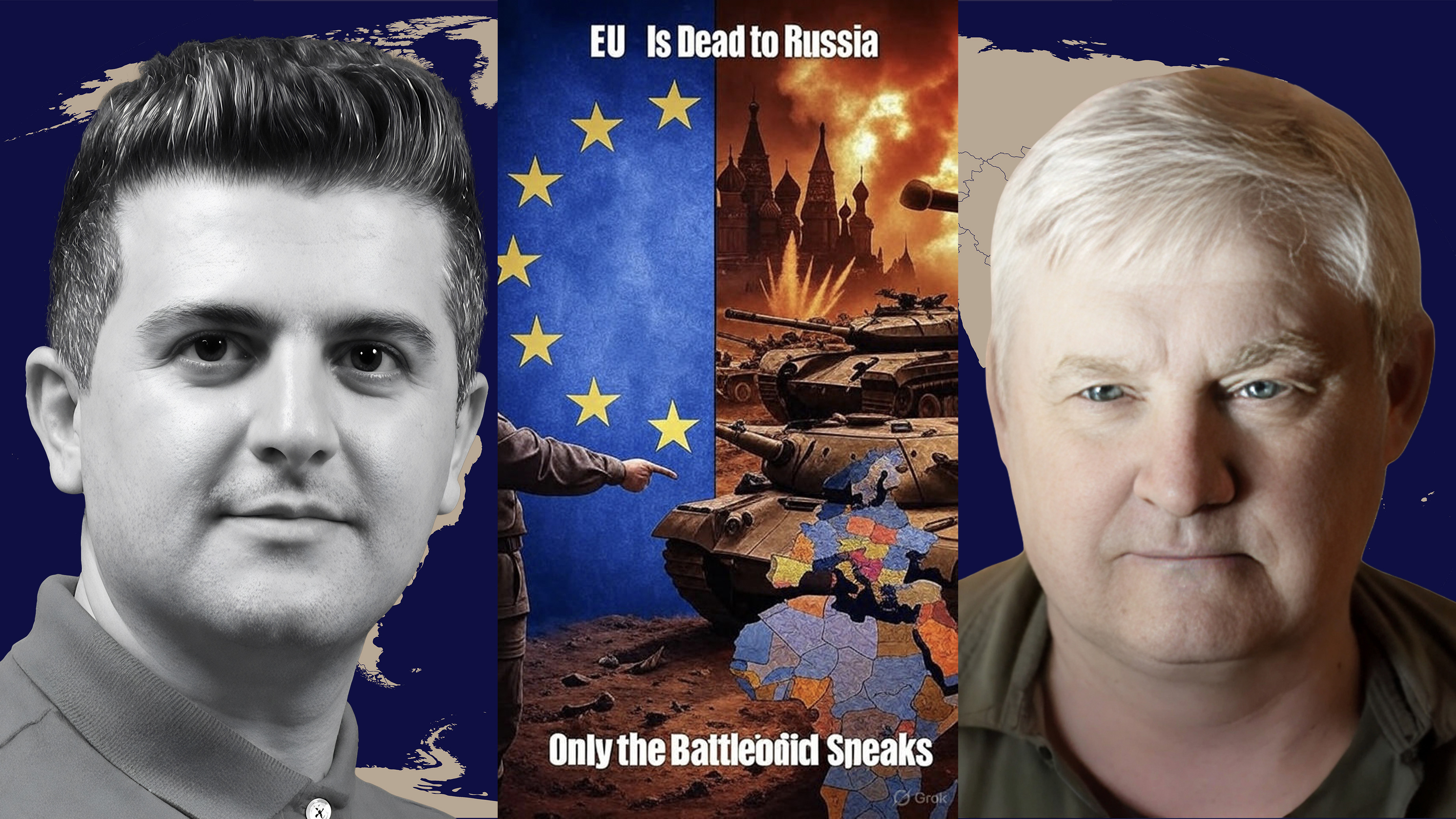
Andrei Martyanov: Has Zelensky's Final Hour Arrived, Shocking Shifts in Ukraine's War Game
from Dialogue Works
Nima Rostami Alkhorshid:What is happening in Ukraine with the recent protests against corruption, and why are we seeing public dissent now after years of silence during the war?How do you explain the mainstream media coverage of protests in Ukraine by outlets like Bloomberg, Financial Times, and Al Jazeera? Are they trying to build a narrative to remove Zelensky from power?What is the significance of the peace negotiations in Istanbul, and what are Russia’s true objectives in these talks?Why does Europe seem more engaged and connected with Ukraine compared to the United States, which appears less involved under Trump?Donald Trump claims the U.S. is producing more missiles and ammunition than any country in history—how accurate is this, and what does it say about U.S. military capabilities compared to Russia?Andrei Martyanov:The protests in Ukraine are not genuine mass movements but orchestrated, paid events funded by Western organizations like Soros and anti-corruption NGOs. They are theatrical, reminiscent of the Maidan, and designed to create a false narrative. There is no real popular uprising because the population only acts when paid. The Zelensky regime is corrupt, and Ukrainian leadership has historically focused only on stealing resources, not governing.The media narrative is shifting because Washington and London are looking to replace Zelensky with another figure, like Zaluzhny, thinking a personality change will serve their goals. But this is superficial. The strategic aim remains the same: to use Ukraine as a future bridgehead against Russia. These Western actors don’t understand real policy or strategy—they only shuffle individuals, not change objectives. Russians see this clearly and are not fooled.The Istanbul negotiations are mostly for show and PR. Russia’s demands haven’t changed since 2021: NATO must roll back to 1997 borders, Ukraine must be demilitarized and neutral, and territorial realities on the ground must be recognized. Talks focus on humanitarian issues like POW exchanges. Real negotiations require dealing with serious actors, not puppets like Zelensky. A Putin-Trump summit may happen, but only after significant groundwork—and even then, Trump is not trusted.Europe is deeply brainwashed and driven by a Russia-hating frenzy. Its elites, losing power, are inciting war sentiment. Countries like Germany, despite weak militaries, are pushing for confrontation. This is dangerous and delusional. Russian officials, like Maria Zakharova, have warned Germany it could be wiped out. Much of Europe, especially the West, is culturally conformist and easily manipulated, while only a small minority (10–15%) truly understand the danger.Trump’s claims about missile production are childish and false—typical narcissistic boasting from someone disconnected from reality. The U.S. military-industrial complex is weak, especially in artillery and missile production. Russia produces high-precision weapons at an order of magnitude greater than all of NATO combined. U.S. systems like ATACMS are outdated and easily shot down. Russia’s air defense (S-400, S-500) and hypersonic missiles (Kinzhal, Zircon, Kh-BD) far surpass anything the U.S. has. Trump lives in an alternate universe, and his statements are a national embarrassment. Hosted on Acast. See acast.com/privacy for more information.
What this episode covers
Nima Rostami Alkhorshid:What is happening in Ukraine with the recent protests against corruption, and why are we seeing public dissent now after years of silence during the war?How do you explain the mainstream media coverage of protests in Ukraine by outlets like Bloomberg, Financial Times, and Al Jazeera? Are they trying to build a narrative to remove Zelensky from power?What is the significance of the peace negotiations in Istanbul, and what are Russia’s true objectives in these talks?Why does Europe seem more engaged and connected with Ukraine compared to the United States, which appears less involved under Trump?Donald Trump claims the U.S. is producing more missiles and ammunition than any country in history—how accurate is this, and what does it say about U.S. military capabilities compared to Russia?Andrei Martyanov:The protests in Ukraine are not genuine mass movements but orchestrated, paid events funded by Western organizations like Soros and anti-corruption NGOs. They are theatrical, reminiscent of the Maidan, and designed to create a false narrative. There is no real popular uprising because the population only acts when paid. The Zelensky regime is corrupt, and Ukrainian leadership has historically focused only on stealing resources, not governing.The media narrative is shifting because Washington and London are looking to replace Zelensky with another figure, like Zaluzhny, thinking a personality change will serve their goals. But this is superficial. The strategic aim remains the same: to use Ukraine as a future bridgehead against Russia. These Western actors don’t understand real policy or strategy—they only shuffle individuals, not change objectives. Russians see this clearly and are not fooled.The Istanbul negotiations are mostly for show and PR. Russia’s demands haven’t changed since 2021: NATO must roll back to 1997 borders, Ukraine must be demilitarized and neutral, and territorial realities on the ground must be recognized. Talks focus on humanitarian issues like POW exchanges. Real negotiations require dealing with serious actors, not puppets like Zelensky. A Putin-Trump summit may happen, but only after significant groundwork—and even then, Trump is not trusted.Europe is deeply brainwashed and driven by a Russia-hating frenzy. Its elites, losing power, are inciting war sentiment. Countries like Germany, despite weak militaries, are pushing for confrontation. This is dangerous and delusional. Russian officials, like Maria Zakharova, have warned Germany it could be wiped out. Much of Europe, especially the West, is culturally conformist and easily manipulated, while only a small minority (10–15%) truly understand the danger.Trump’s claims about missile production are childish and false—typical narcissistic boasting from someone disconnected from reality. The U.S. military-industrial complex is weak, especially in artillery and missile production. Russia produces high-precision weapons at an order of magnitude greater than all of NATO combined. U.S. systems like ATACMS are outdated and easily shot down. Russia’s air defense (S-400, S-500) and hypersonic missiles (Kinzhal, Zircon, Kh-BD) far surpass anything the U.S. has. Trump lives in an alternate universe, and his statements are a national embarrassment. Hosted on Acast. See acast.com/privacy for more information.
NOW PLAYING
Andrei Martyanov: Has Zelensky's Final Hour Arrived, Shocking Shifts in Ukraine's War Game
No transcript for this episode yet
Similar Episodes
Jun 20, 2026 ·31m
Jun 20, 2026 ·24m
Jun 20, 2026 ·42m
Jun 20, 2026 ·26m
Jun 20, 2026 ·22m
Jun 20, 2026 ·37m