
EPISODE · Jul 18, 2025 · 1H 5M
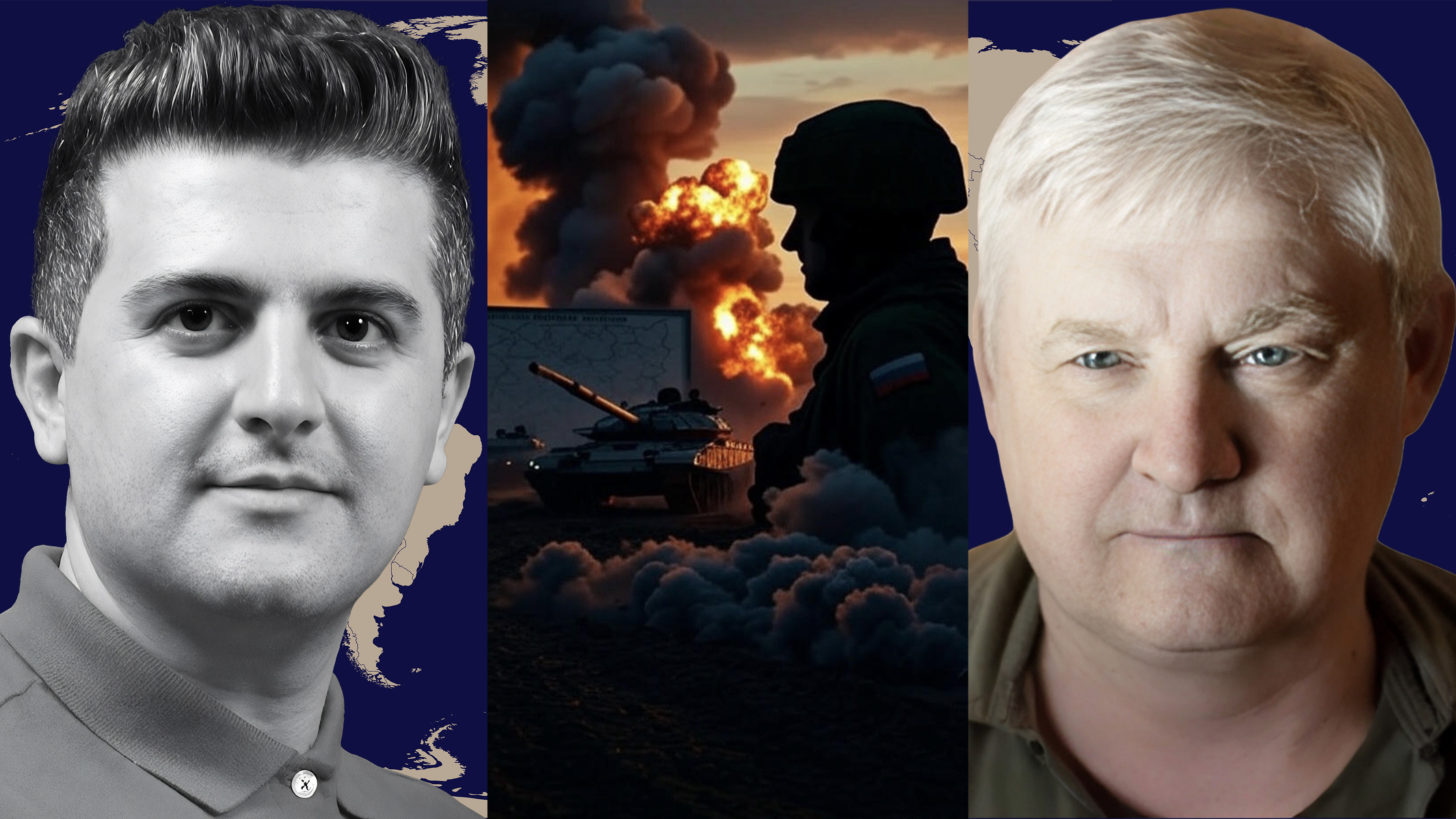
Andrei Martyanov: It's OVER, Russia Plans to End It All on the Battlefield!
from Dialogue Works
Nima Rostami Alkhorshid:What is your assessment of the current geopolitical tensions involving Ukraine and Russia, particularly regarding cross-border military actions?How do you evaluate the technological and military capabilities of Western nations compared to Russia and other global powers?What are the implications of U.S. involvement in Ukraine for global strategic balances and international relations?How do you perceive the leadership qualities of key political figures like Donald Trump and their impact on foreign policy decisions?What is your view on the potential for broader military conflicts, such as a possible World War III, given current global tensions?Andrei Martyanov:The situation involving Ukraine and Russia is marked by significant military escalation, with deep strikes into Russian territory raising concerns about further conflict expansion. However, these actions are not new, as Ukraine has been conducting such operations for some time.Western nations, particularly the U.S., still possess significant technological capabilities, especially in space and unmanned systems, but their military-industrial capacity is declining. European countries, like Germany, lack the ability to produce advanced military systems, and even France, despite having a credible nuclear deterrent, has limited capacity compared to global powers like Russia and China.U.S. involvement in Ukraine has strained its military and political credibility. The U.S. is seen as being driven by a flawed strategic understanding and is increasingly viewed as being incapable of sustaining large-scale military operations. This has weakened its global influence and exposed internal weaknesses.Figures like Donald Trump are often criticized for lacking genuine strategic understanding and being influenced by personal interests and external manipulation. There is skepticism about the competence of Western leaders, with many being seen as products of a failing system.While there is concern about the potential for larger conflicts, particularly with nuclear-armed powers, the likelihood of a full-scale World War III remains low. Russia, for instance, has shown restraint despite provocations, and the global balance of power makes such a conflict unlikely, though regional confrontations remain a risk. Hosted on Acast. See acast.com/privacy for more information.
What this episode covers
Nima Rostami Alkhorshid:What is your assessment of the current geopolitical tensions involving Ukraine and Russia, particularly regarding cross-border military actions?How do you evaluate the technological and military capabilities of Western nations compared to Russia and other global powers?What are the implications of U.S. involvement in Ukraine for global strategic balances and international relations?How do you perceive the leadership qualities of key political figures like Donald Trump and their impact on foreign policy decisions?What is your view on the potential for broader military conflicts, such as a possible World War III, given current global tensions?Andrei Martyanov:The situation involving Ukraine and Russia is marked by significant military escalation, with deep strikes into Russian territory raising concerns about further conflict expansion. However, these actions are not new, as Ukraine has been conducting such operations for some time.Western nations, particularly the U.S., still possess significant technological capabilities, especially in space and unmanned systems, but their military-industrial capacity is declining. European countries, like Germany, lack the ability to produce advanced military systems, and even France, despite having a credible nuclear deterrent, has limited capacity compared to global powers like Russia and China.U.S. involvement in Ukraine has strained its military and political credibility. The U.S. is seen as being driven by a flawed strategic understanding and is increasingly viewed as being incapable of sustaining large-scale military operations. This has weakened its global influence and exposed internal weaknesses.Figures like Donald Trump are often criticized for lacking genuine strategic understanding and being influenced by personal interests and external manipulation. There is skepticism about the competence of Western leaders, with many being seen as products of a failing system.While there is concern about the potential for larger conflicts, particularly with nuclear-armed powers, the likelihood of a full-scale World War III remains low. Russia, for instance, has shown restraint despite provocations, and the global balance of power makes such a conflict unlikely, though regional confrontations remain a risk. Hosted on Acast. See acast.com/privacy for more information.
NOW PLAYING
Andrei Martyanov: It's OVER, Russia Plans to End It All on the Battlefield!
No transcript for this episode yet
Similar Episodes
Jun 20, 2026 ·31m
Jun 20, 2026 ·24m
Jun 20, 2026 ·42m
Jun 20, 2026 ·26m
Jun 20, 2026 ·22m
Jun 20, 2026 ·37m