
EPISODE · Jan 31, 2026 · 10 MIN
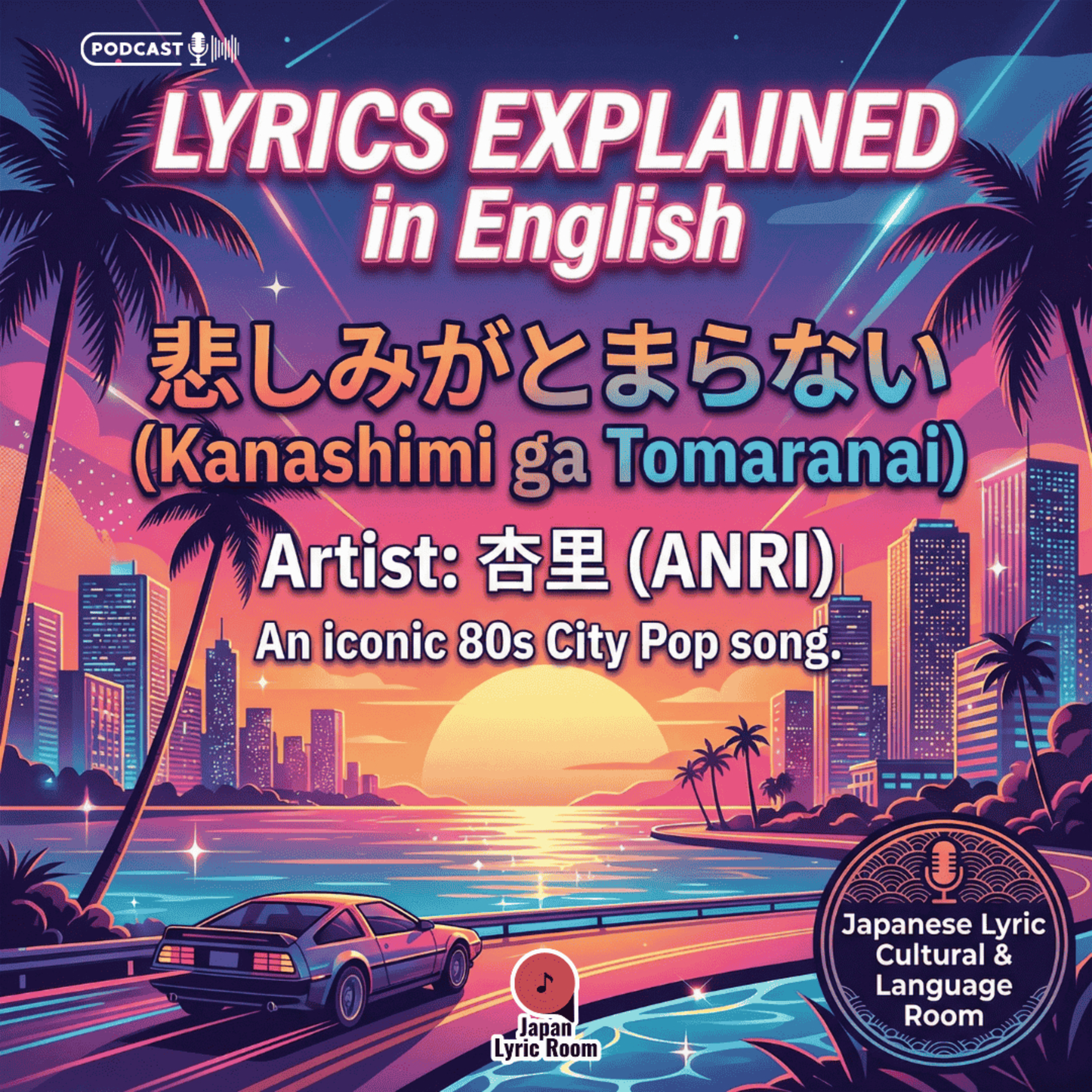
ANRI - Kanashimi ga Tomaranai (悲しみがとまらない)Lyrics Meaning & Analysis | Japanese City Pop Classic
from Japan Lyric Room · host Japan Lyric Room
“Kanashimi ga Tomaranai” isn’t just heartbreak—it’s heartbreak on autopilot. ANRI sings from a place where emotion becomes weather: sadness doesn’t “arrive,” it keeps falling. The phrase “can’t stop” turns grief into a runaway rhythm, like a chorus you never chose but still have to live inside.This is the quiet cruelty of mature love in city pop: distance as self-defense, tenderness as a bruise you keep pressing to prove it’s real. The melody glows, but the narrator’s inner world is dimmed—suggesting a kind of emotional contradiction that defines so many 80s Tokyo love stories: looking composed while unraveling in slow motion.Listen closely and you’ll hear a sonic haunting—bright synths and elegant phrasing masking the raw truth: when your heart loses its brakes, even silence becomes loud.📝 Full Written Analysis & Cultural Context: 📌 https://www.japanlyricroom.com/songs/kanashimiga-tomaranai⏳Chapter0:00 Intro: ANRI "Kanashimi ga Tomaranai" Meaning & 80's City Pop Context1:41 Phrase 1 Breakdown: Deep Dive into Subjective Sadness in the Lyrics2:58 Phrase 2 Story: The Secret of Regret & "Pain Without a Subject" Explained3:51 Phrase 3 Lyrics: How to Visualize the Iconic Cafe Terrace Atmosphere4:54 Phrase 4 Breakdown: Analysis of the Phone Call & Sudden Tragedy Plot5:54 Phrase 5 Meaning: The Genius "Your Kiss Smells Like a Lie" Metaphor Review6:50 Phrase 6 Story: The Emotional Shock of Realizing the End of Love7:46 Phrase 7 Lyrics: "Love is a Small Storm" - A Masterclass in Songwriting8:40 Emotional Summary: Why This City Pop Masterpiece Still Resonates Today📝 Q&A for "Kanashimi ga Tomaranai (I Can't Stop the Loneliness)" by ANTI💔 Q1. What is the actual meaning behind ANRI’s City Pop hit "Kanashimi ga Tomaranai"?A: While the upbeat, breezy melody suggests a typical 80s summer vibe, the lyrics tell a devastating story of betrayal. The song describes a woman who introduced her boyfriend to her female friend, only for the two of them to start an affair. The "loneliness" (Kanashimi) mentioned in the title refers to the narrator's quiet realization of losing both her lover and her friend, captured through the uniquely Japanese lens of "restrained grief" rather than explosive anger.☕ Q2. How do the lyrics of "Kanashimi ga Tomaranai" reflect Japanese cultural nuances?A: The song excels in "scenery-based storytelling," a common trait in Japanese lyricism. Instead of direct confrontation, the pain is revealed through subtle sensory details—like the "scent of a lie" in a kiss or the "mutual sympathy" witnessed at a café terrace. By describing the heartbreak as a "small storm" (chiisana arashi), the song captures the aesthetic of Mono no aware (the pathos of things), where intense emotions are expressed with a delicate, almost fragile touch.🌃 Q3. Why is this song considered a masterpiece of the 1980s Japanese City Pop era?A: "Kanashimi ga Tomaranai" represents the pinnacle of the "Urban Sound" that defined the era, featuring sophisticated arrangements and a western-influenced groove. However, its lasting global appeal lies in the "emotional contrast." The gap between the polished, high-energy production and the deep, melancholic lyrics creates a complex listening experience that resonates with the "plastic love" and "urban loneliness" themes that international fans love about City Pop.☕ Support the show (Buy Me a Coffee): https://buymeacoffee.com/japanlyricroom
Embed this episode
NOW PLAYING
ANRI - Kanashimi ga Tomaranai (悲しみがとまらない)Lyrics Meaning & Analysis | Japanese City Pop Classic
No transcript for this episode yet
Similar Episodes
No similar episodes found.
Similar Podcasts
No similar podcasts found.