
You're listening to Song Explorer, where musicians take apart their songs and piece by piece tell the story of how they were made. I'm Rishike Shirowe. One of the songs I keep coming back to is Mahabut, the fight Aruja Thab. It's really special to me.
I listen to it all the time. I've listened to it so often that I wanted to revisit her episode about it. In the time since the episodes come out, she released a collaborative album with Vijay Iyer and Shazad Ismaili called Love and Exile, which got two Grammy nominations, and she has a new album that's about to come out on May 31st called Night Rain. Here's her episode.
Aruja Thab is a singer and composer based in Brooklyn. She grew up in Saudi Arabia, but her family is from Pakistan, and earlier this year she made history by becoming the first Pakistani artist to win a Grammy. Her song, Mahabut, won the best global music performance Grammy, and she was nominated for Best New Artist. Mahabut was first released on her 2021 album, Vulture Prince, but it's been a part of Aruja's life for a long time.
In this episode, she tells the story of how the song was first born, and how it lived with her and evolved over the years before she finally recorded it. My name is Aruja Thab. Mahabut Ganewale is this poem written by this guy Hafiz Hoshar Puri. He was born in 1912, and he wrote this beautiful poem of which I've taken some lines and adapted them into my song, Mahabut.
Many, many different singers from South Asia have rendered this poem to song over the course of time. This is legendary Pakistani singer, Medi Hisan. I would consider it sort of like a South Asian standard, you know, like there's some pieces that are literally handed down and treated exactly the same way as jazz standards, and so I would say Mahabut is one of them. The first time that I had ever really heard it, I think I was probably like seven or eight.
My parents who are really huge music enthusiasts, they would always have these sort of musical evenings. They would invite their friends over, they would sometimes invite local musicians and singers over. It's called a Miffel. I was sitting next to my father, and he had his little notebook where he had poetry written down, or lyrics written down, and he would sort of flip through it and then decide which song to sing for the evening or whatever, and I think that was the first time I interacted with him actually singing it and seeing it written in his journal.
I think it was not only the first time I heard the song, but also I think as a kid, the first time I was really processing how cool music is and how amazing singing is. And so my desire to make a really honest version of it has been there for a long time. In 2009 or 2010, I was in Bushwick at a very close friend's house, and she had this beautiful rooftop. In the summertime in New York, and two or three other friends were visiting from Karachi, and we just went up to the roof with a bottle of wine, and she had a ukulele.
I was like, I can't really play anything on this, but it's like, yeah, I'm guessing something, so I just kind of like finigled it into sounding like, and then just playing one note over and over again. Yo, muh-huh, so that was kind of it. It just took that, and then I was like, okay, I'm flying, I'm flying, let's go, let's go. I think that was the first time that a melody felt good enough in my head that I sang it.
That was exactly the step that I wanted to take, and that I was kind of waiting for to happen organically. And so, you know, I wish I grew up in a ukulele and a bottle of wine, and the door is open. I went on to write and record my first record, Word Underwater, and I thought about it quite a bit, but I felt that it was not anywhere near ready, but I had started to play it live. This recording is from 2015, the band was upright based saxophone, keyboard, and drums.
My musical collaborator is kind of like a rotating family of people that I love interest with my music, and so sometimes it would be bass drums and acoustic guitar. I was just loving hearing what all it could be or not be, you know? I think we played it live for like probably five or six years, and my music collaborators changed a lot over that time as well, and so it kind of has been doing its thing for a while. That's kind of how much I cared about it, you know?
Like, I just cared about it. I just wasn't happy with it ever, and then I finally, finally, after millions of years, and many different arrangements and many different sonic iterations started to feel right. My heart player is Maeve Gilchrist. We went to school together, so I've been hearing her play for so long.
We had played it duo a couple of times. I love playing duo with her because she doesn't play like really sweet and angelic, you know? It's like not pretty. She can get really metal, and I love that, you know?
She can really like push it and break the norm of what you're expecting it to sound like. And so after playing it for so many years, and then just playing it duo with Maeve, it kind of suddenly just became really clear to me. Whenever I hear like one repeating note, that's like really exciting to me. My ethos is very like minimalism, but I still miss the acoustic guitar element of it.
And so the guitar is by Gyan Riley, Gyan and Maeve created separate parts that lock together and they're playing so beautifully. If you had a harp, you wouldn't really put an acoustic guitar with it because they occupy a such a similar space, sonically. But that's what I want to do, I want it to feel like one part that two different people are playing. It's a two-headed monster, and one arm is playing the guitar, and the other arm is playing the harp, and it's the same part.
And then Shazad just kind of followed. The synth is Shazad Ismiley. He played Moog's synth on it. I was like, Shazad, I want you to take a crazy, really long story-telling solo in the middle, and don't worry about time, just take that epic solo after playing it for myself for six years.
To actually record it, I really, really needed the music to be super expansive and very expressive. There are so many little moments that just come out of nowhere and surprise you. For example, Nadia is Fudelhorn. Her name is Nadia Nordouis.
She comes in, and I was just like, man, you're like the color, you're like the sunrise. Then I sent it out to Jamie Hadad, who lives in Cleveland. He's a percussionist and drummer. He kind of invented the alternative drum set where instead of a snare, there's a jambé, and the sort of world drum kit, he's like a legend.
But whenever I write to him, if I send you this tune, can you send me some stuff? And he's always just like, yeah, yeah, I'm down, I'm down. And he sent over a bunch of stems. And then we edited the percussion a lot, taking a lot out and making it the way that it is now, the jambé is going like, it's accentuating certain key moments.
And I loved the rhythm that Jamie is doing there on the zill's, like, the chk, chk, chk, chk, chk, chk, chk. I was like, I just love that I want that all over the song. But it was like, no, no, no, no, let's kind of place it strategically. What I really, really wanted from the music of it was to kind of convey the emotion of the lyrics so that people who hear it do not have to rely on knowing the language.
Muhabat is in Urdu. The words that are in my Muhabat, this is called in that. It's Muhabat Ternewalekamna Honge. They even feel me hummed now, Honge.
He means basically like, there's many people around you who admire you, but I won't be a part of it. You'll have plenty of lovers, plenty of admirers, followers, people who respect you, that kind of thing. But I won't be one of them. So that's just like, so fantastic.
It's like, I'm not going to be in your hand anymore, peace. I'm out of here. He's actually really sad about it. He's weighing the weight of the world against the weight of losing this person.
It's so romantic, you know, and just so big, which I really liked. So that's an interesting thing to introduce later. I would still be aching to be with you, even if I did get a chance to be with you. So, you know, he kind of starts off by kind of giving you the impression that like, this is something that he's working away from.
But then halfway through the song, you're like, oh, you actually like, didn't ever even have a chance, dude. This is like totally all in your head. When I read that and I was like, whoa, okay, I kind of think I've been there. Like, you're so into someone and, you know, even if the opportunity to be with them is forming, you know, like, you're so into someone.
And, you know, even if the opportunity to be with them is forming, you kind of self-sabotage because you think that they're, like, so bigger than you, you know. And that's something that is like such a subtle kind of thing to experience. And it's so difficult to put that in words. There's so much happening, so simply in the lyrics, that at this point I was like, okay, I'm just going to, like, go back to the opening lines and then kind of get out of here.
I've always really loved this poetry for this reason. And I've always felt that there's, like, so much more happening here between these lines. It is an iconic thing in our history and culture for sure of music and poetry. I'm not comparable to any of the legends who, like, sang this, but I'm glad to be part of the conversation because it is what I did with it is, like, a thing of its own.
There was this music that I've always been wanting to make which would really gracefully and respectfully and deeply combine all of my roots from different places and all of the things that I love about music. And this music is personal to my experience of life. Being from Pakistan and then studying jazz and then living in New York. Mahabharth is kind of like the friend that stays with you for, like, all of the years really, you know.
Coming up, you'll hear how all these ideas and elements came together in the final song. And now, here's Mahabharth by Aruja Thav in its entirety. Oh, good. Visit songexploder.net.
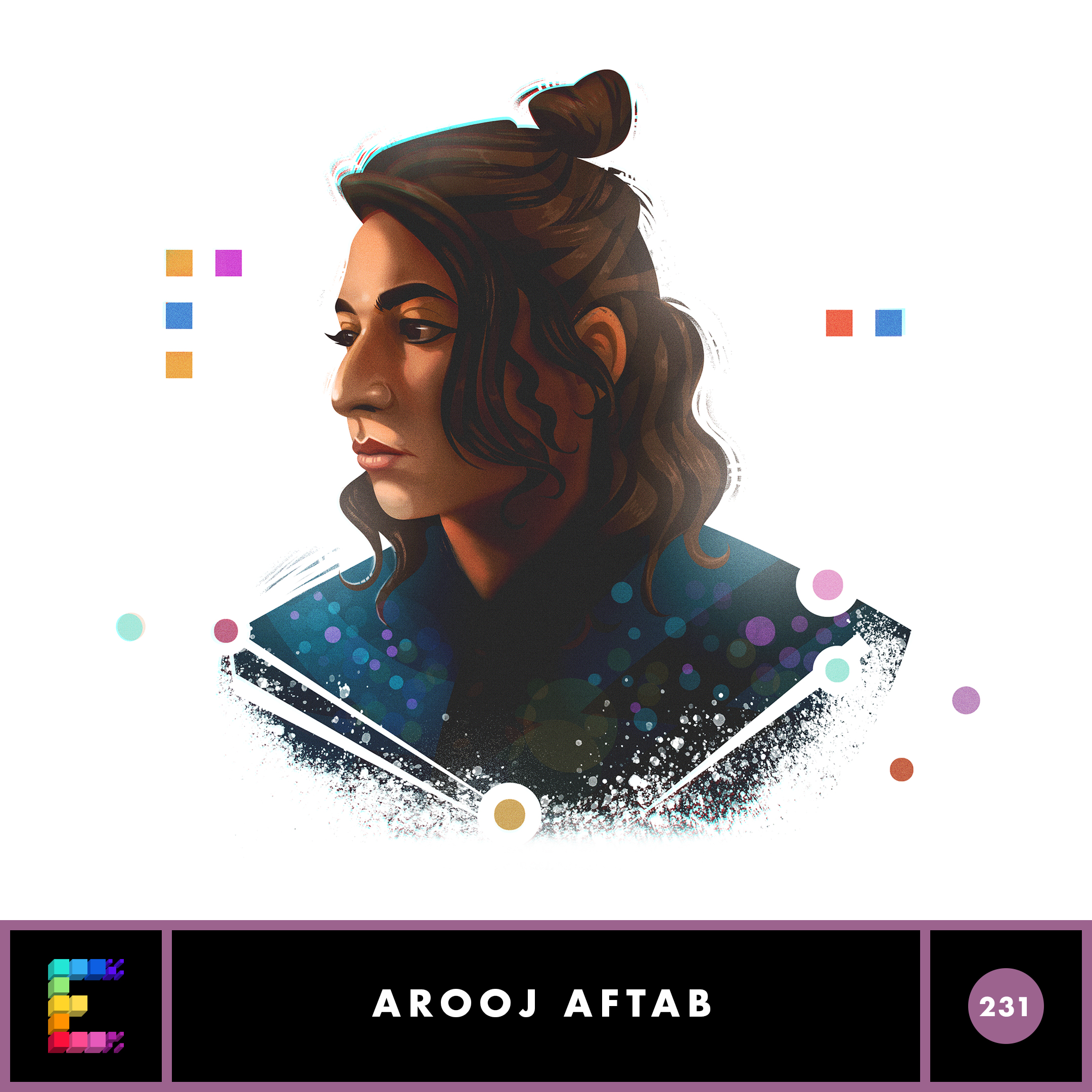
You'll find links to stream or download Mahabharth. This episode was originally produced by me, Craig Ili, Casey Diehl, Kathleen Smith, and Chloe Parker. The reissue was produced with additional help from Mary Dolan. The episode artwork is by Carlo Salerma, and I made the show's theme music and logo.
SongExploder is a proud member of Radiotopia from PRX, a network of independent, listener-supported, artist-owned podcasts. You can learn more about our shows at radiotopia.fm. If you'd like to hear more from me, you can sign up for my newsletter on my website, rishikesh.co. You can find me and SongExploder on Instagram, and you can get a songexploder t-shirt at songexploder.net slash shirt.
I'm rishikesh here way. Thanks for listening. Radio to me.