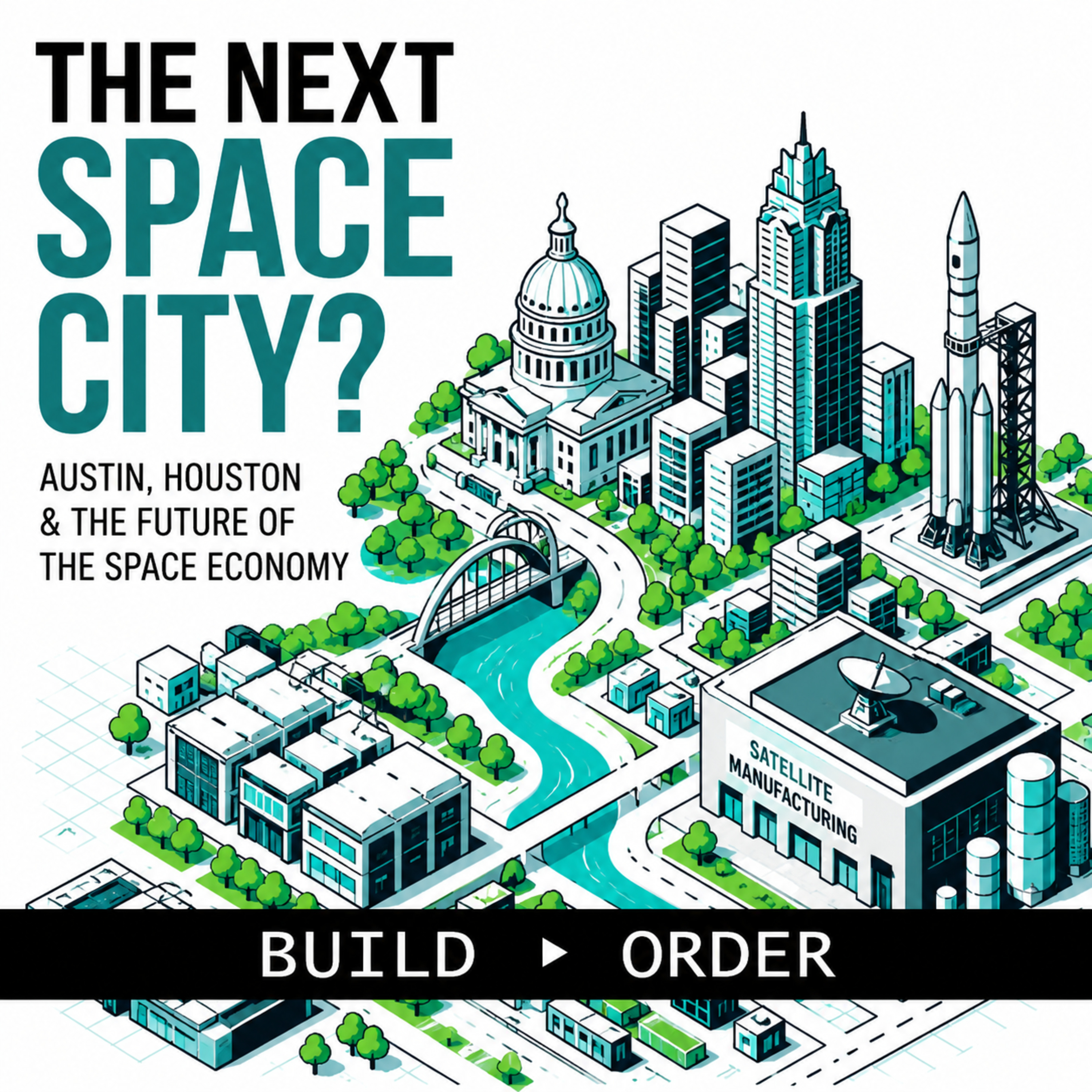
Austin 005: Is Austin the Next Space City? episode artwork

EPISODE · May 17, 2026 · 51 MIN

Austin 005: Is Austin the Next Space City?

from Build Order · host Lauren and Jen

In this episode, Lauren and Jen, dressed for low Earth orbit if not necessarily broadcast journalism, are joined by Lucy Wu, an Austin-based aerospace professional to trace the geography of the American space industry.The original space economy formed around four major hubs: Cape Canaveral for launch, Los Angeles for aerospace design and manufacturing, Huntsville for propulsion and engineering, and Houston for mission control. Each place won its role in the American landscape of space for a different reason, from optimal geography to talent concentration and depth, industrial history to pure politics.The commercial space era is reopening the map. Space is no longer only about getting humans to the Moon (or even to Mars). It now includes satellites, defense, manufacturing, software, data infrastructure, and dual-use technology. As the industry broadens, new cities have a chance to claim parts of the space economy, and those choices have real implications for where companies build, where talent clusters, and where investors should pay attention.By the end of this episode, you’ll have a clearer way to think about the next generation of space cities: why Los Angeles is still hard to unseat, why Denver may already be investable as a space city, and why Austin is becoming “Sat City.”This episode is public, so feel free to launch it into someone else’s orbit.Subscribe to Build Order for more content on how systems shape cities.Chapter descriptions:00:01:47 – The four legacy space hubs00:05:16 – How Houston won mission control00:10:00 – LA’s space density versus Austin’s sprawl00:14:33 – Austin’s acreage advantage00:19:30 – Elon Musk and the Texas space map00:21:17 – Did SpaceX outgrow California?00:30:39 – Which city will win the next space economy?00:32:23 – Austin’s dual use, defense tech, and lunar real estate companies00:36:47 – Austin versus Denver as the next “Space City” 00:43:19 – What real estate investors should consider00:48:20 – Final takeaways

In this episode, Lauren and Jen, dressed for low Earth orbit if not necessarily broadcast journalism, are joined by Lucy Wu, an Austin-based aerospace professional to trace the geography of the American space industry.The original space economy formed around four major hubs: Cape Canaveral for launch, Los Angeles for aerospace design and manufacturing, Huntsville for propulsion and engineering, and Houston for mission control. Each place won its role in the American landscape of space for a different reason, from optimal geography to talent concentration and depth, industrial history to pure politics.The commercial space era is reopening the map. Space is no longer only about getting humans to the Moon (or even to Mars). It now includes satellites, defense, manufacturing, software, data infrastructure, and dual-use technology. As the industry broadens, new cities have a chance to claim parts of the space economy, and those choices have real implications for where companies build, where talent clusters, and where investors should pay attention.By the end of this episode, you’ll have a clearer way to think about the next generation of space cities: why Los Angeles is still hard to unseat, why Denver may already be investable as a space city, and why Austin is becoming “Sat City.”This episode is public, so feel free to launch it into someone else’s orbit.Subscribe to Build Order for more content on how systems shape cities.Chapter descriptions:00:01:47 – The four legacy space hubs00:05:16 – How Houston won mission control00:10:00 – LA’s space density versus Austin’s sprawl00:14:33 – Austin’s acreage advantage00:19:30 – Elon Musk and the Texas space map00:21:17 – Did SpaceX outgrow California?00:30:39 – Which city will win the next space economy?00:32:23 – Austin’s dual use, defense tech, and lunar real estate companies00:36:47 – Austin versus Denver as the next “Space City” 00:43:19 – What real estate investors should consider00:48:20 – Final takeaways

NOW PLAYING

Austin 005: Is Austin the Next Space City?

0:00 51:56

No transcript for this episode yet

We transcribe on demand. Request one and we'll notify you when it's ready — usually under 10 minutes.

No similar episodes found.

Chewing the Fat with WorkForge WorkForge Bite-Sized Conversations for Building a Stronger Workforce Welcome to Chewing the Fat, a podcast delving deep into the world of food manufacturing. Dive into real conversations around critical topics like staffing, retention, onboarding, and career development in this essential industry. Subscribe now to gain insights from your peers, subject matter experts and more on the biggest issues facing food manufacturers today: -Hiring and retaining employees -Addressing the challenges of the Silver Tsunami -Improving time to productivity of new employees -Engaging employees from hire to retire And more... Tune in to Chewing the Fat, a WorkForge podcast, and join the conversation on how to build and sustain a resilient, high-performing workforce in food manufacturing. Chosn Conversations: Beyond the Journal Chosn AI Journal Welcome to Chosn Conversations: Beyond the Journal, where your AI hosts explore the transformative power of conversational journaling and emotional intelligence. Each episode takes you beyond traditional journaling methods, diving deep into voice journaling techniques, mental wellness strategies, and the science behind AI-supported emotional health. We share inspiring user stories, analyze the latest research in digital mental wellness, and provide practical guidance for incorporating journaling into your self-care routine. Whether you're curious about AI therapy alternatives, looking for mental health support tools, or wanting to optimize your journaling practice, our conversations extend beyond the written page into meaningful audio experiences that offer evidence-based insights in an accessible, compassionate format. Join us as we navigate the intersection of technology and mental well-being, helping you track your emotional journey and build lasting resilience through the power of Growth Triggers Luis Diaz Discover how to use your podcast to generate leads, sales, and influence in any market.On this show Luis shares his best tested and proven secrets, tips, and strategies from launching over 300 podcasts in over a dozen different niches and generating over 59 Million Downloads for his clients.Learn how to increase your podcast listenership, create multiple new revenue streams with your podcast, sell more of your core offer and build a show that gives you leverage and authority in your space. From picking the right monetization strategy for your podcast to learning how to position your podcast in a crowded market on Apple and Spotify; this is show is the ultimate marketing and sales resource for online business owners who want to know what works with podcasting.Get in touch over on Instagram <a target="_blank" rel="noopener noreferrer nofollow" class="link" href="https://www.instagram.com/luisr SPADE: The Podcast Paul Anthony Henderson Jr SPADE: The Podcast stands as a beacon of hope and understanding, addressing critical mental health challenges within the African American community. SPADE (Suicide, Post-Traumatic Stress Disorder, Anxiety, Depression, and Epilepsy) seeks to shine a light on topics often stigmatized and misunderstood. Our mission is to break the silence surrounding these issues, encouraging open dialogue and fostering a culture of support and education. By providing meaningful resources and sharing powerful stories, we aim to empower individuals to confront these challenges head-on and build pathways toward healing. Mental health is a crucial but often overlooked subject in the African American community. It’s time to dismantle the barriers of shame and stigma, ensuring everyone feels safe to speak their truth and seek the help they need. This podcast is more than just a platform—it’s a movement to spark change, spread awareness, and inspire action within families, friendships, and communities.

Frequently Asked Questions

How long is this episode of Build Order?

This episode is 51 minutes long.

When was this Build Order episode published?

This episode was published on May 17, 2026.

What is this episode about?

In this episode, Lauren and Jen, dressed for low Earth orbit if not necessarily broadcast journalism, are joined by Lucy Wu, an Austin-based aerospace professional to trace the geography of the American space industry.The original space economy...

Can I download this Build Order episode?

Yes, you can download this episode by clicking the download button on the episode player, or subscribe to the podcast in your preferred podcast app for automatic downloads.
URL copied to clipboard!