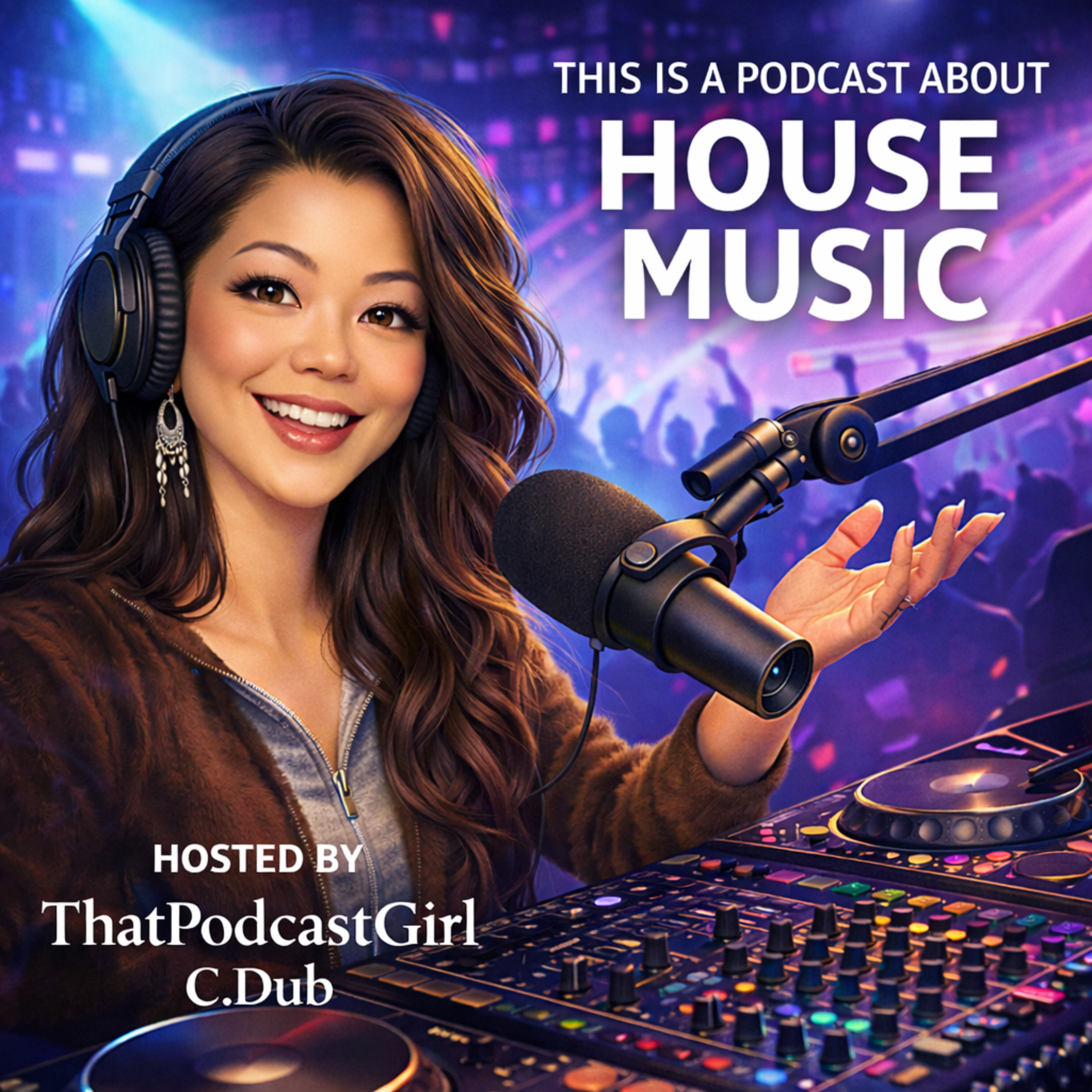
Australia and 90s House Music and the Bush Doof (S2 E12) episode artwork

EPISODE · Feb 14, 2026 · 8 MIN

Australia and 90s House Music and the Bush Doof (S2 E12)

from This Is A Podcast About House Music (ASMR) · host ThatPodcastGirl C.Dub

Hello, my sexy listeners. It’s ThatPodcastGirl Cdub. And This Is A Podcast About House Music.All right Australia,…..no worries, I see you tuning in.Sydney. Melbourne. Brisbane. Perth. The Gold Coast. Adelaide. The Central Coast. I see you all in the numbers. I see you showing up on Chromecast, on smart TVs, in living rooms across a continent that sits beautifully far from where this music first caught fire.And I did not want to just say thank you and move on.If I’m going to say your names, I want to understand what your dance floors felt like when the 80s turned into the 90s. I want to feel the temperature of it. I want to know how house music sounded when it had to travel thousands of miles to reach you.Because geography changes culture.Australia was not down the street from Chicago. It was not a train ride from New York. Records had to be imported. DJs had to wait. Scenes had to build without constant touring artists flying in every weekend. That kind of distance creates a certain kind of self-reliance. It forces a scene to listen closely to what it has and stretch it into something of its own.In Sydney, the late 80s and early 90s dance ecosystem was already alive with large-scale party culture. Events at places like the Hordern Pavilion carried a scale that allowed dance music to fill serious architectural space. At the same time, there was a strong LGBTQ+ underground energy shaping the floor. Queer spaces were not an afterthought. They were central. They were foundational. They were where experimentation could breathe.And then there were the warehouses.Sydney had early warehouse raves that borrowed from what was happening in the UK and the US, but filtered through local networks, local crews, local bodies. Flyers moved through friend groups. Phone numbers were whispered. Locations were sometimes revealed close to the event. The feeling was part anticipation, part pilgrimage. You drove. You found it. You stepped inside and the bass hit differently because you had earned your way there.When I picture those floors, I don’t imagine them trying to imitate Chicago or New York. I imagine a room full of people who knew they were building something slightly off-center from the global map. The music might have been imported, but the energy was domestic. The sweat was local.And then Melbourne.Melbourne in the 90s developed a reputation for serious warehouse culture. All-night events. Named party brands that meant something to the people who went every month. One series that still gets spoken about is Every Picture Tells a Story, which ran through the early and mid 90s as an all-night electronic gathering. The name alone feels cinematic. You can almost see it. The lights cutting through industrial space filled with fog. The bass bouncing off concrete. The bodies settling into marathon rhythm.Melbourne crowds had stamina. That is something you hear again and again in oral histories. People showed up knowing they were there for the long arc of the night. They did not arrive for a quick peak. They arrived to stay. That kind of culture shapes the way DJs play. It shapes the way dancers pace themselves. It shapes how house and techno blend into one another over six, eight, ten hours. It shapes what you wear.And by the mid 90s, the music was no longer invisible.In 1995, the ARIA Awards introduced a Best Dance Release category. The first winner was Itch-E & Scratch-E for “Sweetness & Light.” That moment matters. It signals that what had been living in warehouses and underground parties had reached national visibility. Dance music was not just subculture. It was part of Australia’s recorded history. It was being formally recognized.At the same time, something else was unfolding.Australia’s landscape is vast. Open. Wild. And it makes sense that dance culture would eventually stretch outward into that geography. The early 90s saw the growth of outdoor party culture that later became known as

Hello, my sexy listeners. It’s ThatPodcastGirl Cdub. And This Is A Podcast About House Music.All right Australia,…..no worries, I see you tuning in.Sydney. Melbourne. Brisbane. Perth. The Gold Coast. Adelaide. The Central Coast. I see you all in the numbers. I see you showing up on Chromecast, on smart TVs, in living rooms across a continent that sits beautifully far from where this music first caught fire.And I did not want to just say thank you and move on.If I’m going to say your names, I want to understand what your dance floors felt like when the 80s turned into the 90s. I want to feel the temperature of it. I want to know how house music sounded when it had to travel thousands of miles to reach you.Because geography changes culture.Australia was not down the street from Chicago. It was not a train ride from New York. Records had to be imported. DJs had to wait. Scenes had to build without constant touring artists flying in every weekend. That kind of distance creates a certain kind of self-reliance. It forces a scene to listen closely to what it has and stretch it into something of its own.In Sydney, the late 80s and early 90s dance ecosystem was already alive with large-scale party culture. Events at places like the Hordern Pavilion carried a scale that allowed dance music to fill serious architectural space. At the same time, there was a strong LGBTQ+ underground energy shaping the floor. Queer spaces were not an afterthought. They were central. They were foundational. They were where experimentation could breathe.And then there were the warehouses.Sydney had early warehouse raves that borrowed from what was happening in the UK and the US, but filtered through local networks, local crews, local bodies. Flyers moved through friend groups. Phone numbers were whispered. Locations were sometimes revealed close to the event. The feeling was part anticipation, part pilgrimage. You drove. You found it. You stepped inside and the bass hit differently because you had earned your way there.When I picture those floors, I don’t imagine them trying to imitate Chicago or New York. I imagine a room full of people who knew they were building something slightly off-center from the global map. The music might have been imported, but the energy was domestic. The sweat was local.And then Melbourne.Melbourne in the 90s developed a reputation for serious warehouse culture. All-night events. Named party brands that meant something to the people who went every month. One series that still gets spoken about is Every Picture Tells a Story, which ran through the early and mid 90s as an all-night electronic gathering. The name alone feels cinematic. You can almost see it. The lights cutting through industrial space filled with fog. The bass bouncing off concrete. The bodies settling into marathon rhythm.Melbourne crowds had stamina. That is something you hear again and again in oral histories. People showed up knowing they were there for the long arc of the night. They did not arrive for a quick peak. They arrived to stay. That kind of culture shapes the way DJs play. It shapes the way dancers pace themselves. It shapes how house and techno blend into one another over six, eight, ten hours. It shapes what you wear.And by the mid 90s, the music was no longer invisible.In 1995, the ARIA Awards introduced a Best Dance Release category. The first winner was Itch-E & Scratch-E for “Sweetness & Light.” That moment matters. It signals that what had been living in warehouses and underground parties had reached national visibility. Dance music was not just subculture. It was part of Australia’s recorded history. It was being formally recognized.At the same time, something else was unfolding.Australia’s landscape is vast. Open. Wild. And it makes sense that dance culture would eventually stretch outward into that geography. The early 90s saw the growth of outdoor party culture that later became known as

NOW PLAYING

Australia and 90s House Music and the Bush Doof (S2 E12)

0:00 8:39

No transcript for this episode yet

We transcribe on demand. Request one and we'll notify you when it's ready — usually under 10 minutes.

Frequently Asked Questions

How long is this episode of This Is A Podcast About House Music (ASMR)?

This episode is 8 minutes long.

When was this This Is A Podcast About House Music (ASMR) episode published?

This episode was published on February 14, 2026.

What is this episode about?

Hello, my sexy listeners. It’s ThatPodcastGirl Cdub. And This Is A Podcast About House Music.All right Australia,…..no worries, I see you tuning in.Sydney. Melbourne. Brisbane. Perth. The Gold Coast. Adelaide. The Central Coast. I see you all in the...

Can I download this This Is A Podcast About House Music (ASMR) episode?

Yes, you can download this episode by clicking the download button on the episode player, or subscribe to the podcast in your preferred podcast app for automatic downloads.
URL copied to clipboard!