
EPISODE · Feb 8, 2026 · 7 MIN
Authority Without Character Is the Original Fraud
from Carl's Mind Chimes Magazine Podcasts · host Carl Cimini
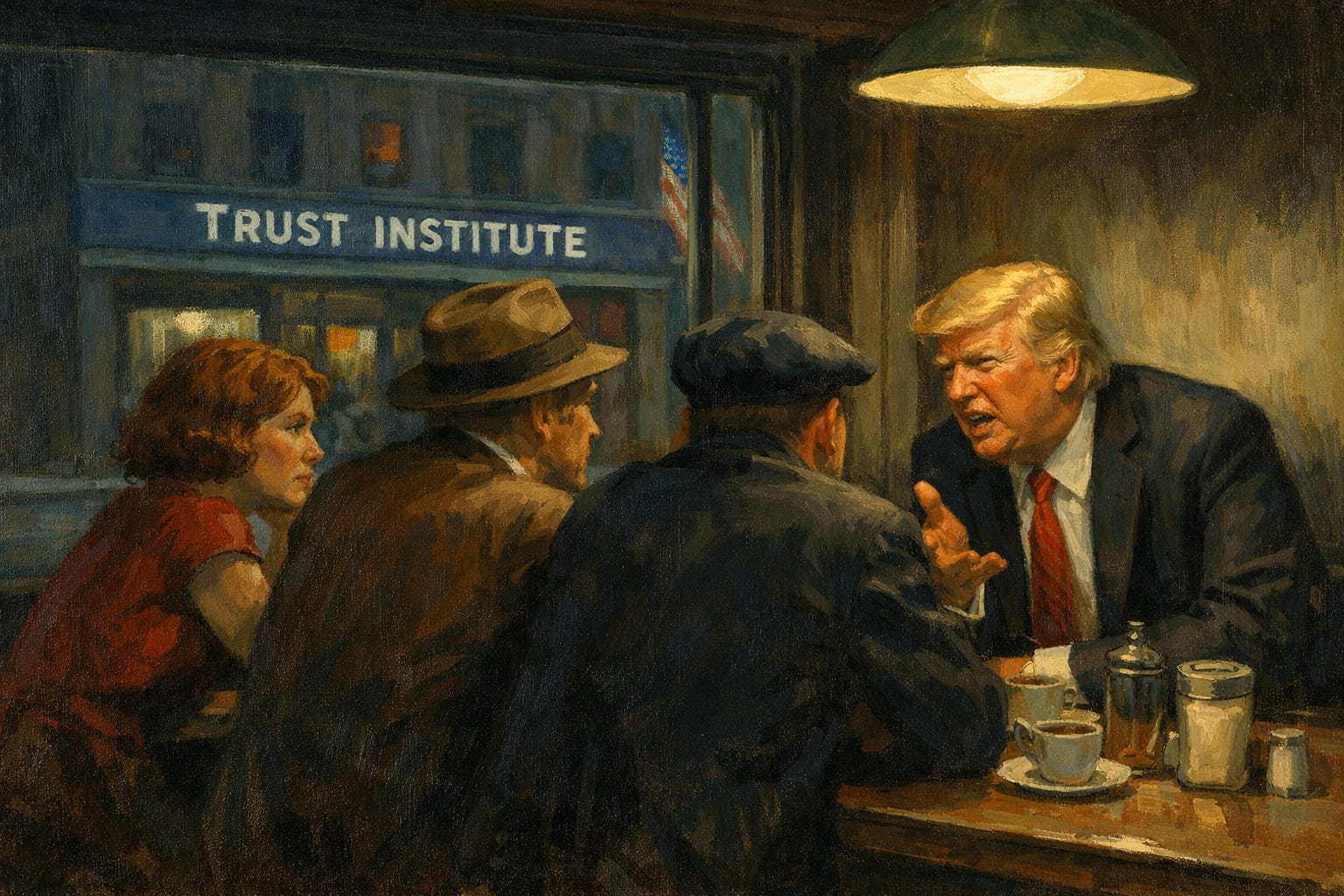
There is nothing radical in saying this—only forgotten common sense: authority that is not grounded in character is not authority at all. It is theater. It is costume. It is power on loan, extracted rather than earned.Every profession eventually learns this lesson the hard way. Medicine, journalism, law, academia, finance—none were “ruined” by ignorance. They were bent by money. Money does not merely corrupt; it recalibrates. It teaches people how far they can lean without falling, how much truth can be trimmed before credibility collapses. Collegiality becomes camouflage. Validation becomes currency.This is not new. For thousands of years, human societies were organized around a simple asymmetry: a tiny literate elite and a vast population told to trust them. Kings ruled by divine right, priests by sacred text, landlords by inheritance. The serfs did not need peer review to know something was wrong. They had hunger. They had labor. They had eyes. Eventually, they flipped the tables—not because they read a study, but because lived reality contradicted the story they were being told.Modern society likes to imagine itself as more sophisticated, more rational. But the same structure persists, only now the language is credentialed rather than sacred. Authority arrives wearing acronyms, data sets, and white papers. The promise is that knowledge will protect us. The betrayal is that knowledge is too often filtered through profit, access, and institutional self-preservation.²And so we arrive at the present crisis: the poor no longer find hope in peer-reviewed studies or institutional authority. This is often dismissed as ignorance or anti-intellectualism. That diagnosis is lazy—and dangerous. Distrust does not emerge in a vacuum. It is cultivated through decades of being talked at rather than listened to, studied rather than served, managed rather than respected.³When expertise repeatedly aligns with power instead of people, skepticism becomes survival. When authority consistently fails to deliver material improvement, its language begins to sound like mockery. Data cannot fill an empty refrigerator. Methodology does not pay rent. And so, the social contract quietly dissolves.The tragedy is not that people reject authority. The tragedy is that authority rejected character first.If trust is ever to be rebuilt, it will not come from better messaging or more footnotes. It will come from visible integrity, shared sacrifice, and institutions willing to lose money rather than lose their soul. History is clear on this point: when authority forgets who it serves, the tables do not stay upright forever.Addendum: MAGA as the Child of ContemptMAGA did not arise from ignorance alone. It was midwifed by contempt.For decades, a strain of haughty intellectualism—technically fluent, morally hollow—signaled to millions of Americans that their lived experience was an inconvenience to the spreadsheet. Expertise spoke about them, rarely with them. Policy optimized for efficiency while communities hollowed out. Wages stagnated; dignity followed. The message, implicit but unmistakable, was that suffering was a rounding error.¹Into that vacuum walked Donald Trump, not as an ideologue but as a talent scout for grievance. He understood something the credentialed class refused to learn: people do not rebel against facts; they rebel against humiliation. Trump did not offer solutions—he offered permission. Permission to distrust institutions that had monetized their authority and abandoned their obligations. Permission to sneer back.²This is the end result of an elite culture that confused intelligence with wisdom and revenue with value. When universities, media, and political leadership tethered credibility to donors, markets, and access, they severed the last thread of moral reciprocity. Common sense—once the bridge between knowledge and justice—was dismissed as unsophisticated. The bill came due.³MAGA is not a philosophy; it is a reaction. It feeds on the wreckage left behind by institutions that demanded trust while delivering precarity. Trump’s genius—such as it is—was to exploit the breach without any intention of repairing it. He monetized resentment, privatized outrage, and converted civic despair into a personal brand.⁴History offers a warning that remains inconvenient: when authority aligns exclusively with money, it forfeits legitimacy. When legitimacy collapses, demagogues do not need to persuade—they only need to point. And when people feel unseen long enough, they will follow the first voice that tells them their anger makes sense, even if the destination is ruin.⁵MAGA is not the disease. It is the fever. The cure is not louder credentials or better data visualization. It is character, accountability, and institutions willing to place human outcomes above financial ones. Without that reckoning, this movement will not be the last—only the loudest so far.What Redemption Would RequireRedemption, if it is still possible, will not come from better branding, smarter algorithms, or another round of expert panels explaining reality to people already living in it. It will require institutions that relearn humility as a discipline, not a talking point—leaders who place character above credential, service above status, and obligation above profit. It will demand policies that deliver tangible dignity: stable work, fair wages, accessible care, and accountability that runs upward as fiercely as it runs down. Most of all, redemption will require a willingness to forgo easy money and elite comfort in exchange for restored trust. History offers no shortcuts here. When authority chooses integrity over extraction, people return—not because they are persuaded, but because they are finally respected.Footnotes* Arlie Russell Hochschild, Strangers in Their Own Land: Anger and Mourning on the American Right (The New Press, 2016).* George Packer, “The Unwinding,” The Atlantic (2013).* Christopher Lasch, The Revolt of the Elites and the Betrayal of Democracy (W. W. Norton, 1995).* Timothy Snyder, On Tyranny: Twenty Lessons from the Twentieth Century (Crown, 2017).* Hannah Arendt, The Origins of Totalitarianism (Harcourt, Brace & Company, 1951).Footnotes* James C. Scott, Seeing Like a State: How Certain Schemes to Improve the Human Condition Have Failed (Yale University Press, 1998).* Thomas Piketty, Capital in the Twenty-First Century (Harvard University Press, 2014).* Michael Sandel, The Tyranny of Merit: What’s Become of the Common Good? (Farrar, Straus and Giroux, 2020). This is a public episode. If you'd like to discuss this with other subscribers or get access to bonus episodes, visit mindchimesmagazine.substack.com/subscribe
NOW PLAYING
Authority Without Character Is the Original Fraud
No transcript for this episode yet
Similar Episodes
No similar episodes found.
Similar Podcasts
No similar podcasts found.