
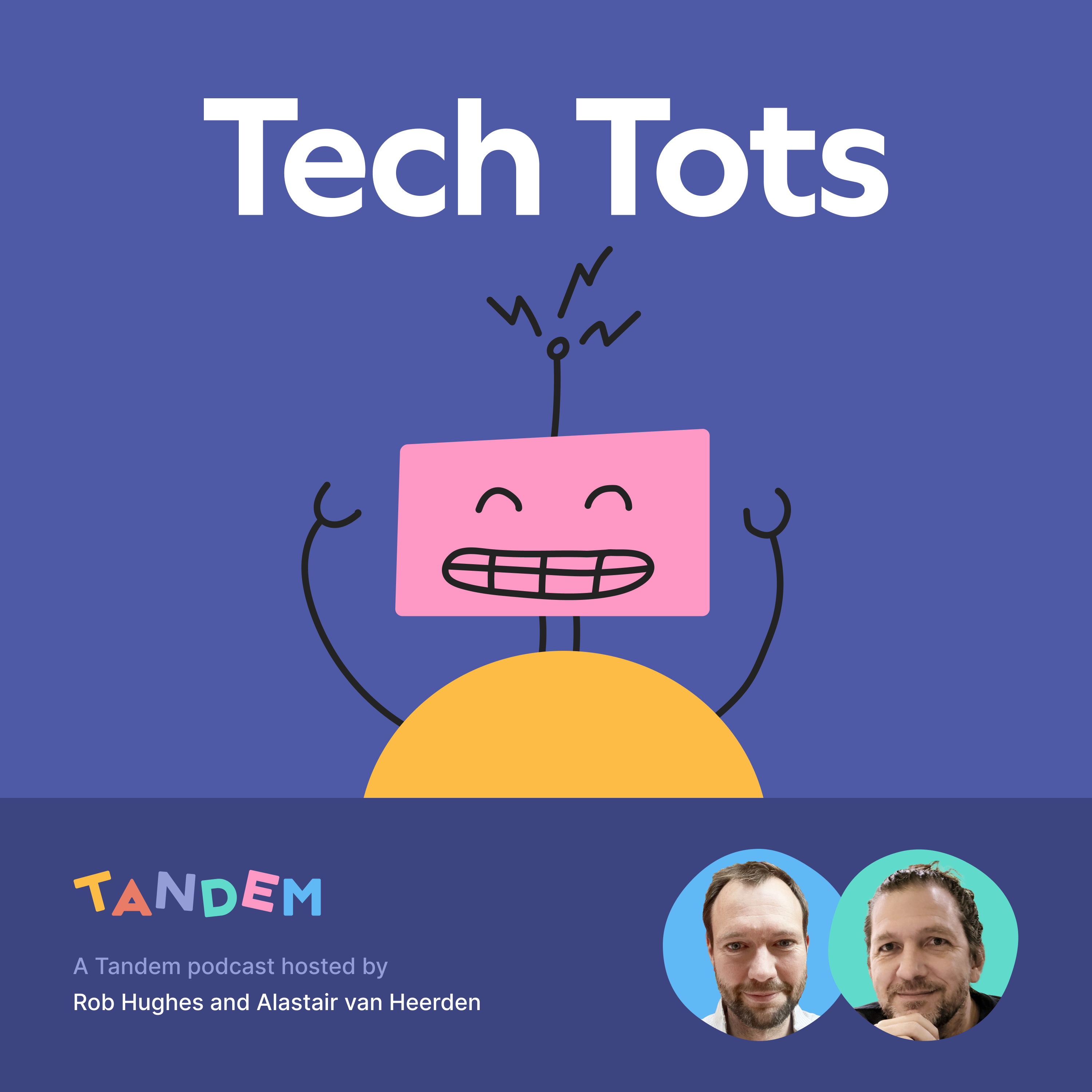
EPISODE · Mar 28, 2025 · 27 MIN
Babies and toddlers are not just small adults - in conversation with Prof Sam Wass
from Tech Tots: Early ideas on parenting in a digital age · host Rob Hughes and Alastair van Heerden - co-founders of playtandem.com
In this episode, Professor Sam Wass from the Institute for the Science of Early Years discusses how children's brains process information very differently from adults, particularly in noisy environments where they struggle to filter sounds. This ability to focus develops slowly.A key insight is the importance of predictability and rhythm in early learning, which helps young brains form stable patterns. While we learn best with an intermediate level of predictability, young children benefit from more predictable environments as their prediction skills are still developing.Professor Wass also raises concerns about fast-paced screen content, suggesting it might be too difficult for young brains to process and could cause stress. He advises parents to not assume that what benefits an adult brain is the same for a child's brain, highlighting the importance of repetition and appropriate pacing.Key Takeaways:• Children process sensory information differently to adults.• Predictability in routines and interactions is crucial for early learning.• Be mindful of the pace of digital content for young children.• What's good for an adult brain isn't necessarily good for a child's.Produced by Early Ideas Limited, who are building Tandem. Podcast music by Tibor Miklos. www.playtandem.com Follow us @playtandem on: Facebook | Instagram | LinkedIn
Embed this episode
NOW PLAYING
Babies and toddlers are not just small adults - in conversation with Prof Sam Wass
No transcript for this episode yet
Similar Episodes
No similar episodes found.
Similar Podcasts
No similar podcasts found.