PodParley PodParley

Baby Blue Blood Drive

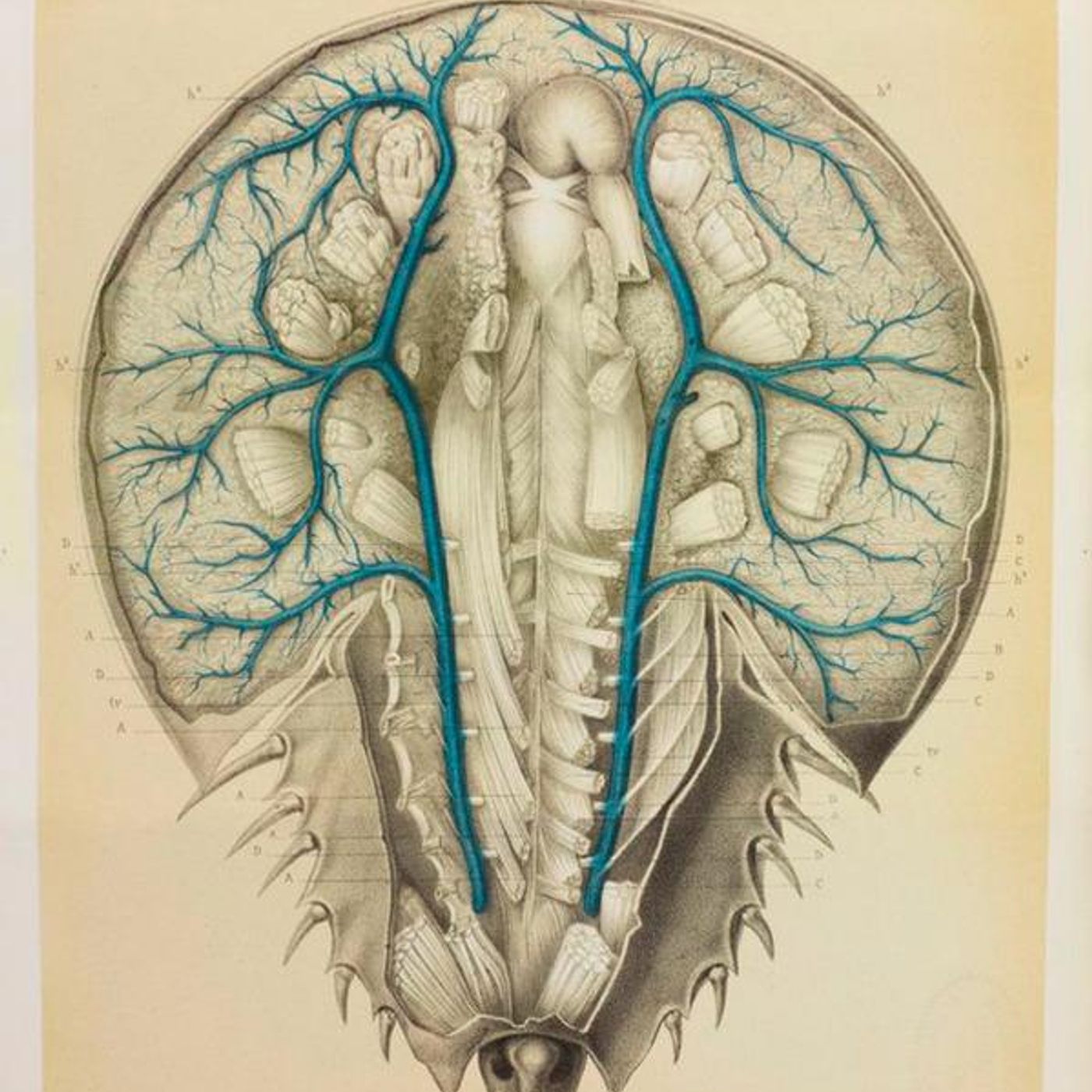
Horseshoe crabs are not much to look at.  But beneath their unassuming catcher’s-mitt shell, they harbor a half-billion-year-old secret: a superpower that helped them outlive the dinosaurs and survive all the Earth’s mass extinctions.  And what is that secret superpower? Their blood. Their baby blue blood.  And it’s so miraculous that for decades, it hasn’t just been saving their butts, it’s been saving ours too. But that all might be about to change.    Follow us as we follow these ancient critters - from a raunchy beach orgy to a marine blood drive to the most secluded waterslide - and learn a thing or two from them about how much we depend on nature and how much it depends on us. This episode was reported by Latif Nasser with help from Damiano Marchetti and Lulu Miller, and was produced by Annie McEwen and Matt Kielty with help from Liza Yeager. Special thanks to Arlene Shaner at the NY Academy of Medicine, Tim Wisniewski at the Alan Mason Cheney Medical Archives at Johns Hopkins University, Jennifer Walton at the library of the Marine Biological Lab, and Glenn Gauvry at the Ecological Research and Development Group. Support Radiolab today at Radiolab.org/donate.

Episode 365 of the Radiolab podcast, hosted by WNYC Studios, titled "Baby Blue Blood Drive" was published on July 24, 2020 and runs 66 minutes.

July 24, 2020 ·66m · Radiolab

0:00 / 0:00

Horseshoe crabs are not much to look at.  But beneath their unassuming catcher’s-mitt shell, they harbor a half-billion-year-old secret: a superpower that helped them outlive the dinosaurs and survive all the Earth’s mass extinctions.  And what is that secret superpower? Their blood. Their baby blue blood.  And it’s so miraculous that for decades, it hasn’t just been saving their butts, it’s been saving ours too. But that all might be about to change.    Follow us as we follow these ancient critters - from a raunchy beach orgy to a marine blood drive to the most secluded waterslide - and learn a thing or two from them about how much we depend on nature and how much it depends on us. This episode was reported by Latif Nasser with help from Damiano Marchetti and Lulu Miller, and was produced by Annie McEwen and Matt Kielty with help from Liza Yeager. Special thanks to Arlene Shaner at the NY Academy of Medicine, Tim Wisniewski at the Alan Mason Cheney Medical Archives at Johns Hopkins University, Jennifer Walton at the library of the Marine Biological Lab, and Glenn Gauvry at the Ecological Research and Development Group. Support Radiolab today at Radiolab.org/donate.

Horseshoe crabs are not much to look at.  But beneath their unassuming catcher’s-mitt shell, they harbor a half-billion-year-old secret: a superpower that helped them outlive the dinosaurs and survive all the Earth’s mass extinctions.  And what is that secret superpower? Their blood. Their baby blue blood.  And it’s so miraculous that for decades, it hasn’t just been saving their butts, it’s been saving ours too.

But that all might be about to change.  

 Follow us as we follow these ancient critters - from a raunchy beach orgy to a marine blood drive to the most secluded waterslide - and learn a thing or two from them about how much we depend on nature and how much it depends on us.

This episode was reported by Latif Nasser with help from Damiano Marchetti and Lulu Miller, and was produced by Annie McEwen and Matt Kielty with help from Liza Yeager.

Special thanks to Arlene Shaner at the NY Academy of Medicine, Tim Wisniewski at the Alan Mason Cheney Medical Archives at Johns Hopkins University, Jennifer Walton at the library of the Marine Biological Lab, and Glenn Gauvry at the Ecological Research and Development Group.

Support Radiolab today at Radiolab.org/donate

The Vanishing of Harry Pace (Radiolab) WNYC Studios From the creators of Dolly Parton's America, Jad Abumrad and Shima Oliaee, comes a new series produced in collaboration with author Kiese Laymon, scholar Imani Perry, writer Cord Jefferson, WQXR’s Terrance McKnight, and WNYC's Jami Floyd. Based on the book Black Swan Blues: the Hard Rise and Brutal Fall of America’s First Black Owned Record Label by Paul Slade.It was Motown before Motown, FUBU before FUBU: Black Swan Records. The label founded 100 years ago by Harry Pace. Pace launched the career of Ethel Waters, inadvertently invented the term rock n roll, played an important role in W.C. Handy becoming "Father of the Blues," inspired Ebony and Jet magazines, and helped desegregate the South Side of Chicago in an epic Supreme Court battle. Then, he disappeared.  The Vanishing of Harry Pace is a series about the phenomenal but forgotten man who changed America. It's a story about betrayal, family, hidden identities, and a time like no other. Note to Self WNYC Studios Is your phone watching you? Can texting make you smarter? Are your kids real? Note to Self explores these and other essential quandaries facing anyone trying to preserve their humanity in the digital age. WNYC Studios is a listener-supported producer of other leading podcasts, including Radiolab, Death, Sex & Money, Snap Judgment, Here’s the Thing with Alec Baldwin, Nancy and many others.© WNYC Studios RadioLacan.com |Radio Lacan en el VII ENAPOL RadioLacan.com es el sitio de audios y conferencias de la Asociación Mundial de Psicoanálisis. RadioLacan.com |#LacanianosxElMundo: Ginebra. Entrevista a Sofía Guaraguara Comenzamos una serie de entrevistas a los colegas que por distintos motivos han dejado su país de origen y han decidido ejercer el psicoanálisis en otro país, en otra lengua, para que nos cuenten sobre lo que esto implica para cada uno y lo interesante de cómo hacer florecer el psicoanálisis en el mundo. En esta oportunidad Liliana Mauas entrevista a Sofía Guaraguara.
URL copied to clipboard!