
EPISODE · Mar 11, 2024 · 1H 13M
Becoming Your Own Banker, Part 25: Uninsurability Hacks
from The Money Advantage Podcast
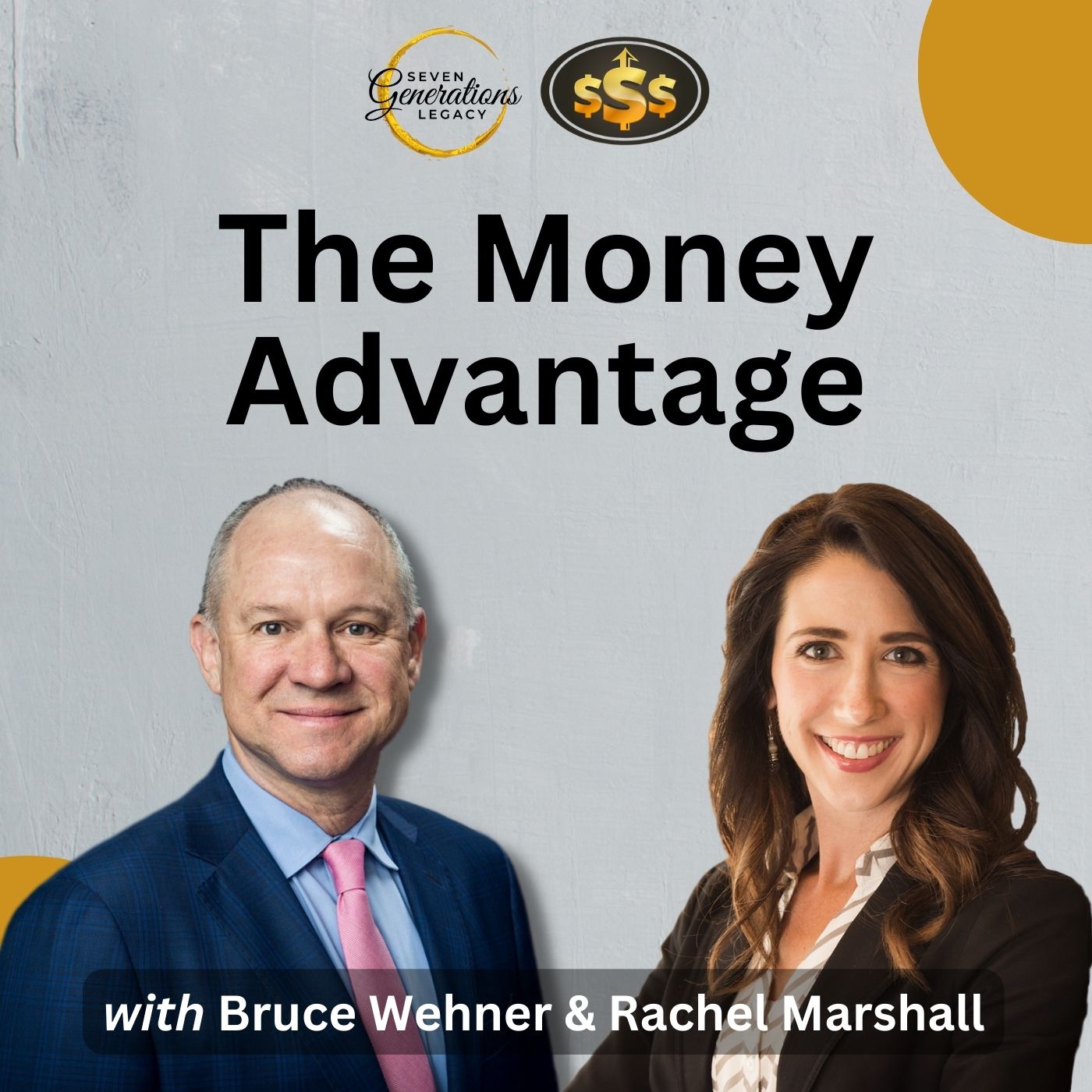
Do you want to use Infinite Banking, but you're uninsurable? Today we are discussing uninsurability hacks! Don't worry, uninsurability ISN'T a game-stopper for using Infinite Banking to build your own banking system. https://www.youtube.com/watch?v=iklRiFBTZRo That means you can still reap the exponential reward of dividends and interest that grow with uninterrupted compounding, store liquid cash reserves that can serve as guaranteed collateral throughout your lifetime, even while it continues growing, and provide a death benefit that is the most efficient estate transfer tool ... ... even if you're not personally eligible for a life insurance policy due to health concerns. Today, we're nearing the end of our tour through Nelson Nash's book, Becoming Your Own Banker to show why Infinite Banking is, in fact, an opportunity available to just about everyone. Unlock the secrets to financial empowerment, even when the odds seem stacked against you due to uninsurability, with our latest Money Advantage Podcast episode. Rachel Marshall and Bruce Wehner delve into the heart of infinite banking for those carrying the weight of health conditions or lifestyles that insurance companies typically shy away from. We tear down the barriers and bust the myths that may have left you feeling excluded from the world of life insurance, revealing a silver lining for anyone eager to take control of their financial destiny. Join us as we navigate the often misunderstood landscape of life insurance ratings, breaking down how your personal health and lifestyle choices don't have to deter you from securing a policy that benefits your financial plans. From understanding the nuances of mortality rates during unprecedented times, such as the COVID-19 pandemic, to the ins and outs of insurance contracts, this episode is packed with expert insights that will reshape your perception of life insurance's role in your financial strategy. Whether you're facing personal insurability hurdles or you're searching for ways to cement a legacy for future generations, we provide actionable strategies and a dose of inspiration. Explore how insuring a family member can open the doors to the infinite banking concept, and how even those with health concerns can potentially find viable paths to insurability. We also touch on the potential of life insurance in generating passive income and serving as capital for investment opportunities. How to Be Insurable Should You Apply with a Health Condition?Life Insurance RatingsWhat Does it Mean to Increase the Cost of Insurance?Uninsurability Hacks and Insurable InterestBook A Strategy Call How to Be Insurable If you want whole life insurance, you’ve got to qualify for a policy first. This means that the insurance company views you as an acceptable risk to take on. Since whole life insurance is permanent, companies must do their due diligence to guarantee that they can pay the claims they are responsible for. In other words, they can’t insure everybody, or they wouldn’t have the money to pay death benefits. So, to gauge your personal insurance risk, companies require an application. Part of this application is a health exam. Life insurance companies employ people called actuaries, who are capable of extremely precise life expectancy math, based on certain health variables. A health exam helps to tell these actuaries whether you fall within an acceptable risk margin, and how much it would then cost to insure you if you do. For example, someone with good health who smokes cigarettes may qualify for insurance, however their cost of insurance will increase slightly, since smoking creates a higher risk for certain issues later in life. It may all sound a bit morbid, however, this practice allows insurance companies to be extremely capable financially (which is something you want in an insurance company). By insuring people who are likely to live long lives, they can collect the necessary premium to fund the death benefits of those who may pass away well before their time, as well as those who live to a ripe old age. So, if you do have a policy, you can be confident in your company’s financials. Should You Apply with a Health Condition? If you have a pre-existing health condition, you may be tempted to quit before you’ve even tried. However, we’d like to emphasize that you shouldn’t be deterred from applying, regardless of how you view your own health and habits. While there are certainly some disqualifying illnesses off the bat, like a terminal diagnosis, insurance companies want to work with you if possible. Sometimes, a health condition merely requires a few more steps—like certain tests or treatment—or it just costs a bit more. And in reality, it’s much more beneficial to you and your family’s wealth to pay a bit more for a life insurance policy than to not have one at all. We knew someone with a heart condition who had concerns about applying for a policy, but when he did, the insurance company merely requested a few additional tests. He was ultimately able to qualify for life insurance, despite believing there was no possible way he could be insured. [9:06] “Don’t pre-qualify your own health, because what you believe is bad may not be bad to the life insurance company.” Life Insurance Ratings So what happens if you DO qualify for insurance, but you have a health condition or a habit that makes your policy more expensive? What does that mean? This is where “ratings” come in. This is how insurance companies designate policies based on actuarial data. This can be a good thing, because you’re not getting an individual price based on your health specifically, you’re getting rated into a group and receiving pricing accordingly. Just like insurance in general, this is how policies stay as affordable as possible for as many people as possible. A Standard rating is the average rating of people who are getting insurance, and is the cost basis of all policies. Pricing goes up or down from this basis based on this rating. For example, you can be rated Preferred or Super Preferred, both better ratings than Standard, which would make your cost below the basis. Preferred and Super Preferred ratings are rare because you have to have impeccable health, not have super risky habits, and no underlying issues or markers. Then, you have Sub-Standard ratings, of which there are several tiers, which simply mean that your health is below the average of people being approved for life insurance. This is nothing to be ashamed of, and can even be cause to celebrate—you qualify for insurance! Ultimately, these ratings are more for the company than they are for you, so try not to read too much into them. What Does it Mean to Increase the Cost of Insurance? When we say the cost of insurance is increasing or decreasing, we mean that the cost relative to your death benefit is increasing or decreasing. In other words, you’re going to “feel” this cost on the death benefit side, rather than the premium side. Say, for example, that you want to qualify for $500,000 of death benefit, but you get a Substandard rating. You might see the premium stay the same, but the death benefit you qualify for is reduced. This is effectively raising your price, but you’re seeing the change in the death benefit rather than your personal “cost.” Uninsurability Hacks and Insurable Interest If you find that you’re unable to qualify for whole life insurance, that doesn’t mean you cannot own a policy. Instead of insuring yourself, you’ll just want to insure someone else—a child, grandchild, parent, etc. In order to insure someone, you must have an insurable interest, which proves to the insurance company that you have a reason to insure someone. Otherwise, we could take out policies on just anyone. Essentially, insurable interest means that if this person were to pass away, it would create a financial burden for you. If you expect your child to be a caregiver for you or expect to be the guardian for your grandchildren, those can be valid reasons for insurable interest. As the owner of the life insurance policy, you’re responsible for the premium payments, but you’re also the one who has access to the cash value. This means that you can still practice infinite banking, even if the policy is not on your own life. An additional benefit to this is that you can later gift this policy to your child or grandchild, or use it to help them finance purchases while teaching them the value of leverage. If you’re struggling to prove an insurable interest, you may still benefit from another family member’s policy, depending on your family dynamics. For example, in a close-knit family, you may not need to personally own a policy if you have agreements in place to create financing opportunities from the family bank. This is one of the many benefits of implementing IBC with a generational perspective. Generation 1 can benefit from what Generation 2 owns, while Generation 3 benefits from both generations, and their policies can benefit their elders in return. Book A Strategy Call Do you want to coordinate your finances so that everything works together to improve your life today, accelerate time and money freedom, and leave the greatest legacy? We can help! Book an Introductory Call with our team today https://themoneyadvantage.com/calendar/, and find out how Privatized Banking, alternative investments, or cash flow strategies can help you accomplish your goals better and faster. That being said, if you want to find out more about how Privatized Banking gives you the most safety, liquidity, and growth… plus boosts your investment returns, and guarantees a legacy, go to https://privatizedbankingsecrets.com/freeguide
Embed this episode
NOW PLAYING
Becoming Your Own Banker, Part 25: Uninsurability Hacks
No transcript for this episode yet
Similar Episodes
No similar episodes found.
Similar Podcasts
No similar podcasts found.