
EPISODE · Nov 21, 2024 · 11 MIN
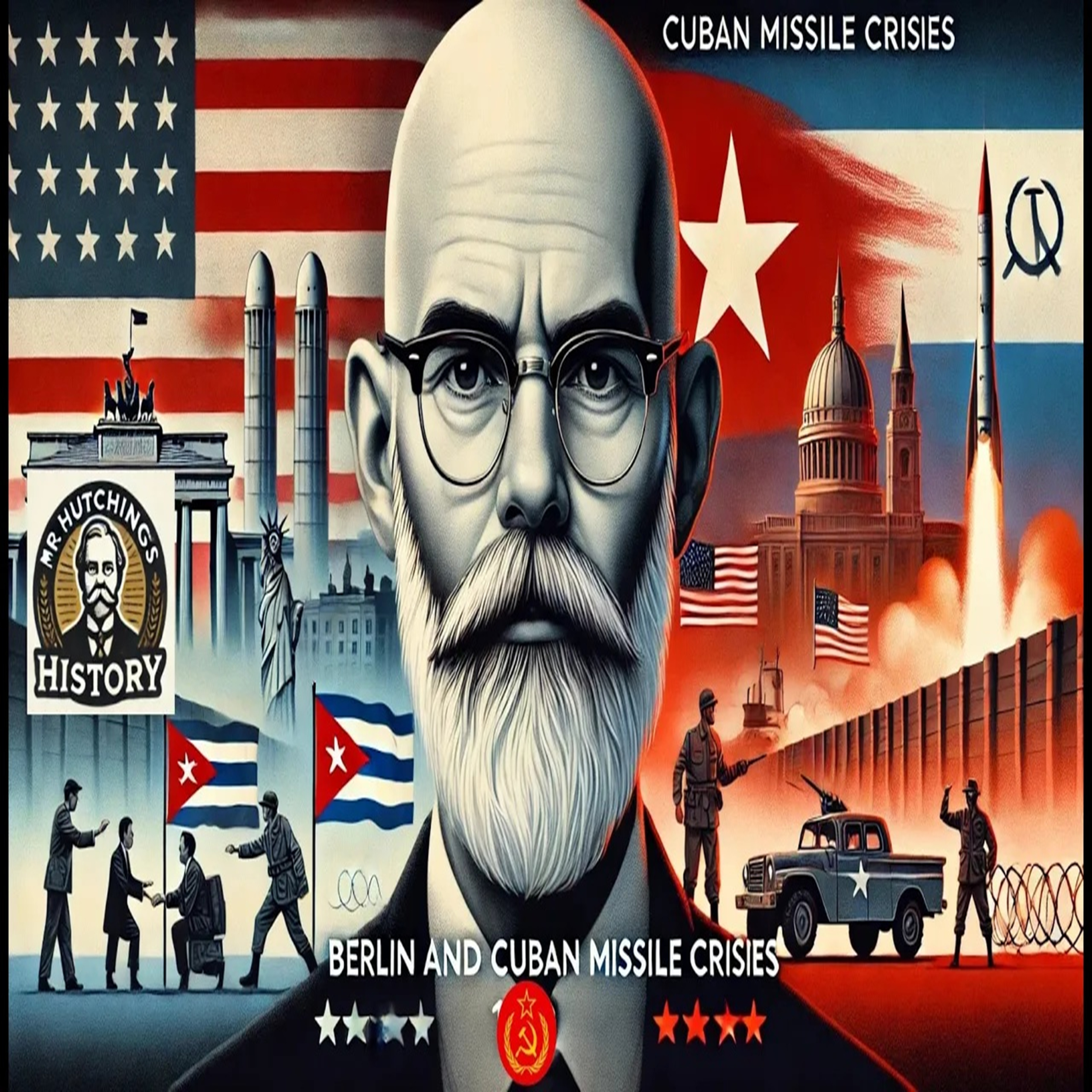
Berlin and Cuban Missile Crises – Cold War Flashpoints
from Mr. Hutchings History · host Produced, created, and written by Harold M. Hutchings
Welcome to Mr. Hutchings History! In this episode, we explore two of the most critical crises of the Cold War: The Berlin Crisis (1958-1961) and the Cuban Missile Crisis (1962). These events brought the United States and the Soviet Union to the brink of nuclear war, forever altering superpower relations.Key topics include:The Berlin Crisis and Khrushchev’s demand for the withdrawal of Western powers from BerlinThe construction of the Berlin Wall and its symbolic representation of the Cold War divideThe Cuban Missile Crisis, the 13-day standoff, and the resolution that averted nuclear conflictThe impact of these crises on US-Soviet relations and the development of détenteWe’ll also examine various historical perspectives—Orthodox, Revisionist, Post-revisionist, and Post-Cold War—on the causes and outcomes of these crises. Was the US policy of containment successful, or did interventionism escalate tensions? How did Khrushchev’s actions reflect the USSR’s strategic calculations?This episode delves deep into the Cold War's most perilous moments and their lasting impact on global diplomacy.#Paper2WorldHistory #ColdWar #BerlinCrisis #CubanMissileCrisis #USSR #USA #SuperpowerRivalry #NuclearThreat #Containment #ColdWarTensions #CrisisManagement #Eisenhower #Kennedy #Khrushchev #DétenteWorks CitedGaddis, John Lewis. We Now Know: Rethinking Cold War History. Oxford UP, 1998.Hanhimäki, Jussi M. The Cold War: A History in Documents and Eyewitness Accounts. Oxford UP, 2004.LaFeber, Walter. America, Russia, and the Cold War, 1945-2006. McGraw-Hill, 2008.Zubok, Vladislav. A Failed Empire: The Soviet Union in the Cold War from Stalin to Gorbachev. University of North Carolina Press, 2007.Chapters(0:00) Introduction – Cold War TensionsWelcome to Mr. Hutchings History! Today, we explore two Cold War flashpoints—the Berlin and Cuban Missile Crises—that nearly led to nuclear war.(0:38) The Cold War Chess MatchThe U.S. and USSR vied for global influence while avoiding direct conflict. Every move was a calculated risk.(1:00) Berlin: A Divided CityWest Berlin, a capitalist enclave in East Germany, became a symbol of freedom, leading to mass defections.(1:36) Khrushchev’s Ultimatum & U.S. ResponseIn 1958, Khrushchev demanded the West leave Berlin. Eisenhower relied on nuclear deterrence, escalating tensions.(2:16) The U-2 Spy Plane Incident (1960)A U.S. spy plane was shot down over the USSR, derailing diplomacy and deepening Cold War mistrust.(2:40) The Berlin Wall – A City DividedIn 1961, the Berlin Wall was built, cutting off East Berliners and symbolizing Cold War divisions.(3:16) The Cuban Missile Crisis BeginsIn 1962, the USSR placed nuclear missiles in Cuba, responding to U.S. missiles in Turkey and the Bay of Pigs failure.(3:57) Kennedy’s Dilemma – The Nuclear StandoffKennedy imposed a naval "quarantine" on Cuba, pressuring the Soviets while avoiding war.(5:04) 13 Days of BrinkmanshipFor nearly two weeks, the world held its breath as the U.S. and USSR teetered on the edge of war.(6:08) The Secret Deal & Crisis ResolutionKhrushchev removed missiles from Cuba. Secretly, the U.S. later withdrew missiles from Turkey.(7:17) The Aftermath – Cold War ShiftsThe crisis led to détente, diplomacy, and the installation of the Washington-Moscow hotline.(8:08) Historical Interpretations – Who Won?Orthodox historians see U.S. victory, revisionists blame U.S. aggression, and post-revisionists cite miscalculations.(9:42) Lessons from the Cold WarThe crises showed the dangers of brinkmanship, the need for diplomacy, and how miscommunication fuels conflict.(11:12) Conclusion – Why History MattersUnderstanding Cold War crises helps us navigate today’s conflicts. History doesn’t repeat, but it often rhymes.
Embed this episode
NOW PLAYING
Berlin and Cuban Missile Crises – Cold War Flashpoints
No transcript for this episode yet
Similar Episodes
No similar episodes found.
Similar Podcasts
No similar podcasts found.