
EPISODE · Feb 5, 2026 · 17 MIN
Birth 9: The Crimson Commodity — Mahālakṣmī from the Rajas Guṇa
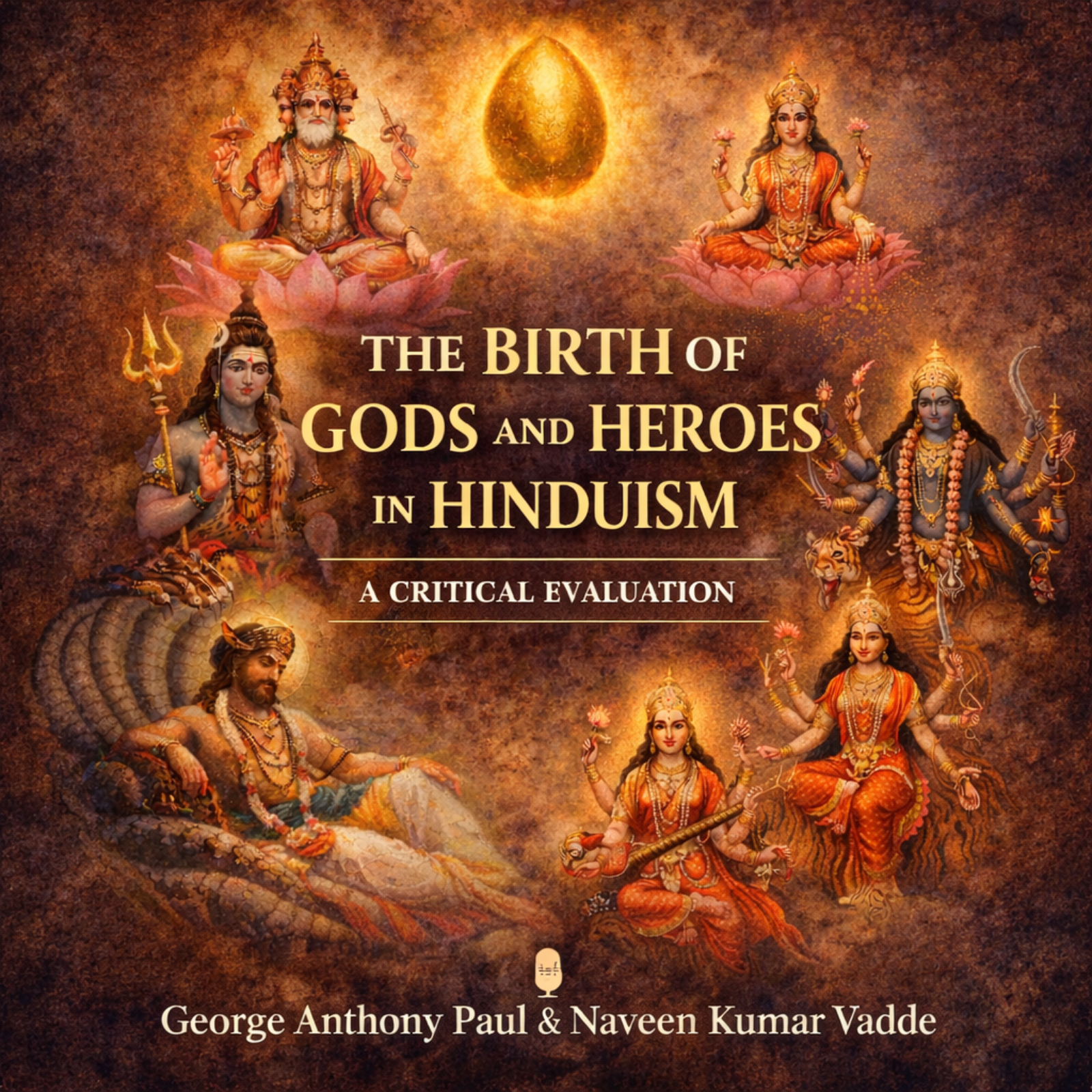
from The Birth of Gods and Heroes in Hinduism: A Critical Evaluation
Birth 9: The Crimson Commodity — Mahālakṣmī from the Rajas Guṇan this episode, we investigate the origins of Mahālakṣmī, often hailed as the goddess of wealth and beauty. According to the Devī‑Māhātmya and Devī‑Bhāgavata Purāṇa, she is not an absolute first cause, but a "rajasic emanation"—a personified slice of the primordial Great Goddess's quality of passion, desire, and activity (rajas-guṇa).We subject this "biological alchemy" to a rigorous scientific and theological prosecution. How can a non-material psychological tendency like "passion" solidify into a carbon-based, four-armed organism? We explore the massive genetic information gap, the "Mitochondrial Dead End," and the profound theological tension of worshiping a deity born from the very quality (rajas) that many Eastern traditions claim keeps the soul trapped in the cycle of suffering and attachment.Key Topics Covered:The Scriptural Basis: Examining the Prādhānika Rahasya and the manifestation of Mahālakṣmī as the "passion-portion" of the Divine Mother.The Information-System Problem: Why a philosophical disposition cannot store or transmit the billions of base pairs of DNA required for a humanoid body.The Mitochondrial Dead End: How a spontaneous manifestation from a guṇa lacks the maternal line required for the mtDNA and ATP production necessary to wield weapons or bestow boons.Anatomy of an Attribute: The skeletal and neurological impossibility of a four-armed vertebrate arising from an abstract temperament without an embryological history.Sanctified Temptation?: A theological critique—if rajas is associated with bondage and restlessness, does Mahālakṣmī function as a savior or as a religiously endorsed distraction from spiritual freedom?The Biblical Contrast: Comparing the fragmented "Goddess of Wealth" with the unified, self-existent God of the Bible. Why Jesus Christ—the King who embraced poverty—offers a more compelling path for those seeking liberation from greed and status.References in this Episode:Hindu Scriptures: Mārkaṇḍeya Purāṇa (Devī‑Māhātmya), Devī‑Bhāgavata Purāṇa (Book 9).Scientific Principles: DNA information systems, Mitochondrial inheritance (mtDNA), Laws of Thermodynamics, Vertebrate anatomy.Biblical Verses: Matthew 6:24 (God and Money), Psalm 24:1 (The Earth is the Lord’s), Philippians 2:5-8 (The Humility of Christ).
Embed this episode
Ready to play
Birth 9: The Crimson Commodity — Mahālakṣmī from the Rajas Guṇa
No transcript for this episode yet
Similar Episodes
No similar episodes found.
Similar Podcasts
No similar podcasts found.