PodParley PodParley

Brain Balls

When neuroscientist Madeline Lancaster was a brand new postdoc, she accidentally used an expired protein gel in a lab experiment and noticed something weird. The stem cells she was trying to grow in a dish were self-assembling. The result? Madeline was the first person ever to grow what she called a “cerebral organoid,” a tiny, 3D version of a human brain the size of a peppercorn. In about a decade, these mini human brain balls were everywhere. They were revealing bombshell secrets about how our brains develop in the womb, helping treat advanced cancer patients, being implanted into animals, even playing the video game Pong. But what are they? Are these brain balls capable of sensing, feeling, learning, being? Are they tiny, trapped humans? And if they were, how would we know? Special thanks to Lynn Levy, Jason Yamada-Hanff, David Fajgenbaum, Andrew Verstein, Anne Hamilton, Christopher Mason, Madeline Mason-Mariarty, the team at the Boston Museum of Science, and Howard Fine, Stefano Cirigliano, and the team at Weill-Cornell. EPISODE CREDITS: Reported by - Latif Nasserwith help from - Mona MadgavkarProduced by - Annie McEwen, Mona Madgavkar, and Pat Walterswith mixing help from - Jeremy BloomFact-checking by - Natalie Middleton and Rebecca Randand Edited by  - Alex Neason and Pat Walters EPISODE CITATIONS: Videos - “Growing Mini Brains to Discover What Makes Us Human,” Madeline Lancaster’s TEDxCERN Talk, Nov 2015 (https://zpr.io/6WP7xfA27auR) Brain cells playing Pong (https://zpr.io/pqgSqguJeAPK) Reuters report on CL1 computer launch in March 2025 (https://zpr.io/cdMf8Yjvayyd) Articles - Madeline Lancaster: The accidental organoid – mini-brains as models for human brain development (https://zpr.io/nnwFwUwnm2p6), MRC Laboratory of Molecular Biology What We Can Learn From Brain Organoids (https://zpr.io/frUfsg4pxKsb), by Carl Zimmer. NYT, November 6, 2025 Ethical Issues Related to Brain Organoid Research (https://zpr.io/qyiATHEhdnSa), by Insoo Hyun et al, Brain Research, 2020 Brain organoids get cancer, too, opening a new frontier in personalized medicine (https://zpr.io/nqMCQ) STAT Profile of Howard Fine and his lab’s glioblastoma research at Weill Cornell Medical Center: By re-creating neural pathway in dish, Stanford Medicine research may speed pain treatment (https://zpr.io/UnegZeQZfqn2) Stanford Medicine profile of Sergiu Pasca’s research on pain in organoids A brief history of organoids (https://zpr.io/waSbUCSrL9va) by Corrò et al, American Journal of Physiology - Cell Physiology, Books - Carl Zimmer Life’s Edge: The Search for What it Means to be Alive (https://carlzimmer.com/books/lifes-edge/) Sign up for our newsletter!! It includes short essays, recommendations, and details about other ways to interact with the show. Signup (https://radiolab.org/newsletter)! Radiolab is supported by listeners like you. Support Radiolab by becoming a member of The Lab (https://members.radiolab.org/) today. Follow our show on Instagram, Twitter and Facebook @radiolab, and share your thoughts with us by emailing [email protected] support for Radiolab’s science programming is provided by the Simons Foundation and the John Templeton Foundation. Foundational support for Radiolab was provided by the Alfred P. Sloan Foundation.

Episode 675 of the Radiolab podcast, hosted by WNYC Studios, titled "Brain Balls" was published on January 9, 2026 and runs 41 minutes.

January 9, 2026 ·41m · Radiolab

0:00 / 0:00

When neuroscientist Madeline Lancaster was a brand new postdoc, she accidentally used an expired protein gel in a lab experiment and noticed something weird. The stem cells she was trying to grow in a dish were self-assembling. The result? Madeline was the first person ever to grow what she called a “cerebral organoid,” a tiny, 3D version of a human brain the size of a peppercorn. In about a decade, these mini human brain balls were everywhere. They were revealing bombshell secrets about how our brains develop in the womb, helping treat advanced cancer patients, being implanted into animals, even playing the video game Pong. But what are they? Are these brain balls capable of sensing, feeling, learning, being? Are they tiny, trapped humans? And if they were, how would we know? Special thanks to Lynn Levy, Jason Yamada-Hanff, David Fajgenbaum, Andrew Verstein, Anne Hamilton, Christopher Mason, Madeline Mason-Mariarty, the team at the Boston Museum of Science, and Howard Fine, Stefano Cirigliano, and the team at Weill-Cornell. EPISODE CREDITS: Reported by - Latif Nasserwith help from - Mona MadgavkarProduced by - Annie McEwen, Mona Madgavkar, and Pat Walterswith mixing help from - Jeremy BloomFact-checking by - Natalie Middleton and Rebecca Randand Edited by  - Alex Neason and Pat Walters EPISODE CITATIONS: Videos - “Growing Mini Brains to Discover What Makes Us Human,” Madeline Lancaster’s TEDxCERN Talk, Nov 2015 (https://zpr.io/6WP7xfA27auR) Brain cells playing Pong (https://zpr.io/pqgSqguJeAPK) Reuters report on CL1 computer launch in March 2025 (https://zpr.io/cdMf8Yjvayyd) Articles - Madeline Lancaster: The accidental organoid – mini-brains as models for human brain development (https://zpr.io/nnwFwUwnm2p6), MRC Laboratory of Molecular Biology What We Can Learn From Brain Organoids (https://zpr.io/frUfsg4pxKsb), by Carl Zimmer. NYT, November 6, 2025 Ethical Issues Related to Brain Organoid Research (https://zpr.io/qyiATHEhdnSa), by Insoo Hyun et al, Brain Research, 2020 Brain organoids get cancer, too, opening a new frontier in personalized medicine (https://zpr.io/nqMCQ) STAT Profile of Howard Fine and his lab’s glioblastoma research at Weill Cornell Medical Center: By re-creating neural pathway in dish, Stanford Medicine research may speed pain treatment (https://zpr.io/UnegZeQZfqn2) Stanford Medicine profile of Sergiu Pasca’s research on pain in organoids A brief history of organoids (https://zpr.io/waSbUCSrL9va) by Corrò et al, American Journal of Physiology - Cell Physiology, Books - Carl Zimmer Life’s Edge: The Search for What it Means to be Alive (https://carlzimmer.com/books/lifes-edge/) Sign up for our newsletter!! It includes short essays, recommendations, and details about other ways to interact with the show. Signup (https://radiolab.org/newsletter)! Radiolab is supported by listeners like you. Support Radiolab by becoming a member of The Lab (https://members.radiolab.org/) today. Follow our show on Instagram, Twitter and Facebook @radiolab, and share your thoughts with us by emailing [email protected] support for Radiolab’s science programming is provided by the Simons Foundation and the John Templeton Foundation. Foundational support for Radiolab was provided by the Alfred P. Sloan Foundation.

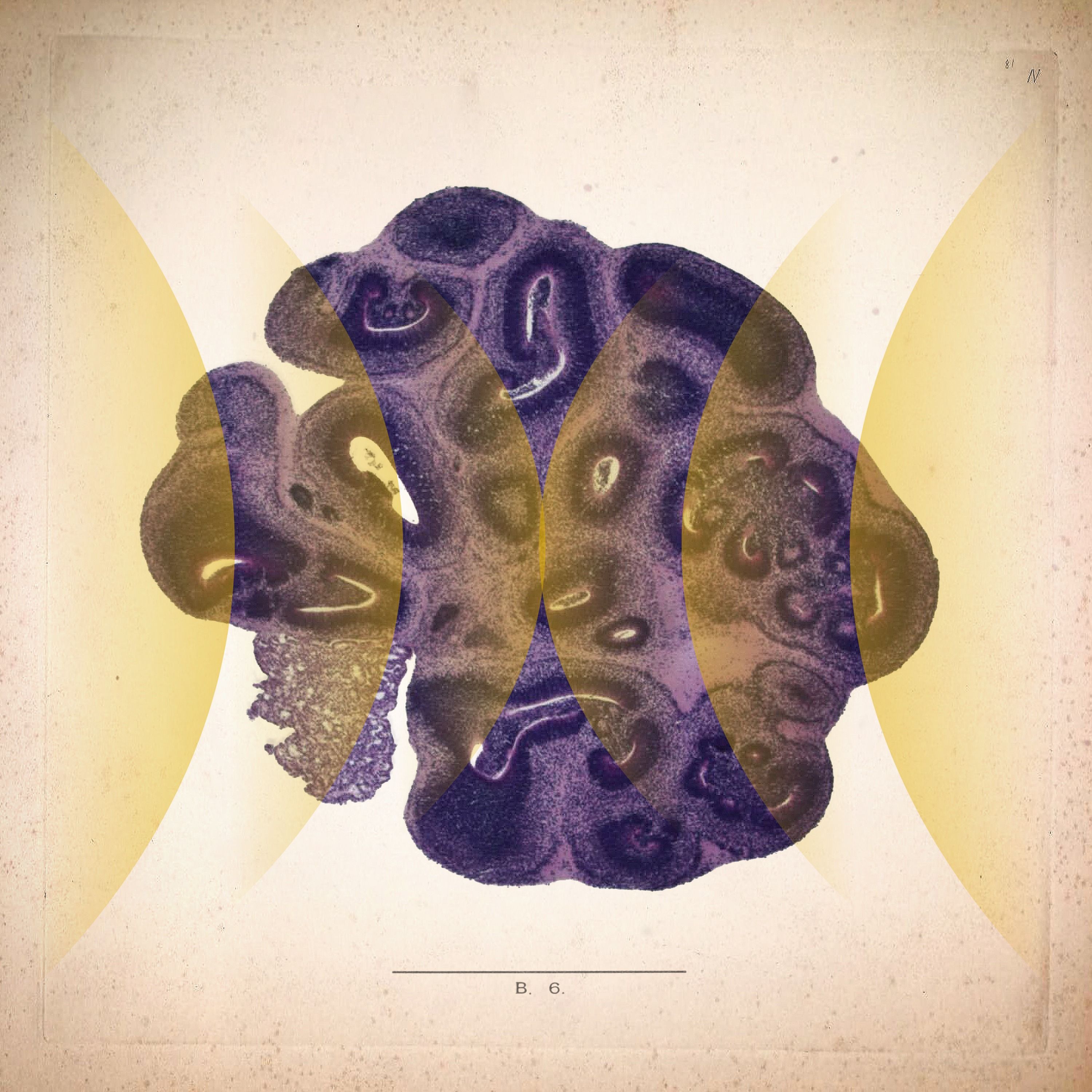
When neuroscientist Madeline Lancaster was a brand new postdoc, she accidentally used an expired protein gel in a lab experiment and noticed something weird. The stem cells she was trying to grow in a dish were self-assembling. The result? Madeline was the first person ever to grow what she called a “cerebral organoid,” a tiny, 3D version of a human brain the size of a peppercorn.

In about a decade, these mini human brain balls were everywhere. They were revealing bombshell secrets about how our brains develop in the womb, helping treat advanced cancer patients, being implanted into animals, even playing the video game Pong. But what are they? Are these brain balls capable of sensing, feeling, learning, being? Are they tiny, trapped humans? And if they were, how would we know?

Special thanks to Lynn Levy, Jason Yamada-Hanff, David Fajgenbaum, Andrew Verstein, Anne Hamilton, Christopher Mason, Madeline Mason-Moriarty, the team at the Boston Museum of Science, and Howard Fine, Stefano Cirigliano, and the team at Weill-Cornell. 

EPISODE CREDITS: 
Reported by - Latif Nasser
with help from - Mona Madgavkar
Produced by - Annie McEwen, Mona Madgavkar, and Pat Walters
with mixing help from - Jeremy Bloom
Fact-checking by - Natalie Middleton and Rebecca Rand
and Edited by  - Alex Neason and Pat Walters

EPISODE CITATIONS:

Videos -

Articles -


Books - 
Carl Zimmer Life’s Edge: The Search for What it Means to be Alive (https://carlzimmer.com/books/lifes-edge/)


Sign up for our newsletter!! It includes short essays, recommendations, and details about other ways to interact with the show. Signup (https://radiolab.org/newsletter)!

Radiolab is supported by listeners like you. Support Radiolab by becoming a member of The Lab (https://members.radiolab.org/) today.

Follow our show on Instagram, Twitter and Facebook @radiolab, and share your thoughts with us by emailing [email protected].

Leadership support for Radiolab’s science programming is provided by the Simons Foundation and the John Templeton Foundation. Foundational support for Radiolab was provided by the Alfred P. Sloan Foundation.

The Vanishing of Harry Pace (Radiolab) WNYC Studios From the creators of Dolly Parton's America, Jad Abumrad and Shima Oliaee, comes a new series produced in collaboration with author Kiese Laymon, scholar Imani Perry, writer Cord Jefferson, WQXR’s Terrance McKnight, and WNYC's Jami Floyd. Based on the book Black Swan Blues: the Hard Rise and Brutal Fall of America’s First Black Owned Record Label by Paul Slade.It was Motown before Motown, FUBU before FUBU: Black Swan Records. The label founded 100 years ago by Harry Pace. Pace launched the career of Ethel Waters, inadvertently invented the term rock n roll, played an important role in W.C. Handy becoming "Father of the Blues," inspired Ebony and Jet magazines, and helped desegregate the South Side of Chicago in an epic Supreme Court battle. Then, he disappeared.  The Vanishing of Harry Pace is a series about the phenomenal but forgotten man who changed America. It's a story about betrayal, family, hidden identities, and a time like no other. RadioLacan.com |Radio Lacan en el VII ENAPOL RadioLacan.com es el sitio de audios y conferencias de la Asociación Mundial de Psicoanálisis. RadioLacan.com |#LacanianosxElMundo: Ginebra. Entrevista a Sofía Guaraguara Comenzamos una serie de entrevistas a los colegas que por distintos motivos han dejado su país de origen y han decidido ejercer el psicoanálisis en otro país, en otra lengua, para que nos cuenten sobre lo que esto implica para cada uno y lo interesante de cómo hacer florecer el psicoanálisis en el mundo. En esta oportunidad Liliana Mauas entrevista a Sofía Guaraguara. RadioLacan.com |Seminario de Eric Laurent en Radio Lacan 2014-2015: Estudios Lacanianos de la ECF: “Hablar lalengua del cuerpo” “Partiremos del hecho que el misterio, el punto de real, es ‘la unión de la palabra y el cuerpo’, mas allá de la pulsión freudiana que reunía carga libidinal y representación en el mito fundador. De este punto, avanzaremos en la exploración del análisis del ser hablante, análisis al que nos invita Jacques-Alain Miller en su conferencia de cierre del último congreso de la AMP. Tendremos presente también, a lo largo de este estudio, hasta qué punto el paradigma cognitivo contemporáneo de la psicología quiere hacer callar el cuerpo, reducirlo a un comportamiento, para así exaltar el proceso cognitivo, incluso si es calificado de emocional. Nos preguntaremos también, a lo largo de este año, cómo esta extensión del síntoma permite mantener el lazo con las disciplinas clínicas que utilizan también la palabra síntoma”.Cada clase estará consagrada a la lectura de un texto de Lacan mencionado en la conferencia de Jacques-Alain Miller o un texto que resuene con ella.Radio Lacan agradece a Éric
URL copied to clipboard!