
EPISODE · Apr 9, 2026 · 25 MIN
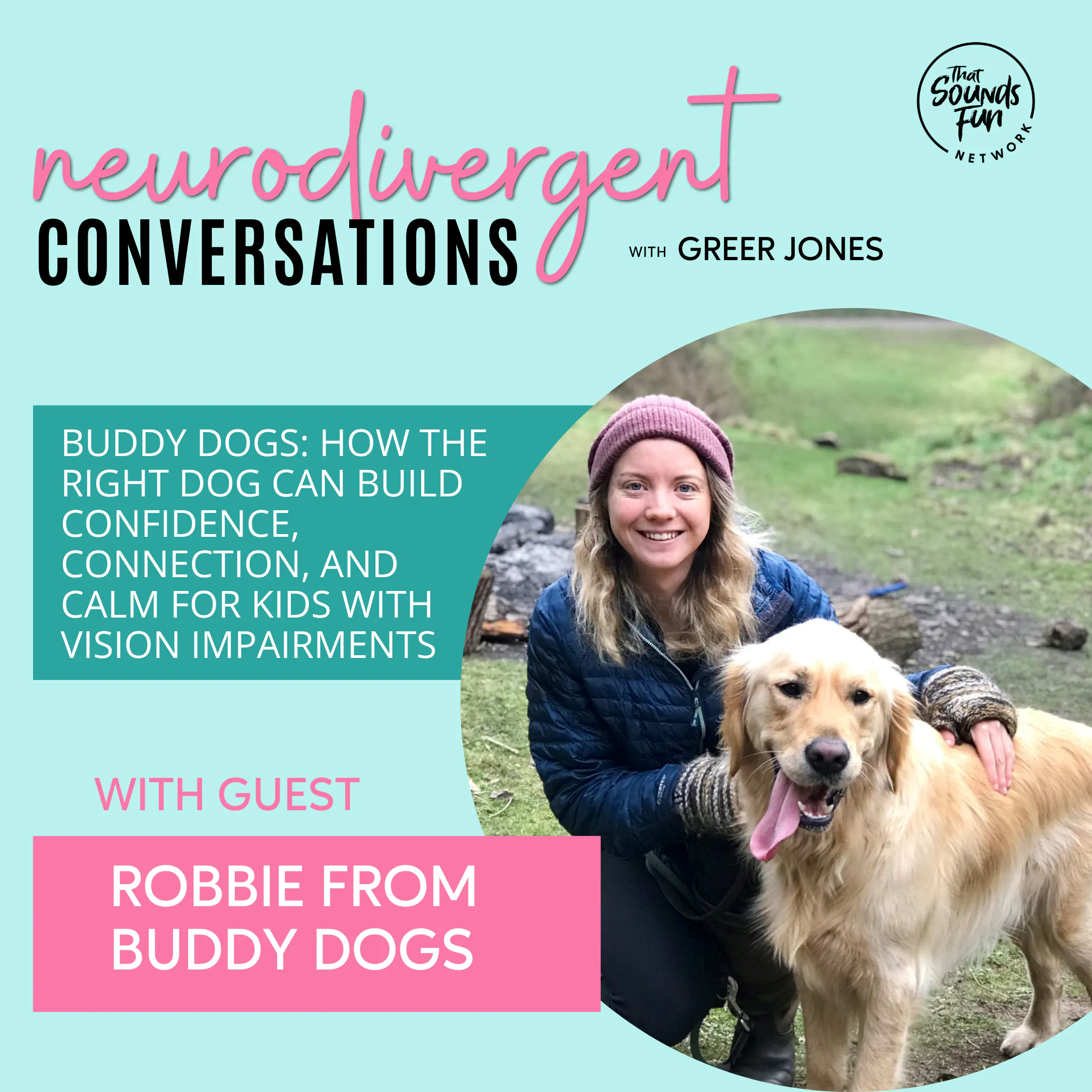
Buddy Dogs: How the Right Dog Can Build Confidence, Connection, and Calm for Kids With Vision Impairments
from Neurodivergent Conversations | Autism Spectrum, ADHD, AuDHD, PDA, Emotional Regulation, Neurodivergent parent · host That Sounds Fun Network
What if the first positive thing connected to your child’s diagnosis was… a dog in a little jacket that makes people smile? In this episode, Greer talks with Robbie Campbell from Buddy Dogs, a service within Guide Dogs UK that places specially matched dogs with children who have vision impairments—often alongside other complex needs. Robbie explains why Buddy Dogs exists: guide dogs are trained for mobility and require a level of independence that simply isn’t realistic for most children. But the companionship, confidence, and connection that dogs bring? That can be life-changing for kids and families. Robbie shares what he sees again and again: dogs becoming an “icebreaker” in public, helping kids feel more confident talking to others, and even opening doors for children to speak about their vision impairment in a new way—sometimes for the very first time. For some families, the Buddy Dog becomes a shift in the emotional story: instead of isolation and heavy equipment drawing stares, there’s a warm, inviting focus that brings people closer. You’ll also hear how Buddy Dogs are different from guide dogs: Buddy Dogs aren’t trained for mobility tasks. They’re placed for companionship and day-to-day confidence-building—and they’re typically dogs who didn’t continue down the guide dog route, but are still beautifully suited for family life. Matching is taken seriously, including what a particular dog needs and what each family’s lifestyle can support, with training and ongoing check-ins to make sure the partnership stays strong. The conversation also touches on neurodivergent families: many kids in the programme are also autistic, ADHD, or otherwise neurodivergent. Robbie describes how dogs often become natural regulators—helping with transitions, reducing anxiety, and bringing grounding presence (without being “task trained” like some assistance dogs). One story stands out: a child who arrived at a session as a whirlwind of anxiety and energy, then settled and connected once the dog entered the room—and after being matched, showed a remarkable shift in focus, communication, and calm. Greer also shares her own experience: how giving her son simple dog-care “jobs” after school (feeding, playing, petting) has helped soften the tricky transition from school to home—because sometimes that repetitive, comforting connection is exactly what a nervous system needs. This episode is a reminder that so much of disability and neurodivergence is invisible—and we never fully know what someone is carrying. Robbie’s takeaway is simple and powerful: be open, be curious, and be willing to support people as they are. GUEST LINKS: GET THE LINKSThe Unfinished Idea WebsiteJoin the Unfinished Community Follow me on socials: INSTAGRAM FACEBOOK Learn more about your ad choices. Visit megaphone.fm/adchoices
What this episode covers
What if the first positive thing connected to your child’s diagnosis was… a dog in a little jacket that makes people smile? In this episode, Greer talks with Robbie Campbell from Buddy Dogs, a service within Guide Dogs UK that places specially matched dogs with children who have vision impairments—often alongside other complex needs. Robbie explains why Buddy Dogs exists: guide dogs are trained for mobility and require a level of independence that simply isn’t realistic for most children. But the companionship, confidence, and connection that dogs bring? That can be life-changing for kids and families. Robbie shares what he sees again and again: dogs becoming an “icebreaker” in public, helping kids feel more confident talking to others, and even opening doors for children to speak about their vision impairment in a new way—sometimes for the very first time. For some families, the Buddy Dog becomes a shift in the emotional story: instead of isolation and heavy equipment drawing stares, there’s a warm, inviting focus that brings people closer. You’ll also hear how Buddy Dogs are different from guide dogs: Buddy Dogs aren’t trained for mobility tasks. They’re placed for companionship and day-to-day confidence-building—and they’re typically dogs who didn’t continue down the guide dog route, but are still beautifully suited for family life. Matching is taken seriously, including what a particular dog needs and what each family’s lifestyle can support, with training and ongoing check-ins to make sure the partnership stays strong. The conversation also touches on neurodivergent families: many kids in the programme are also autistic, ADHD, or otherwise neurodivergent. Robbie describes how dogs often become natural regulators—helping with transitions, reducing anxiety, and bringing grounding presence (without being “task trained” like some assistance dogs). One story stands out: a child who arrived at a session as a whirlwind of anxiety and energy, then settled and connected once the dog entered the room—and after being matched, showed a remarkable shift in focus, communication, and calm. Greer also shares her own experience: how giving her son simple dog-care “jobs” after school (feeding, playing, petting) has helped soften the tricky transition from school to home—because sometimes that repetitive, comforting connection is exactly what a nervous system needs. This episode is a reminder that so much of disability and neurodivergence is invisible—and we never fully know what someone is carrying. Robbie’s takeaway is simple and powerful: be open, be curious, and be willing to support people as they are. GUEST LINKS: GET THE LINKSThe Unfinished Idea WebsiteJoin the Unfinished Community Follow me on socials: INSTAGRAM FACEBOOK Learn more about your ad choices. Visit megaphone.fm/adchoices
NOW PLAYING
Buddy Dogs: How the Right Dog Can Build Confidence, Connection, and Calm for Kids With Vision Impairments
No transcript for this episode yet
Similar Episodes
No similar episodes found.
Similar Podcasts
No similar podcasts found.