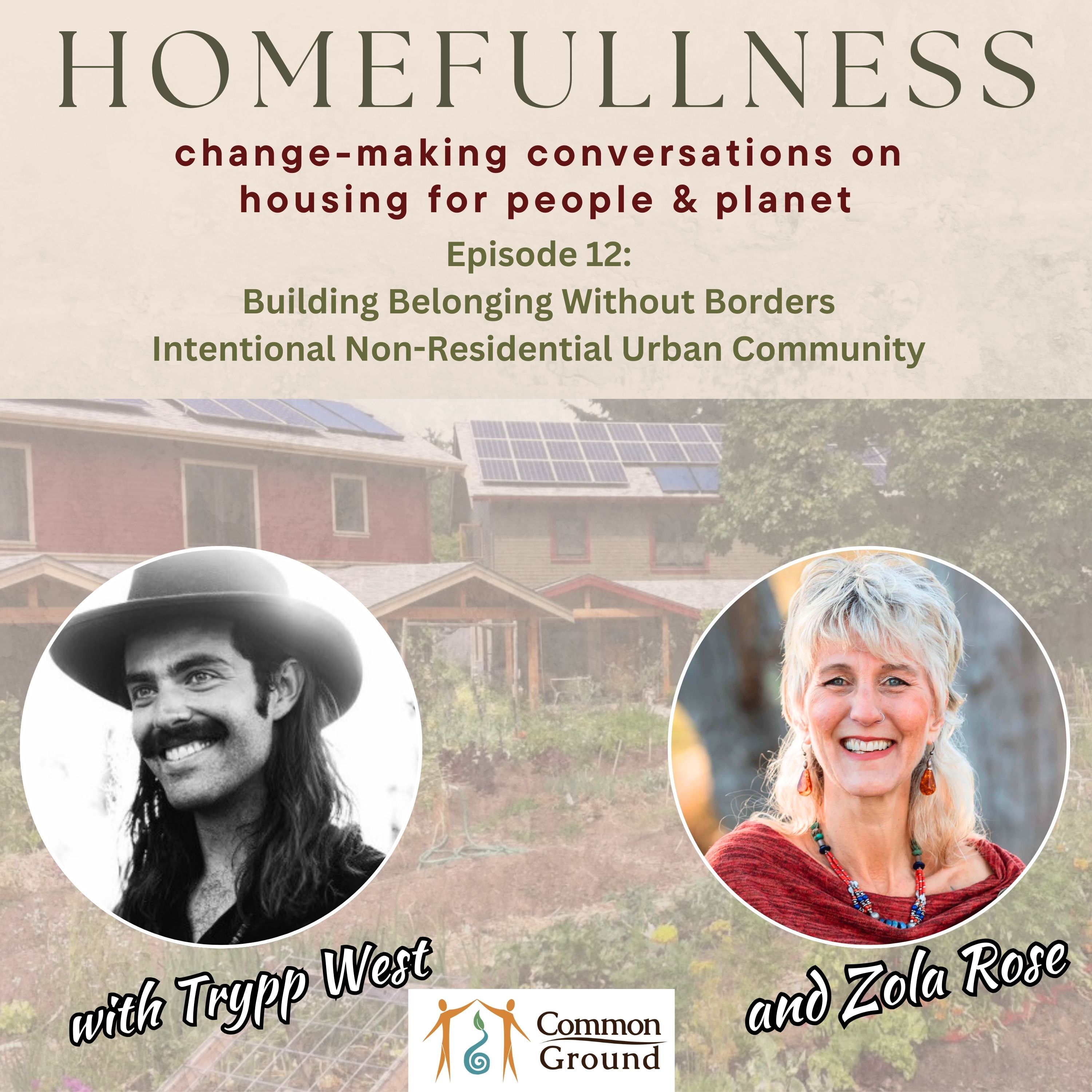
Building a non-residential community of purpose and belonging episode artwork

EPISODE · Feb 24, 2025 · 48 MIN

Building a non-residential community of purpose and belonging

from Homefullness · host Zola Rose

In the latest episode of the Homefullness Show, I interview Trypp West, the founder of an urban community called Springfed in Boulder, Colorado (USA).  He describes the founding of Springfed, a community that started as his thesis project and has continued for the past three years. The community operates on a non-residential model with the meeting place being his rented farmhouse where they hold fortnightly potlucks and Sunday gardening days to foster social bonds and teach self-sufficiency. The five take-aways from this interview are: Community Impact: The intentional community has profoundly impacted individuals, helping those suffering from depression and disconnection. Members express deeply personal benefits and emotional support from the community, which enhances their sense of belonging and life purpose. Concept of Homefullness: "Homefullness" is described as the feeling of being able to rely on and connect with people around you. It emphasizes the importance of interrelatedness and creating a supportive environment that fosters a sense of home. Development and Leadership: The community, initiated as a thesis project, has continued to thrive for years. The leadership promotes shared roles and responsibilities, empowering members to take on leadership roles and contributing to the evolution of the community. Leadership includes facilitating conflict resolution and ensuring equitable participation. Ecological and Social Activities: Key activities include bi-weekly potlucks that strengthen social bonds, garden days that teach and involve members in sustainable practices, and various thematic events that encourage community engagement and personal growth. Measuring Success and Future Vision: Success is measured qualitatively through heartfelt feedback from members rather than formal metrics. The community prioritizes emotional and social well-being through personal testimonies and shared experiences. Future visions include potentially expanding to a more residential model while continuing to foster inclusive and cooperative community practices.   Resources mentioned in episode: Common Ground: https://commonground.net.nz CrowsFlyInPairs.com (poetry book) Upstream, podcast on socialist economics Iron John, book by Robert Bly on masculinity Returning to the Teachings by Rupert Ross Less is More by Jason Hickel Trypp's email: [email protected] Zola's: [email protected]

In the latest episode of the Homefullness Show, I interview Trypp West, the founder of an urban community called Springfed in Boulder, Colorado (USA).  He describes the founding of Springfed, a community that started as his thesis project and has continued for the past three years. The community operates on a non-residential model with the meeting place being his rented farmhouse where they hold fortnightly potlucks and Sunday gardening days to foster social bonds and teach self-sufficiency. The five take-aways from this interview are: Community Impact: The intentional community has profoundly impacted individuals, helping those suffering from depression and disconnection. Members express deeply personal benefits and emotional support from the community, which enhances their sense of belonging and life purpose. Concept of Homefullness: "Homefullness" is described as the feeling of being able to rely on and connect with people around you. It emphasizes the importance of interrelatedness and creating a supportive environment that fosters a sense of home. Development and Leadership: The community, initiated as a thesis project, has continued to thrive for years. The leadership promotes shared roles and responsibilities, empowering members to take on leadership roles and contributing to the evolution of the community. Leadership includes facilitating conflict resolution and ensuring equitable participation. Ecological and Social Activities: Key activities include bi-weekly potlucks that strengthen social bonds, garden days that teach and involve members in sustainable practices, and various thematic events that encourage community engagement and personal growth. Measuring Success and Future Vision: Success is measured qualitatively through heartfelt feedback from members rather than formal metrics. The community prioritizes emotional and social well-being through personal testimonies and shared experiences. Future visions include potentially expanding to a more residential model while continuing to foster inclusive and cooperative community practices.   Resources mentioned in episode: Common Ground: https://commonground.net.nz CrowsFlyInPairs.com (poetry book) Upstream, podcast on socialist economics Iron John, book by Robert Bly on masculinity Returning to the Teachings by Rupert Ross Less is More by Jason Hickel Trypp's email: [email protected] Zola's: [email protected]

NOW PLAYING

Building a non-residential community of purpose and belonging

0:00 48:29

No transcript for this episode yet

We transcribe on demand. Request one and we'll notify you when it's ready — usually under 10 minutes.

No similar episodes found.

No similar podcasts found.

Frequently Asked Questions

How long is this episode of Homefullness?

This episode is 48 minutes long.

When was this Homefullness episode published?

This episode was published on February 24, 2025.

What is this episode about?

In the latest episode of the Homefullness Show, I interview Trypp West, the founder of an urban community called Springfed in Boulder, Colorado (USA).  He describes the founding of Springfed, a community that started as his thesis project and has...

Can I download this Homefullness episode?

Yes, you can download this episode by clicking the download button on the episode player, or subscribe to the podcast in your preferred podcast app for automatic downloads.
URL copied to clipboard!