
EPISODE · Apr 28, 2026 · 20 MIN
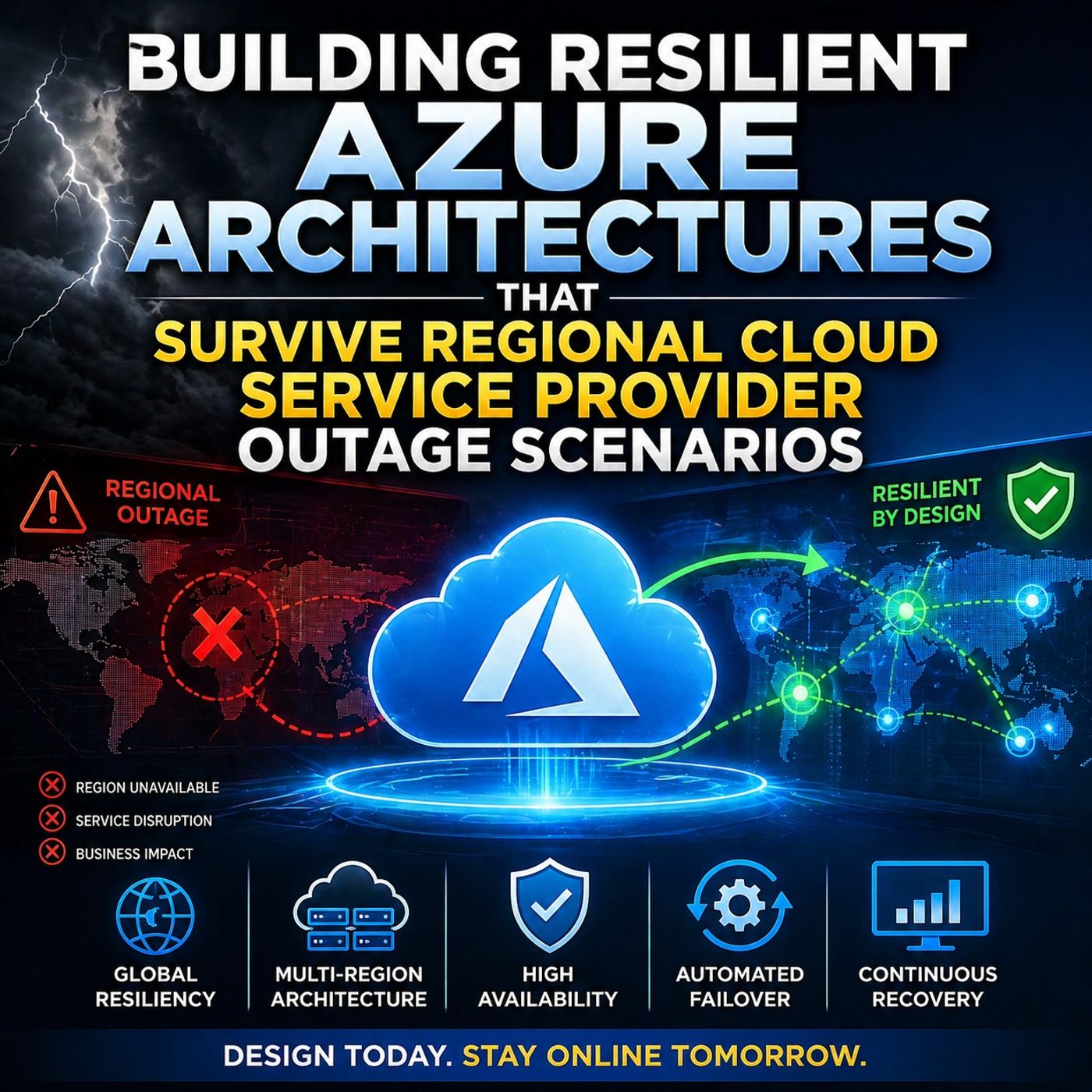
Building Resilient Azure Architectures: That Survive Regional Cloud Service Provider Outage Scenarios
from M365.FM - Modern work, security, and productivity with Microsoft 365 · host Mirko Peters - Founder of m365.fm, m365.show and m365con.net
Most architects believe that deploying across multiple regions guarantees resilience. It doesn’t. In reality, many organizations are simply paying double for what is effectively a distributed single point of failure. When failover depends on meetings, manual intervention, or a functioning control plane during a blackout—you don’t have resilience. You have hope. This episode breaks that illusion. We simulate a real regional outage and expose how modern cloud architectures fail under pressure. The shift is clear: from passive redundancy to state-synchronized resilience—where systems are designed to behave, not just exist, during failure.WHEN THE FRONT DOOR FAILS: EDGE DEPENDENCY RISK Global entry points like Azure Front Door feel invisible—until they fail. When they do, perfectly healthy backends become unreachable. The October outage proved this: a single configuration issue disrupted global routing, taking down services worldwide. This is the Anycast trap. Traffic doesn’t fail cleanly—it fragments. Some users connect, others time out, and your monitoring becomes misleading. The fix isn’t more edge—it’s multi-path ingress. Resilient systems allow traffic to bypass global layers and route directly to regional endpoints, trading performance for survival. DNS FAILURE: THE HIDDEN SYSTEM KILLER Everything in the cloud depends on name resolution. When DNS breaks, your architecture doesn’t degrade—it disappears. A single race condition can wipe routing records and trigger a retry storm, where systems overload themselves trying to recover. True resilience requires decoupling internal communication from global DNS. Regional resolution, conservative TTL strategies, and break-glass routing paths ensure your system can still function—even when the internet can’t tell it where to go. THE CONTROL PLANE FALLACY Most disaster recovery plans assume you can redeploy during a crisis. But when outages hit, management APIs like Azure Resource Manager are often overwhelmed. Thousands of organizations try to recover at once, creating a bottleneck that makes redeployment impossible. The reality: the cloud is finite under stress. Resilient architectures don’t rebuild—they pre-provision. Warm standby environments, reserved capacity, and data-plane failover remove dependency on a failing control plane. If your recovery requires the portal, you’re already too late. STATE STRATEGY: THE REAL BATTLEFIELD Stateless services are easy to move. Data is not. It anchors your system to failure. Most architectures rely on asynchronous replication, accepting small delays that turn into permanent data loss during outages. The solution is consistency-aware design. Not all data is equal. Critical transactions demand tighter guarantees, while less critical data can lag. True resilience means active global state, not passive backups—so when a region fails, the system continues without interruption. GOVERNANCE: WHY MEETINGS KILL UPTIME The longest outages aren’t caused by technology—they’re caused by indecision. War rooms delay action while systems degrade. If failover requires approval, your architecture is already broken. Modern resilience relies on automated decision-making. Telemetry-driven triggers, circuit breakers, and federated ownership ensure that failover happens instantly—without debate. The system reacts before humans can hesitate. TESTING FOR FAILURE, NOT SUCCESS Architectures don’t fail on whiteboards—they fail in production. Hidden bugs only appear under stress. That’s why resilience requires chaos engineering and Game Days. By simulating outages under real conditions, teams uncover bottlenecks, retry storms, and capacity gaps before they matter. If you’re not testing regularly, your architecture is silently degrading. THE SHIFT: FROM REDUNDANCY TO TRUE RESILIENCE Resilience isn’t about where you deploy—it’s about how your system behaves under pressure. It requires intentional design across ingress, DNS, control planes, data, and governance. Key takeaways:Multi-region alone does not eliminate single points of failureAutomated failover beats manual decision-making every timeState strategy—not infrastructure—is the foundation of resilienceFINAL THOUGHT You don’t rise to the level of your architecture during a crisis—you fall to the level of your preparation. The difference between an outage and a disaster is how your system behaves when everything goes wrong. Follow for more deep dives into cloud resilience, and rethink how your architecture survives—not just scales.Become a supporter of this podcast: https://www.spreaker.com/podcast/m365-fm-modern-work-security-and-productivity-with-microsoft-365--6704921/support.
Embed this episode
NOW PLAYING
Building Resilient Azure Architectures: That Survive Regional Cloud Service Provider Outage Scenarios
No transcript for this episode yet
Similar Episodes
No similar episodes found.
Similar Podcasts
No similar podcasts found.