
EPISODE · Nov 21, 2024 · 1H 27M
Can I Respond To That Please? (episode 3)
from Science From the Fringe · host Science From The Fringe, Jay Bhattacharya, and Bryce Nickels
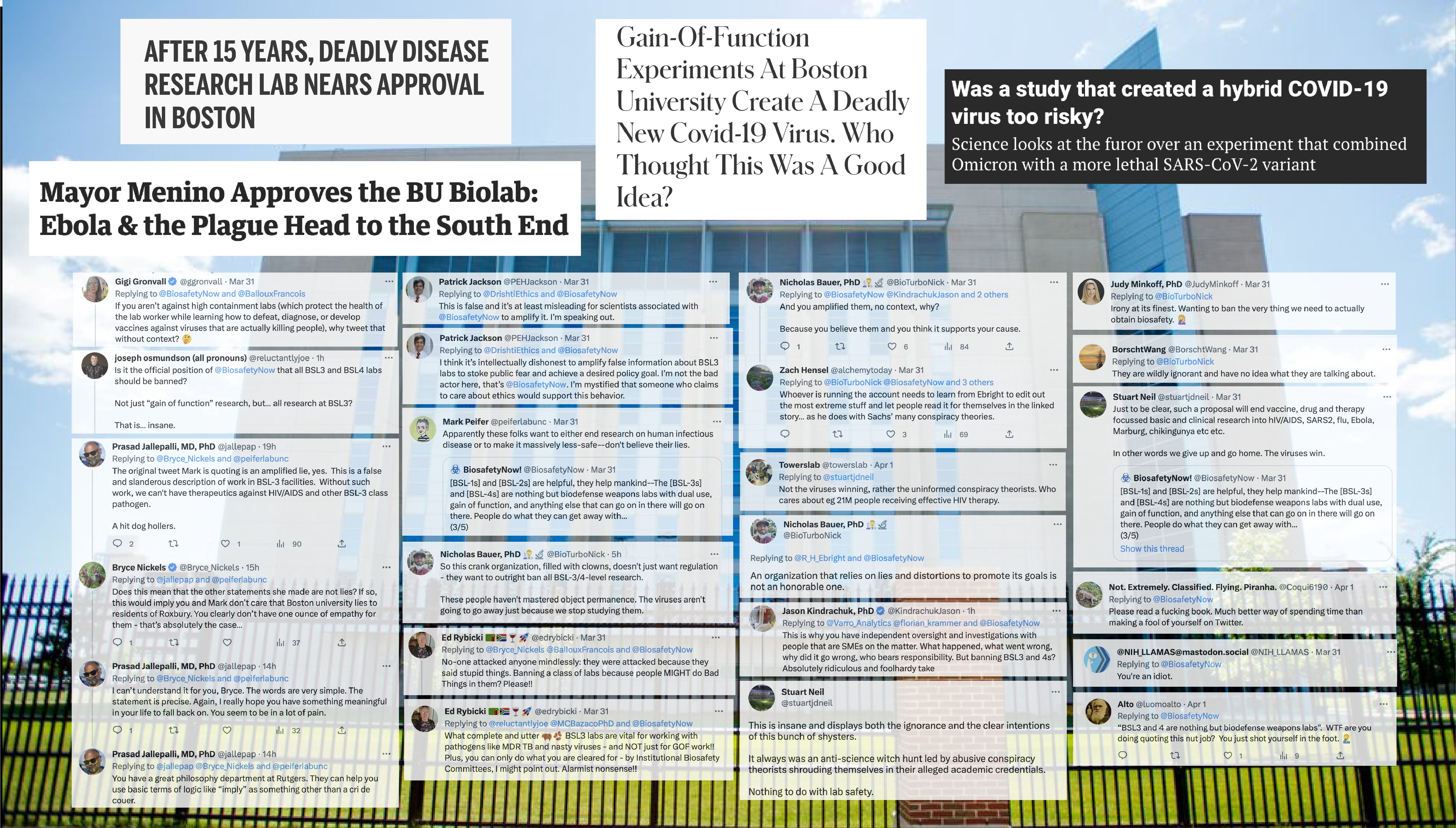
Stanford Professor Jay Bhattacharya and Rutgers Professor Bryce Nickels respond to scientists that attack members of the public who voice concerns about research conducted in high-containment biolabs in their communities. They highlight this issue through the responses of scientists to community organizers Klare X. Allen and Lorraine Fowlkes from the Roxbury Safety Net.In 2000, Klare founded the Roxbury Safety Net as a movement of people of color who have been excluded from decision-making processes that impact their safety, quality of life, and environment. For over 20 years, the Roxbury Safety Net has promoted environmental justice and community control over development of the Roxbury neighborhood in Boston, MA. In 2002, the Roxbury Safety Net discovered Boston University’s plans to build a BSL-4 lab (later named the National Emerging Infectious Diseases Laboratories, NEIDL) in the Roxbury/South End neighborhood. Alarmed by the threat posed to the community, the Safety Net immediately began a campaign to Stop the BU Bio Terror Lab. Since then, Stop the BU Bio Terror Lab has operated as a coalition of community residents, scientists, lawyers, students, members of peace and justice groups, and members of the faith community united in opposition to dangerous research being performed at the NEIDL. Members have made numerous visits to City Councilors, hosted countless meetings, organized dozens of protests, spoken at city, state and federal hearings, submitted public comment, and initiated both state and federal lawsuits. These efforts persuaded the city of Boston to implement the strictest local regulations on biosafety, biosecurity, and biorisk management in any city in the United States.recorded October 28, 20240:00 - 0:30: Intro Tess Parks0:30 - 2:25: Welcome and introduction2:25 - 4:00: Jay discusses the lack of public consent for high-risk research and the public's right to have a say in the research conducted in their communities.4:00 - 15:30: Jay and Bryce discuss why high-containment biolabs are often located in large cities. Bryce introduces Klare X. Allen and the Roxbury Safety Net.15:30 - 19:40: Klare X. Allen recounts how she first learned about Boston University's plan to build the NEIDL in 2002 and describes the disrespectful treatment of Roxbury community members.19:40 - 25:35: Jay and Bryce reflect on Klare's comments.25:35 - 26:25: Lorraine Fowlkes of the Roxbury Safety Net speaks at a City Council meeting in San Carlos, CA (March 2023).26:25 - 1:10:20: Bryce and Jay discuss reactions from scientists to Lorraine’s comments after they were posted on X.1:10:20 - 1:24:40: Bryce and Jay explore the need for reforms in science to change the culture that perceives the public as adversaries.1:24:40 - 1:26:40: Sign-off1:26:40 - 1:27:26: Outro Tess ParksClick here to learn more about Klare X. Allen and the Roxbury Safety NetClick here to view the post on X with Lorraine Fowlkes comments that prompted attacks from scientists. Timeline: National Emerging Infectious Diseases Laboratories (NEIDL)* September 2003: The National Institute of Allergy and Infectious Diseases awarded Boston University $128 million to construct one of two National Biocontainment Laboratories.* February 2006: The federal government announced its decision to fund the laboratory’s construction, which began in March of that same year.* Fall 2008: Construction of the NEIDL is completed.* December 2011: The BU laboratory was granted preliminary approval by The State Executive Office of Energy and Environmental Affairs grants approval for BSL-2 research at the NIEDL.* April 2012: BSL-2 work begins at the NIEDL.* January 2013: The National Institutes of Health concludes that Boston University’s high-containment laboratory “poses minimal risk to the community surrounding the facility,” clearing the way for a final state environmental review.* March 2013: The state secretary of environmental affairs approves Boston University's environmental impact report.* January 2014: BSL-3 work begins at the NIEDL.* May 2014: Boston City Council The Boston City Council voted 8-5 to reject a proposed ordinance banning BSL-4 labs.* December 2016: The Centers for Disease Control and Prevention approved Boston University to operate a BSL-4 laboratory.* August 2018: The NEIDL begins work with its first Level-4 pathogens, the Ebola and Marburg viruses.* October 2022: Researchers at the NEIDL ignite controversy by announcing they have performed SARS-CoV-2 gain of function experiments.Articles about biolabs in San Carlos, CA:* San Carlos moves to regulate biohazards (March 8, 2023)* San Carlos Bans High-Risk Bio Labs in the City – A Win for the Safety of the Residents (June 6, 2023) Get full access to Science From the Fringe at sciencefromthefringe.substack.com/subscribe
Embed this episode
NOW PLAYING
Can I Respond To That Please? (episode 3)
No transcript for this episode yet
Similar Episodes
No similar episodes found.
Similar Podcasts
No similar podcasts found.