
EPISODE · Apr 3, 2026 · 47 MIN
Can Robots Be Fair? Dr. Tom Williams on Social Justice
from Business Talk · host Business Talk
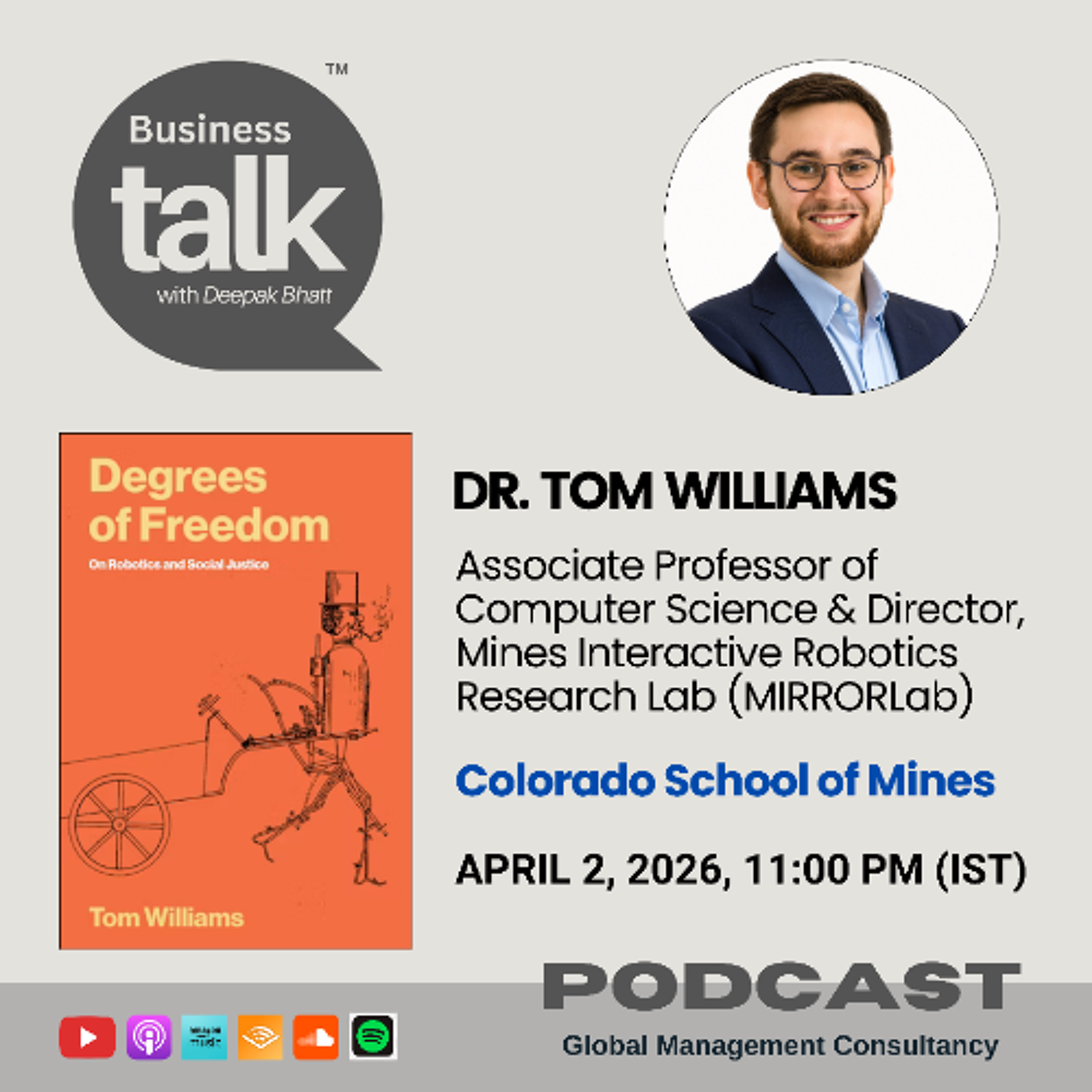
Dr. Tom Williams, Associate Professor of Computer Science at Colorado School of Mines and Director of the Mines Interactive Robotics Research Lab, explores how robots can either reinforce or resist existing power structures in his book ‘Degrees of Freedom: On Robotics and Social Justice’. Drawing on history, he shows how mainstream “white patriarchal” robot imaginaries, rooted in post-Civil War U.S. narratives and science fiction, have shaped robot appearance, deployment, and decision-making in ways that primarily serve white, Western male interests. Through concepts such as “New Jim Cobots,” the “whites-only water fountain” problem in biased computer vision, and the school-to-prison pipeline, he illustrates how uncritical robot design can deepen systemic inequality. At the same time, he offers pathways forward, designer awareness, participatory design with marginalized communities, and design justice approaches that shift power over technology to those most affected, alongside alternative ethical frameworks like Confucian role ethics and abolitionist robotics that reimagine both robots and the institutions they serve. This podcast is brought to you by Global Management Consultancy. For more information, please visit www.globalmanagementconsultancy.com. Disclaimer: A. The background music used in this video is the property of its respective developer and is protected by Copyright. Although it is a free version, Business Talk, Global Management Consultancy and Deepak Bhatt do not hold the rights to this music. B. Dr. Tom Williams offered thoughtful perspectives from his acclaimed book, “Degrees of Freedom: On Robotics and Social Justice”, in his conversation on the Business Talk podcast channel. The uploaded video contains copyrighted material; therefore, any modifications to graphics, music, or the presence of the author or host are strictly prohibited.
Embed this episode
NOW PLAYING
Can Robots Be Fair? Dr. Tom Williams on Social Justice
No transcript for this episode yet
Similar Episodes
No similar episodes found.
Similar Podcasts
No similar podcasts found.