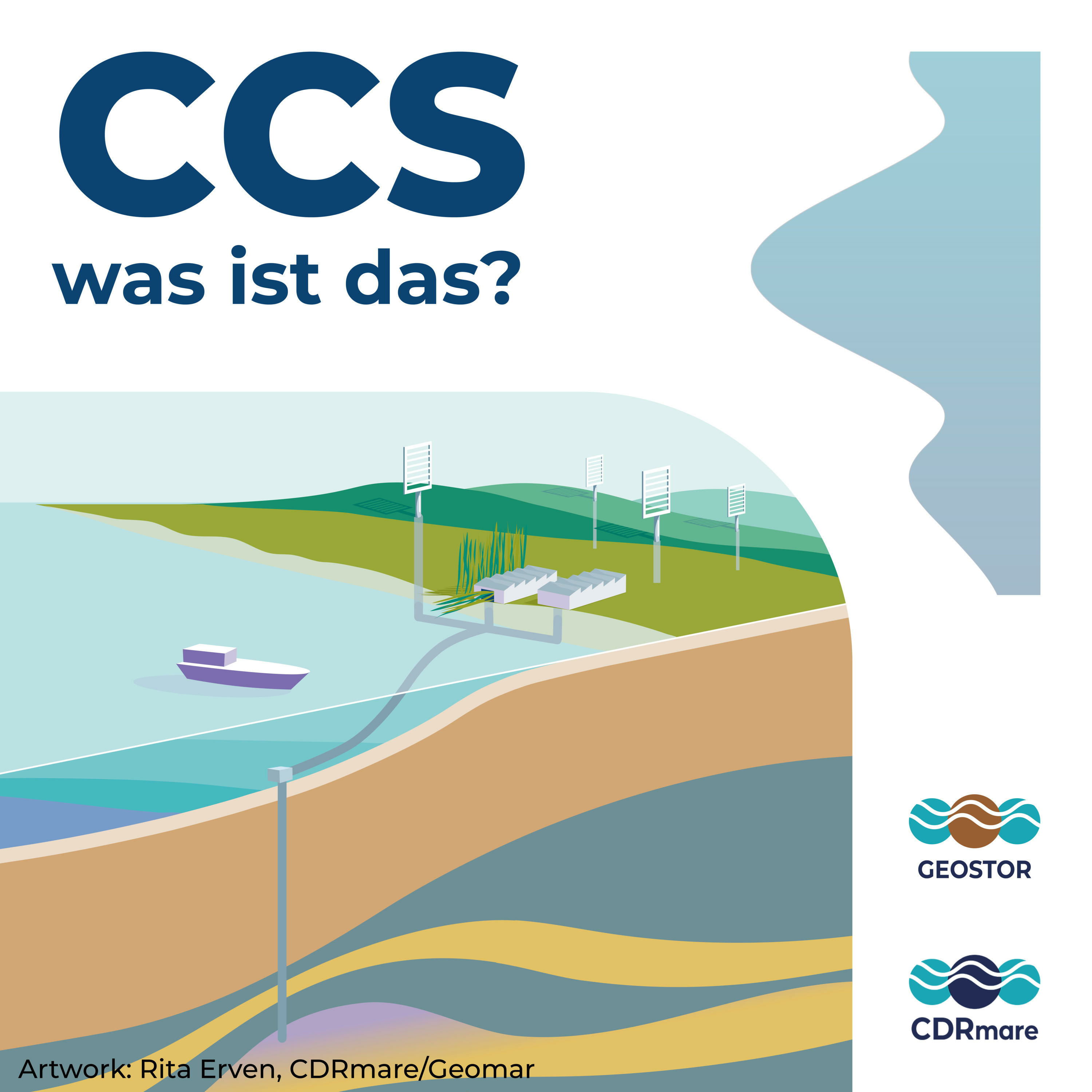
CCS – was ist das? // Folge 9 – Technik & Kosten

EPISODE · Aug 29, 2024 · 40 MIN

CCS – was ist das? // Folge 9 – Technik & Kosten

from CCS – was ist das? · host CCS – was ist das?

In dieser Episode unterhalten wir uns mit Dr. Sven Hoog vom Unternehmen Fichtner, das im Rahmen des Forschungsverbundes GEOSTOR eine erste Konzept- und Machbarkeitsstudie zur CO2-Verpressung unter der deutschen Nordsee erstellt hat. Es geht demzufolge um die Frage, welche Anlagen und Technologien benötigt werden, wenn abgeschiedenes CO2 auf das Meer hinaustransportiert und dort tief unter dem Meeresboden verpresst werden soll. Außerdem besprechen wir, was eine solche geologische CO2-Speicherung unter dem Meer kosten würde. #CCS, #podcast , #klimaschutz Moderation: Kristin Hamann Gesprächspartner: Dr. Sven Hoog Produktion: Ole Duggen Timestamps: 01:17 - Was ist das Geschäftsfeld der Firma Fichtner und welche Dienstleistungen bieten sie an? 03:36 - Was war die Aufgabe von Fichtner im Forschungsprojekt des Verbunds GEOSTOR? 05:39 - Wie sieht der Ablauf des CO2-Transports vom Umschlagplatz bis zum Speicherort in der Nordsee aus? 07:04 - Warum wurde der CO2-Transport in zwei Phasen aufgeteilt, und welche Technologien kommen in den verschiedenen Phasen zum Einsatz? 10:14 - Welche Vorteile bietet die Verflüssigung von CO2 für den Transport? 11:56 - Welche Technologien werden für den CO2-Transport und die Speicherung verwendet, und wie sehen die entsprechenden Anlagen aus? 13:45 - Wie sieht der Transport von flüssigem CO2 auf dem Meer aus und welche Kapazitäten haben die Schiffe, die dafür genutzt werden? 15:15 - Gibt es bereits bestehende Plattformen in der Nähe der untersuchten Speicherorte, die für CO2 genutzt werden könnten, oder müsste man längere Pipelines verlegen? 15:53 - Muss die Plattform für die CO2-Speicherung direkt über dem Speicherort positioniert sein? 17:00 - Gibt es Alternativen zu den herkömmlichen Oberflächenplattformen, wie zum Beispiel Unterwasserinstallationen? 32:56 - Gibt es bereits Schätzungen der Kosten für die CO2-Abscheidung und den Transport, basierend auf anderen Studien? 33:46 - Wie kommen die großen Unterschiede bei den Kosten für den CO2-Transport zustande, abhängig von Speicherorten und Transportmethoden? 34:37 - Lohnt sich der Bau einer Pipeline langfristig gesehen, im Vergleich zu anderen Transportmöglichkeiten wie dem Export nach Norwegen? 36:12 - Könnte man ein Lifecycle Assessment für die CO2-Speicherung und den Transport erstellen, um den Energiebedarf und die Kosten abzuschätzen? 36:51 - Wie sieht die Zukunft von Fichtner im Projekt aus, nachdem die erste Phase abgeschlossen ist, und wie ist der aktuelle Marktstand? Weitere Informationen unter folgendem Link: https://cdrmare.de/infomaterialien/ Kontakt-Mailadresse: [email protected] Musik: Songtitel & Künstler: “Astrisx”, von Blue Dot Sessions Quelle: Free Music Archive https://creativecommons.org/licenses/by-nc/4.0/

NOW PLAYING

CCS – was ist das? // Folge 9 – Technik & Kosten

0:00 40:55

No transcript for this episode yet

We transcribe on demand. Request one and we'll notify you when it's ready — usually under 10 minutes.

Managing Next Generation Energy Systems Cambridge University Background Stakeholders working with energy systems have to make complex decisions formulated from risk-based assessments about the future. The move towards more renewables in our energy systems complicates matters even further, requiring the development of an integrated power grid and continuous and steady transformation of the UK power system. Network flows must be managed reliably under uncertain demands, uncertain supply, emerging network technologies and possible failures and, further, prices in related markets can be highly volatile. Mathematicians working with engineers and economists, can make significant contributions to address such issues, by helping to develop fit-for-purpose models for next generation energy systems. These interdisciplinary approaches are looking to address a range of associated problems, including modelling, prediction, simulation, control, market and mechanism design and optimisation. This knowledge exchange workshop was part of the four months Res The Data Engineering Show The Firebolt Data Bros The Data Engineering Show is a podcast for data engineering and BI practitioners to go beyond theory. Learn from the biggest influencers in tech about their practical day-to-day data challenges and solutions in a casual and fun setting.SEASON 1 DATA BROSEldad and Boaz Farkash shared the same stuffed toys growing up as well as a big passion for data. After founding Sisense and building it to become a high-growth analytics unicorn, they moved on to their next venture, Firebolt, a leading high-performance cloud data warehouse.SEASON 2 DATA BROSIn season 2 Eldad adopted a brilliant new little brother, and with their shared love for query processing, the connection was immediate. After excelling in his MS, Computer Science degree, Benjamin Wagner joined Firebolt to lead its query processing team and is a rising star in the data space. For inquiries contact [email protected]: https://www.firebolt.io GSMC Classics: Soldiers of the Press GSMC Podcast Network Soldiers of the Press, was a war drama series, that ran from 1942 to 1945. The program, narrated by correspondents from the United Press, Walter Cronkike and Harrison Salisbury, told recent news from action during World War II. GSMC Classics presents some of the greatest classic radio broadcasts, classic novels, dramas, comedies, mysteries, and theatrical presentations from a bygone era. The GSMC Classics collection is the embodiment of the best of the golden age of radio. Let Golden State Media Concepts take you on a ride through the classic age of radio, with this compiled collection of episodes from a wide variety of old programs. ***PLEASE NOTE*** GSMC Podcast Network presents these shows as historical content and have brought them to you unedited. Remember that times have changed and some shows might not reflect the standards of today’s politically correct society. The shows do not necessarily reflect the views, standards, or beliefs of Golden State Media Concepts or the GSMC Classics: Stars over Hollywood GSMC Podcast Network Stars over Hollywood was a variety radio show that ran from 1941 to 1954, on CBS. The show featured stories of drama and romance with some comedy in them and starred big stars such as Alan Ladd, Joan Crawford, Mary Astor, Phil Harris, and Basil Rathbone. GSMC Classics presents some of the greatest classic radio broadcasts, classic novels, dramas, comedies, mysteries, and theatrical presentations from a bygone era. The GSMC Classics collection is the embodiment of the best of the golden age of radio. Let Golden State Media Concepts take you on a ride through the classic age of radio, with this compiled collection of episodes from a wide variety of old programs. ***PLEASE NOTE*** GSMC Podcast Network presents these shows as historical content and have brought them to you unedited. Remember that times have changed and some shows might not reflect the standards of today’s politically correct society. The shows do not necessarily reflect the views, standards, or beliefs of Golden State
URL copied to clipboard!