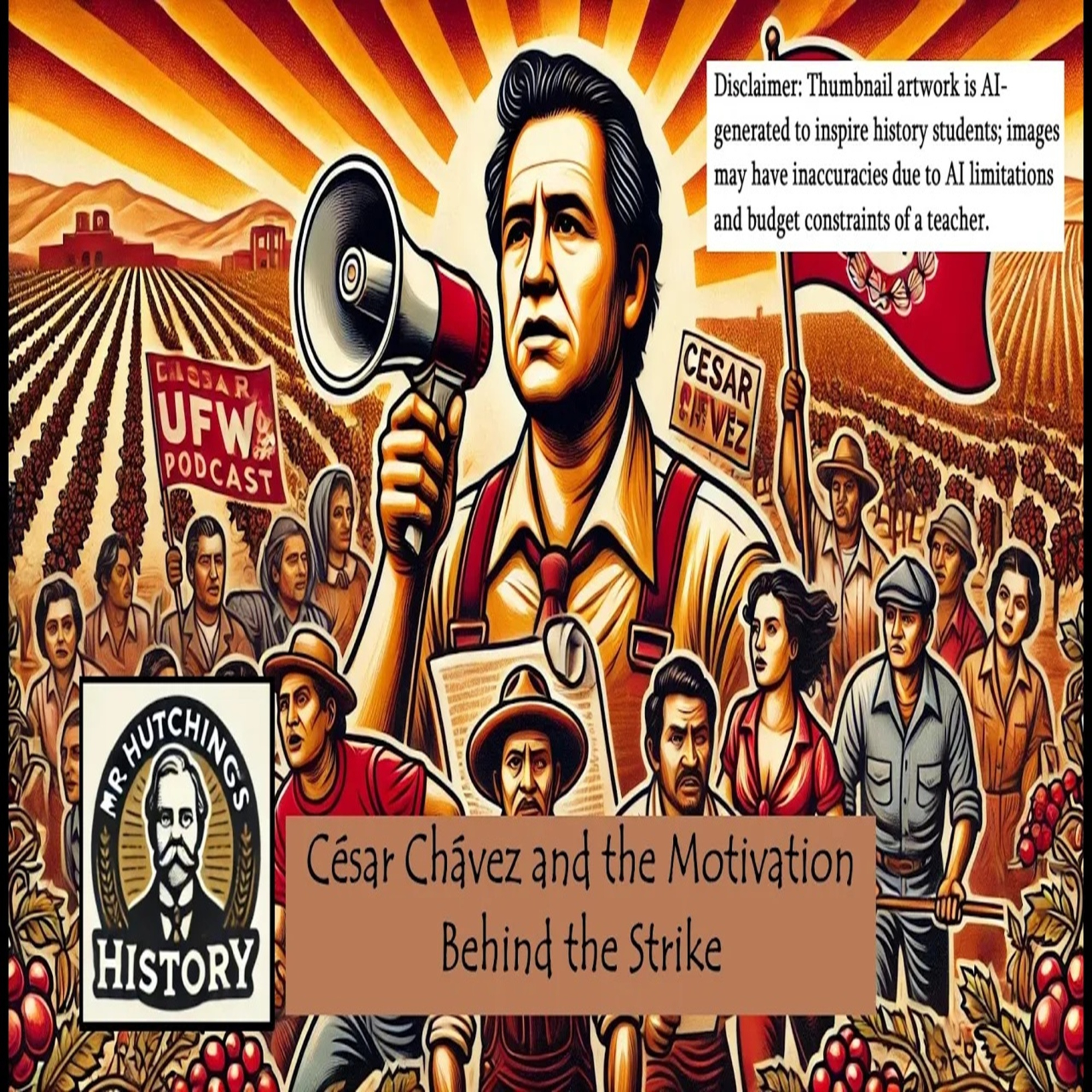
César Chávez and the Motivation Behind the Strike episode artwork

EPISODE · Dec 9, 2024 · 10 MIN

César Chávez and the Motivation Behind the Strike

from Mr. Hutchings History · host Produced, created, and written by Harold M. Hutchings

In this episode of Mr. Hutchings History, we explore the motivations that drove the farmworker strikes led by César Chávez in the 1960s, focusing on his insights shared in his 1966 article The Organizer’s Tale. Chávez’s words reveal the deeper values that fueled the movement for farmworker rights, including a desire for dignity, justice, and cultural pride. Through nonviolent resistance, Chávez and the United Farm Workers (UFW) brought national attention to the plight of agricultural laborers. The Delano Grape Strike (1965–1970), a pivotal moment in the movement, was more than just a fight for better wages; it was a struggle for respect, collective empowerment, and the acknowledgment of farmworkers’ humanity. Chávez’s use of symbolism, including Aztec and Catholic imagery, connected the strike to a larger narrative of cultural resilience. His integration of nonviolence, inspired by figures like Gandhi and Martin Luther King Jr., further emphasized the moral high ground of the movement. This episode highlights the lasting legacy of the UFW’s efforts and the broader impact on Mexican-American activism. #Paper3HLoption2 #HispanicAmericanMovement #CesarChavez #ImmigrationReform #FarmworkersRights #UFW #CivilRights #NonviolentResistance #CulturalPride #SocialJustice #DelanoGrapeStrike #MexicanAmericanActivism #GrassrootsMovement Works Cited Chávez, César. The Organizer’s Tale, Ramparts, July 1966. García, Matt. From the Jaws of Victory: The Triumph and Tragedy of Cesar Chavez and the Farm Worker Movement. University of California Press, 2012. González, Juan. Harvest of Empire: A History of Latinos in America. Penguin, 2011. McWilliams, Carey. Factories in the Field: The Story of Migratory Farm Labor in California. Little, Brown and Co., 1939. Ruiz, Vicki L. From Out of the Shadows: Mexican Women in Twentieth-Century America. Oxford UP, 1998.

In this episode of Mr. Hutchings History, we explore the motivations that drove the farmworker strikes led by César Chávez in the 1960s, focusing on his insights shared in his 1966 article The Organizer’s Tale. Chávez’s words reveal the deeper values that fueled the movement for farmworker rights, including a desire for dignity, justice, and cultural pride. Through nonviolent resistance, Chávez and the United Farm Workers (UFW) brought national attention to the plight of agricultural laborers. The Delano Grape Strike (1965–1970), a pivotal moment in the movement, was more than just a fight for better wages; it was a struggle for respect, collective empowerment, and the acknowledgment of farmworkers’ humanity. Chávez’s use of symbolism, including Aztec and Catholic imagery, connected the strike to a larger narrative of cultural resilience. His integration of nonviolence, inspired by figures like Gandhi and Martin Luther King Jr., further emphasized the moral high ground of the movement. This episode highlights the lasting legacy of the UFW’s efforts and the broader impact on Mexican-American activism. #Paper3HLoption2 #HispanicAmericanMovement #CesarChavez #ImmigrationReform #FarmworkersRights #UFW #CivilRights #NonviolentResistance #CulturalPride #SocialJustice #DelanoGrapeStrike #MexicanAmericanActivism #GrassrootsMovement Works Cited Chávez, César. The Organizer’s Tale, Ramparts, July 1966. García, Matt. From the Jaws of Victory: The Triumph and Tragedy of Cesar Chavez and the Farm Worker Movement. University of California Press, 2012. González, Juan. Harvest of Empire: A History of Latinos in America. Penguin, 2011. McWilliams, Carey. Factories in the Field: The Story of Migratory Farm Labor in California. Little, Brown and Co., 1939. Ruiz, Vicki L. From Out of the Shadows: Mexican Women in Twentieth-Century America. Oxford UP, 1998.

NOW PLAYING

César Chávez and the Motivation Behind the Strike

0:00 10:29

No transcript for this episode yet

We transcribe on demand. Request one and we'll notify you when it's ready — usually under 10 minutes.

No similar episodes found.

No similar podcasts found.

Frequently Asked Questions

How long is this episode of Mr. Hutchings History?

This episode is 10 minutes long.

When was this Mr. Hutchings History episode published?

This episode was published on December 9, 2024.

What is this episode about?

In this episode of Mr. Hutchings History, we explore the motivations that drove the farmworker strikes led by César Chávez in the 1960s, focusing on his insights shared in his 1966 article The Organizer’s Tale. Chávez’s words reveal the deeper...

Can I download this Mr. Hutchings History episode?

Yes, you can download this episode by clicking the download button on the episode player, or subscribe to the podcast in your preferred podcast app for automatic downloads.
URL copied to clipboard!