
EPISODE · Jan 24, 2026 · 4 MIN
Chapter 2 — What a Framework Is (and Isn’t)
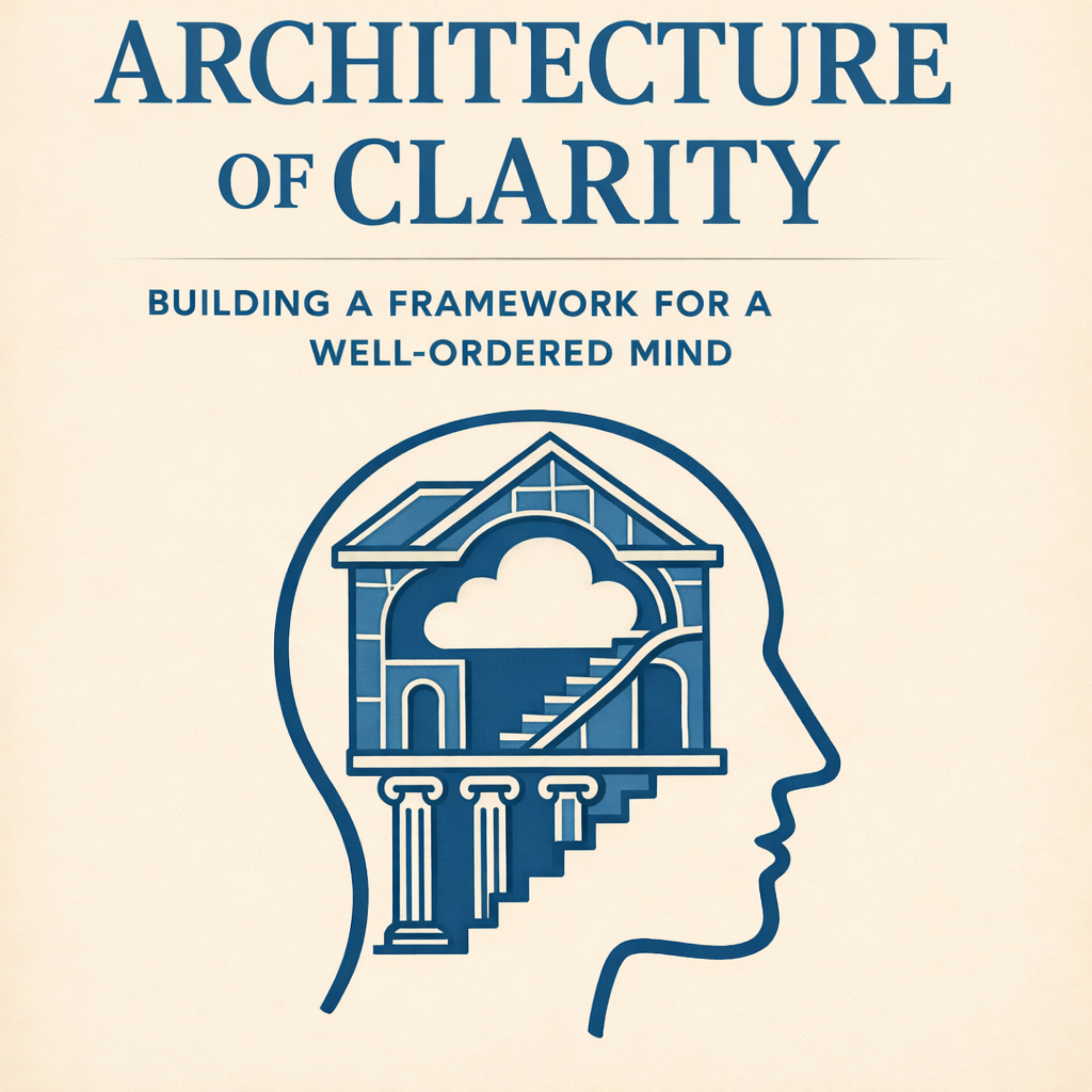
from The Architecture of Clarity: Building a Framework for a Well-Ordered Mind · host Only Life After All
The Blueprint in Your HeadEvery builder begins with a blueprint.It doesn’t tell them where every nail goes, but it provides the structure that determines where walls, doors, and windows belong. Without it, construction becomes guesswork—walls end up crooked, rooms misplaced, and the whole building unstable.Your mind also builds. Every belief you hold, every decision you make, every judgment you pass is like laying another brick in the structure of your understanding. But without a framework—a mental blueprint—the bricks pile up without form. The result can be impressive in size yet weak in stability.A coherent mental framework is not a list of facts. It’s the relationship between those facts, the underlying principles that connect them, and the methods you use to test, adjust, and apply them.It is:A System of PrinciplesYour non-negotiables—the truths, values, and commitments that remain steady even when the details shift.Example: From CloudMind’s Guideposts for Living Wisely, “Live as You Will Have Wished to Have Lived When You Are Dying” is more than a poetic thought. It’s a navigational principle—something you can return to when weighing two conflicting paths.A Way of Organizing KnowledgeFacts are stored in categories that link to each other—history connects to psychology, personal experience to philosophy. This allows you to see patterns and implications instead of isolated details.A Method for IntegrationNew information is not simply accepted or rejected; it is weighed, tested, and either incorporated into the structure or set aside. This keeps your thinking adaptable without becoming chaotic.A Decision FilterA framework allows you to assess choices against your principles quickly, without reinventing your criteria each time. This reduces decision fatigue and helps you act consistently.A Rigid IdeologyIdeologies resist contradiction at all costs, often bending reality to fit their pre-set conclusions. A healthy framework flexes—absorbing new truths even when they require rearranging old ones.CloudMind principle: “Avoid Extremely Intense Ideology” — strength comes from clarity, not from refusing to adapt.A Collection of SlogansMotivational phrases without deep integration fade quickly under pressure. “Stay curious” means little unless you’ve built a system where curiosity is rewarded and acted upon.A Map Someone Else Drew for YouBorrowed frameworks can be a starting point, but until you’ve tested them against your own experiences and values, they’re someone else’s scaffolding—not yours.Without this clarity, it’s easy to mistake consistency for coherence. You can be completely consistent in following a rigid, faulty ideology—but that’s not coherence. True coherence comes from the harmony between your principles, your knowledge, and your lived reality.A coherent framework lets you:Change your mind without losing your identity.Absorb challenges without collapsing.Integrate wisdom from multiple sources without contradiction.We’ll soon begin mapping your own framework using a blend of:Anchor Points from the Guideposts for Living Wisely (your core principles).Mechanics of Mind from CloudMind’s psychological insights (how beliefs form, how identity shapes choices, how mis-cognition works).Thinking Tools drawn from philosophy, history, and systems thinking.By the end, you’ll have not just a list of ideas, but a living structure—one that grows stronger each time you engage with it.Key Takeaway: A coherent mental framework is a living system, not a fixed creed. It is built on principles you trust, organized knowledge, and the capacity to integrate and adapt without losing your center.A Framework Is…A Framework Isn’t…Why This Distinction MattersThe Beginning of Your Framework
NOW PLAYING
Chapter 2 — What a Framework Is (and Isn’t)
No transcript for this episode yet
Similar Episodes
Mar 26, 2026 ·1m
Mar 19, 2026 ·34m
Feb 18, 2026 ·11m
Feb 11, 2026 ·45m