PodParley PodParley

China's Strategic Assault on Dollar Hegemony Through Banking Infrastructure, Critical Mineral Dominance, and the Architecture of De-Dollarization - Part 3

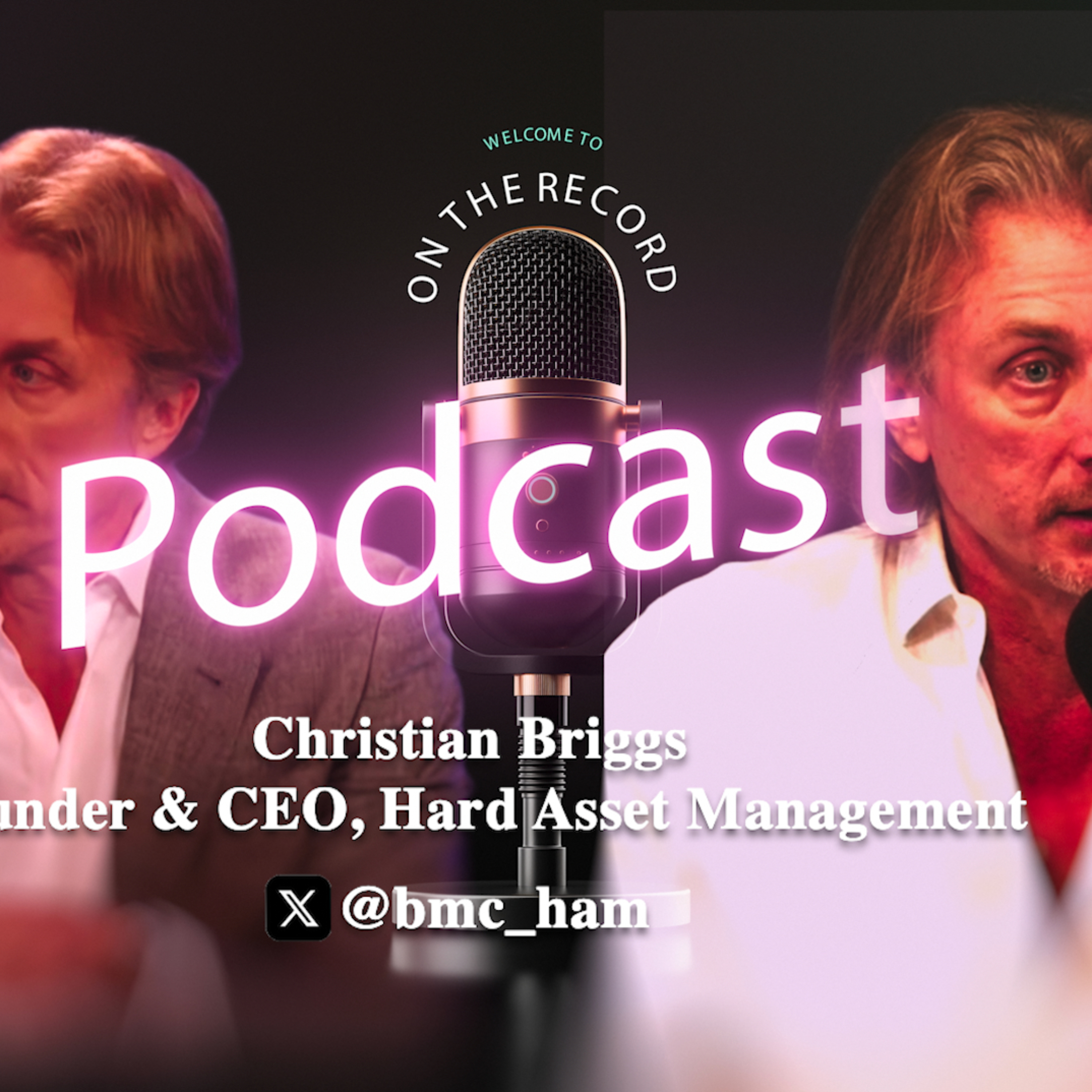
An episode of the Hard Asset Money Show podcast, hosted by Christian Briggs, titled "China's Strategic Assault on Dollar Hegemony Through Banking Infrastructure, Critical Mineral Dominance, and the Architecture of De-Dollarization - Part 3" was published on February 20, 2026 and runs 52 minutes.

February 20, 2026 ·52m · Hard Asset Money Show

0:00 / 0:00

Today’s episode breaks down Christian Briggs' Part One of his policy paper, "China's Strategic Assault on Dollar Hegemony Through Banking Infrastructure, Critical Mineral Dominance, and the Architecture of De-Dollarization - Part 3". We turn the volume up to maximum—and it’s not just about de-dollarization anymore. This episode argues the next global order won’t be decided by speeches or sanctions, but by minerals, supply chains, and quantum supremacy. Whoever controls the metals that power AI, weapons systems, and next-generation computing will control the future—economically, militarily, and technologically.The episode opens with Venezuela—the “quiet” intervention that instantly rewired the chessboard. China poured $60B+ into Venezuela for gold, resources, and leverage in the Western Hemisphere… but the core lesson is brutal: money doesn’t buy security. A U.S. military operation executed in hours erased two decades of Chinese positioning overnight. That shockwave, the host argues, changes every Latin American calculation going forward: partnering with Beijing doesn’t protect you when U.S. core interests are engaged.From there, the focus shifts to the true war: strategic commodity control. Coltan and tantalum—used in capacitors that sit inside everything from smartphones to fighter jets—are framed as the hidden backbone of modern defense. If the U.S. controls key coltan flows and builds domestic processing, dependency on Chinese bottlenecks can be reduced over a 5–10 year horizon. But time is the enemy.The episode then widens the lens: China’s commodity strategy isn’t only minerals—it’s food. With acquisitions like Syngenta and Smithfield, plus global trading expansion through COFCO, China is building leverage across seeds, pork, soybeans, palm oil, sugar, shipping lanes, and ports. The warning is clear: food leverage can be as decisive as energy or rare earths.Then comes the terrifying scenario planning: if China triggers a full rare-earth cutoff, the episode claims U.S. defense production faces a countdown—six to eighteen months depending on the system. F-35 production, precision munitions, shipbuilding, electronics, clean energy manufacturing—everything cascades. The same applies to industrial production: one cutoff ripples through every sector because supply chains are interconnected and brittle.The episode also highlights China’s explosive rise in autos—surpassing Japan as the world’s largest vehicle seller—built on EV dominance and vertically integrated battery supply chains. Tariffs may slow the invasion, but they don’t close the competitiveness gap.Finally, the podcast unveils “legal warfare”: WTO pressure campaigns, anti-suit injunctions, arbitration traps, retaliation lists, and compliance choke points designed to box America in while China stays free. And it ends with the biggest twist of all: Washington may be rebuilding dollar dominance not through oil—but through a new Mineral-Dollar system—Project Vault, mineral price floors, trade blocks, and an NSC-level command structure treating supply chains like a theater of war.

Today’s episode breaks down Christian Briggs' Part One of his policy paper, "China's Strategic Assault on Dollar Hegemony Through Banking Infrastructure, Critical Mineral Dominance, and the Architecture of De-Dollarization - Part 3". We turn the volume up to maximum—and it’s not just about de-dollarization anymore. This episode argues the next global order won’t be decided by speeches or sanctions, but by minerals, supply chains, and quantum supremacy. Whoever controls the metals that power AI, weapons systems, and next-generation computing will control the future—economically, militarily, and technologically.

The episode opens with Venezuela—the “quiet” intervention that instantly rewired the chessboard. China poured $60B+ into Venezuela for gold, resources, and leverage in the Western Hemisphere… but the core lesson is brutal: money doesn’t buy security. A U.S. military operation executed in hours erased two decades of Chinese positioning overnight. That shockwave, the host argues, changes every Latin American calculation going forward: partnering with Beijing doesn’t protect you when U.S. core interests are engaged.

From there, the focus shifts to the true war: strategic commodity control. Coltan and tantalum—used in capacitors that sit inside everything from smartphones to fighter jets—are framed as the hidden backbone of modern defense. If the U.S. controls key coltan flows and builds domestic processing, dependency on Chinese bottlenecks can be reduced over a 5–10 year horizon. But time is the enemy.

The episode then widens the lens: China’s commodity strategy isn’t only minerals—it’s food. With acquisitions like Syngenta and Smithfield, plus global trading expansion through COFCO, China is building leverage across seeds, pork, soybeans, palm oil, sugar, shipping lanes, and ports. The warning is clear: food leverage can be as decisive as energy or rare earths.

Then comes the terrifying scenario planning: if China triggers a full rare-earth cutoff, the episode claims U.S. defense production faces a countdown—six to eighteen months depending on the system. F-35 production, precision munitions, shipbuilding, electronics, clean energy manufacturing—everything cascades. The same applies to industrial production: one cutoff ripples through every sector because supply chains are interconnected and brittle.

The episode also highlights China’s explosive rise in autos—surpassing Japan as the world’s largest vehicle seller—built on EV dominance and vertically integrated battery supply chains. Tariffs may slow the invasion, but they don’t close the competitiveness gap.

Finally, the podcast unveils “legal warfare”: WTO pressure campaigns, anti-suit injunctions, arbitration traps, retaliation lists, and compliance choke points designed to box America in while China stays free. And it ends with the biggest twist of all: Washington may be rebuilding dollar dominance not through oil—but through a new Mineral-Dollar system—Project Vault, mineral price floors, trade blocks, and an NSC-level command structure treating supply chains like a theater of war.

The Atlas Investor Tiho Brkan The Atlas Investor with Tiho Brkan covers and analyzes global capital markets and investment risks and opportunities across a wide array of asset classes including stocks, bonds, real estate and alternatives such as Gold and hard assets. The podcast also focuses on global business and citizenship opportunities as discovered through Tiho's extensive travels and on the ground due diligence. Tiho Brkan is a portfolio wealth manager, international real estate investor and global citizen who has achieved considerable acclaim as a trader and investor. The goal of the podcast is not only to inform and educate but also help you make money. People Focus Podcast Talk Staff Join us as we celebrate the most important asset that we all have – our people – the people that help keep our businesses running each and every day, the people that motivate us when times are hard, help us make decisions that don’t always feel like they’re the right ones and challenge us when we need to stay on track to achieve the overall company mission – the purpose behind why we do what we do. Jake & Gino: Real Estate Investing & Multifamily Jake & Gino Real estate investing, multifamily, and apartment investing—where real estate meets real business ownership. Hosted by investor-entrepreneurs Jake Stenziano and Gino Barbaro, the show goes beyond buying apartments to teach you how to build a durable, well-run real estate business. Each episode blends deal analysis, market insights, leadership lessons, and hard-earned operating experience from owning and managing thousands of units. Whether you’re just starting out or scaling a portfolio, Jake & Gino deliver practical education, honest conversations, and proven frameworks to help you grow cash flow, build systems, and create long-term wealth—without losing sight of family, values, and purpose.Also included under The Jake & Gino umbrella:How To: From real estate underwriting and asset management to organizational structure and owner mindset, How To delivers clear frameworks and actionable guidance for investors who want to build and operate a real estate business with clarity, discipli The Frontier CapIntel The Frontier is an original podcast series by CapIntel, featuring the latest ideas, innovations, products and philosophies of investment professionals. Today, investors have no access to the actual financial professionals who make investment decisions for them, and have a hard time learning their philosophies, and viewpoints on the markets they cover. The goal of The Frontier is to bridge this gap. Hosts James Rockwood and Taku Murahwi sit down for 20-30 minute discussions with Portfolio Managers and Chief Investment Officers of Big Banks and top Asset Management firms. We give you an exclusive look on the funds they manage, their views on the markets, and their investment philosophies. Subscribe now.
URL copied to clipboard!