
EPISODE · Apr 3, 2025 · 21 MIN
Climate Change and Prehistoric Populations: Insights from Europe's Final Paleolithic
from Evolutionary Insights by Anthropology.net · host Anthropology.net
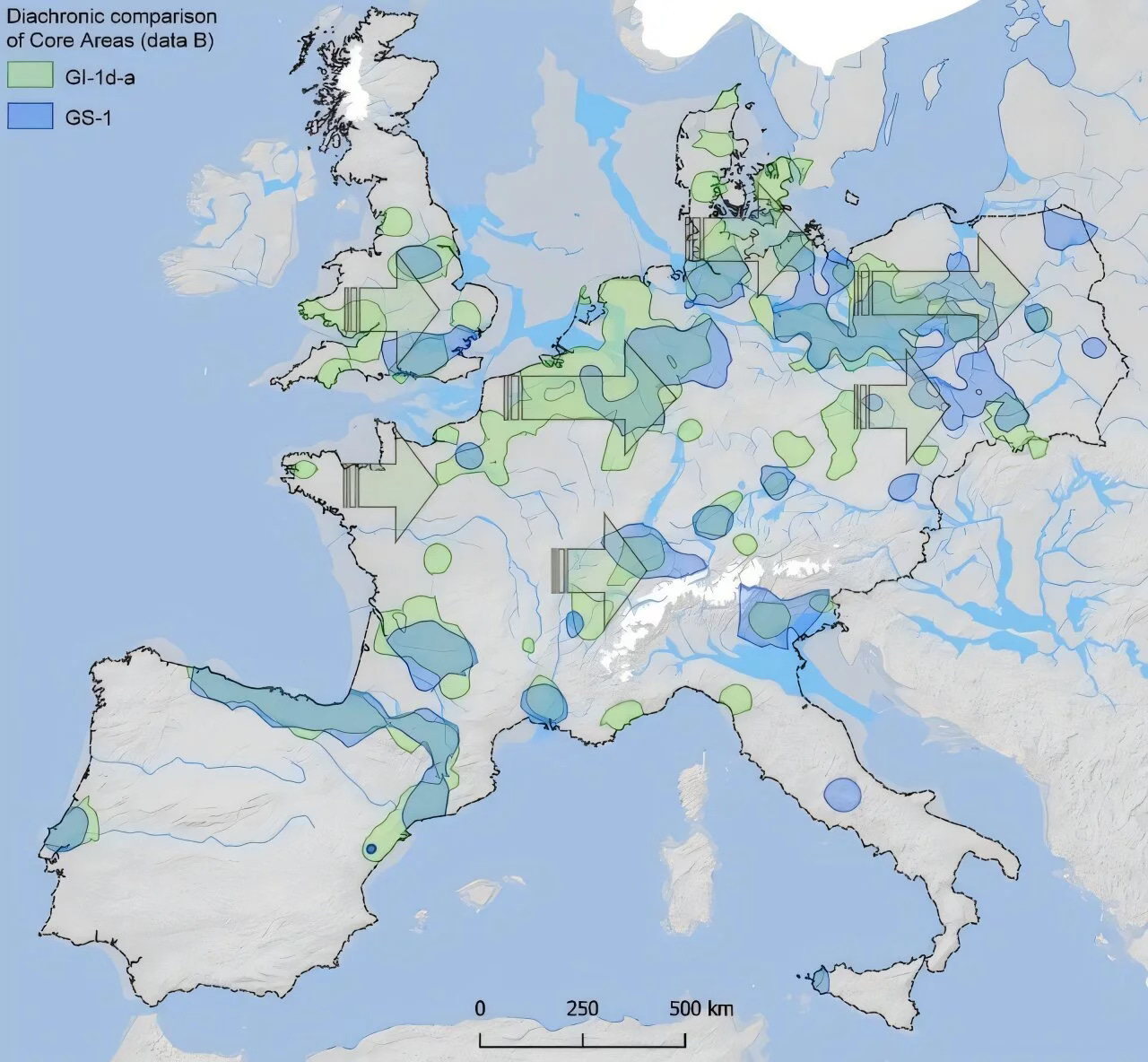
The end of the last Ice Age, spanning approximately 14,000 to 11,600 years ago, was a period of significant climatic fluctuations that profoundly influenced human populations in Europe. A recent study published in PLOS One by a team of 25 archaeologists from various European institutions offers a comprehensive analysis of how these prehistoric hunter-gatherer communities responded to environmental changes during the Final Paleolithic.Population Dynamics Amidst Climatic ShiftsThe research indicates that during the warmer phases of the Final Paleolithic, known as Greenland Interstadial 1d-a (GI-1d-a), human populations expanded into northern and northeastern Central Europe. This period marked the first time in prehistory that these regions became demographic centers. Conversely, during the subsequent colder phase, Greenland Stadial 1 (GS-1), or the Younger Dryas, there was a dramatic decline in population across Europe, with an estimated reduction of 50%. Interestingly, some areas, such as northern Italy, Poland, and northeastern Germany, exhibited stability or even slight increases in population density, suggesting possible migration towards more favorable environments.Dr. Isabell Schmidt from the University of Cologne's Department of Prehistoric Archaeology explains:"These observations probably reflect the eastward movement of people in response to the very abrupt and pronounced climatic cooling during the Younger Dryas. Humans during the Final Paleolithic apparently responded by migrating to more favorable areas."Methodology: The Cologne ProtocolTo arrive at these conclusions, the researchers compiled an extensive database of archaeological sites from the period and employed a geostatistical method known as the Cologne Protocol. This standardized procedure estimates prehistoric demographic data, facilitating diachronic comparisons and providing new insights into how early humans adapted to environmental challenges.Broader Implications and Related ResearchThis study contributes to a growing body of evidence on the impact of climate change on prehistoric human populations. For instance, research published in Science Advances analyzed fossil human teeth from Ice Age Europe, revealing significant population declines during colder periods and even regional extinctions in Western Europe. The study's lead investigator, Dr. Hannes Rathmann from the University of Tübingen, noted:"Our study provides important insights into the demographic history of Ice Age Europeans and highlights the profound impact of climate and environmental changes on the lives of prehistoric humans."Furthermore, a study in Current Anthropology utilized climate niche modeling to investigate the Late Upper Paleolithic Hamburgian settlement of northern Europe. The findings suggest that rising temperatures facilitated northward dispersal, while subsequent cooling led to habitat fragmentation and population decline.ConclusionThe interplay between climate change and human demographic shifts during the Final Paleolithic underscores the adaptability and resilience of prehistoric populations. These studies highlight the importance of interdisciplinary approaches in understanding the complex relationship between environmental factors and human history.Additional Related Research* Ruan, Q.-J., Li, H., Xiao, P.-Y., et al. (2025). Quina lithic technology indicates diverse Late Pleistocene human dynamics in East Asia. Proceedings of the National Academy of Sciences, 122(14), e2418029122. https://doi.org/10.1073/pnas.2418029122* Salem, N., van de Loosdrecht, M. S., Sümer, A. P., et al. (2025). Ancient DNA from the Green Sahara reveals ancestral North African lineage. Nature, 1–7. https://doi.org/10.1038/s41586-025-08793-7 This is a public episode. If you'd like to discuss this with other subscribers or get access to bonus episodes, visit www.anthropology.net/subscribe
NOW PLAYING
Climate Change and Prehistoric Populations: Insights from Europe's Final Paleolithic
No transcript for this episode yet
Similar Episodes
No similar episodes found.
Similar Podcasts
No similar podcasts found.