
EPISODE · Mar 28, 2024 · 27 MIN
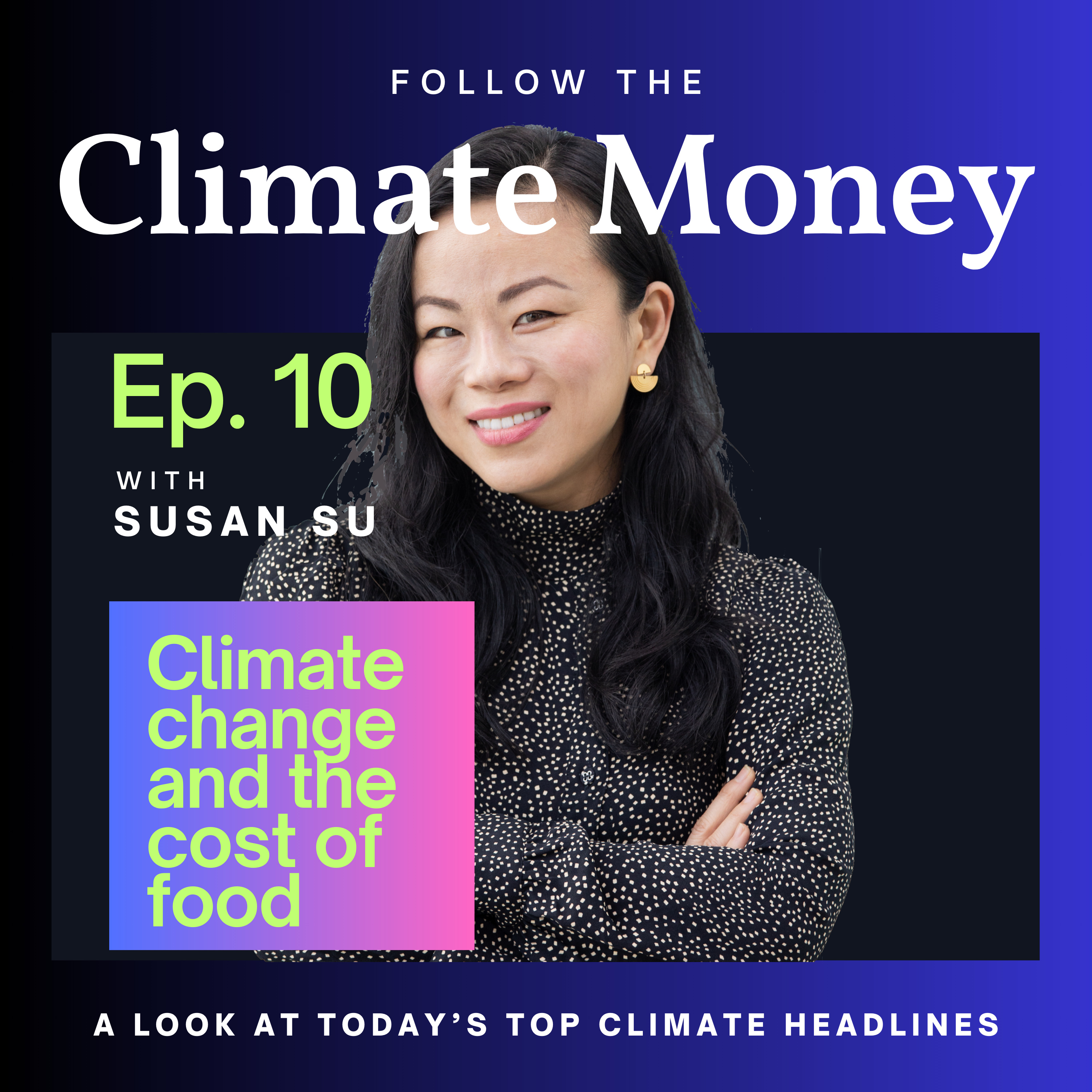
Climate change and the cost of food
from Climate Money · host Susan Su
On today’s episode, we talk about climate change and the cost of food. New work from researchers at the Potsdam Institute for Climate Impact Research and the European Central Bank is projecting that climate change will drive up food prices around the world by up to 3.2% per year by 2035. Food will grow to take up a greater proportion of total household income because these price increases will outstrip overall climate-driven inflation. The impact will be disproportionately borne by people in sub-Saharan Africa, where many communities are already living with moderate to severe food insecurity. Today’s episode looks at exactly what these numbers mean for communities around the world, how it relates to markets, and how the actions of some larger players to mitigate food waste could contribute to a solution. Related links: https://www.nature.com/articles/s43247-023-01173-x https://www.bloomberg.com/news/articles/2024-03-14/google-is-trying-to-reduce-its-food-waste-without-irritating-employees https://www.weforum.org/agenda/2021/03/global-food-waste-solutions/ https://www.bloomberg.com/news/articles/2024-02-29/rising-cocoa-prices-drive-mars-hersey-to-use-less-chocolate https://www.ers.usda.gov/data-products/ag-and-food-statistics-charting-the-essentials/food-prices-and-spending/?topicId=1afac93a-444e-4e05-99f3-53217721a8be#:~:text=Average%20annual%20food%2Dat%2Dhome,is%202.5%20percent%20per%20year
What this episode covers
On today’s episode, we talk about climate change and the cost of food. New work from researchers at the Potsdam Institute for Climate Impact Research and the European Central Bank is projecting that climate change will drive up food prices around the world by up to 3.2% per year by 2035. Food will grow to take up a greater proportion of total household income because these price increases will outstrip overall climate-driven inflation. The impact will be disproportionately borne by people in sub-Saharan Africa, where many communities are already living with moderate to severe food insecurity. Today’s episode looks at exactly what these numbers mean for communities around the world, how it relates to markets, and how the actions of some larger players to mitigate food waste could contribute to a solution. Related links: https://www.nature.com/articles/s43247-023-01173-x https://www.bloomberg.com/news/articles/2024-03-14/google-is-trying-to-reduce-its-food-waste-without-irritating-employees https://www.weforum.org/agenda/2021/03/global-food-waste-solutions/ https://www.bloomberg.com/news/articles/2024-02-29/rising-cocoa-prices-drive-mars-hersey-to-use-less-chocolate https://www.ers.usda.gov/data-products/ag-and-food-statistics-charting-the-essentials/food-prices-and-spending/?topicId=1afac93a-444e-4e05-99f3-53217721a8be#:~:text=Average%20annual%20food%2Dat%2Dhome,is%202.5%20percent%20per%20year
NOW PLAYING
Climate change and the cost of food
No transcript for this episode yet
Similar Episodes
No similar episodes found.
Similar Podcasts
No similar podcasts found.