
EPISODE · Mar 26, 2026 · 58 MIN
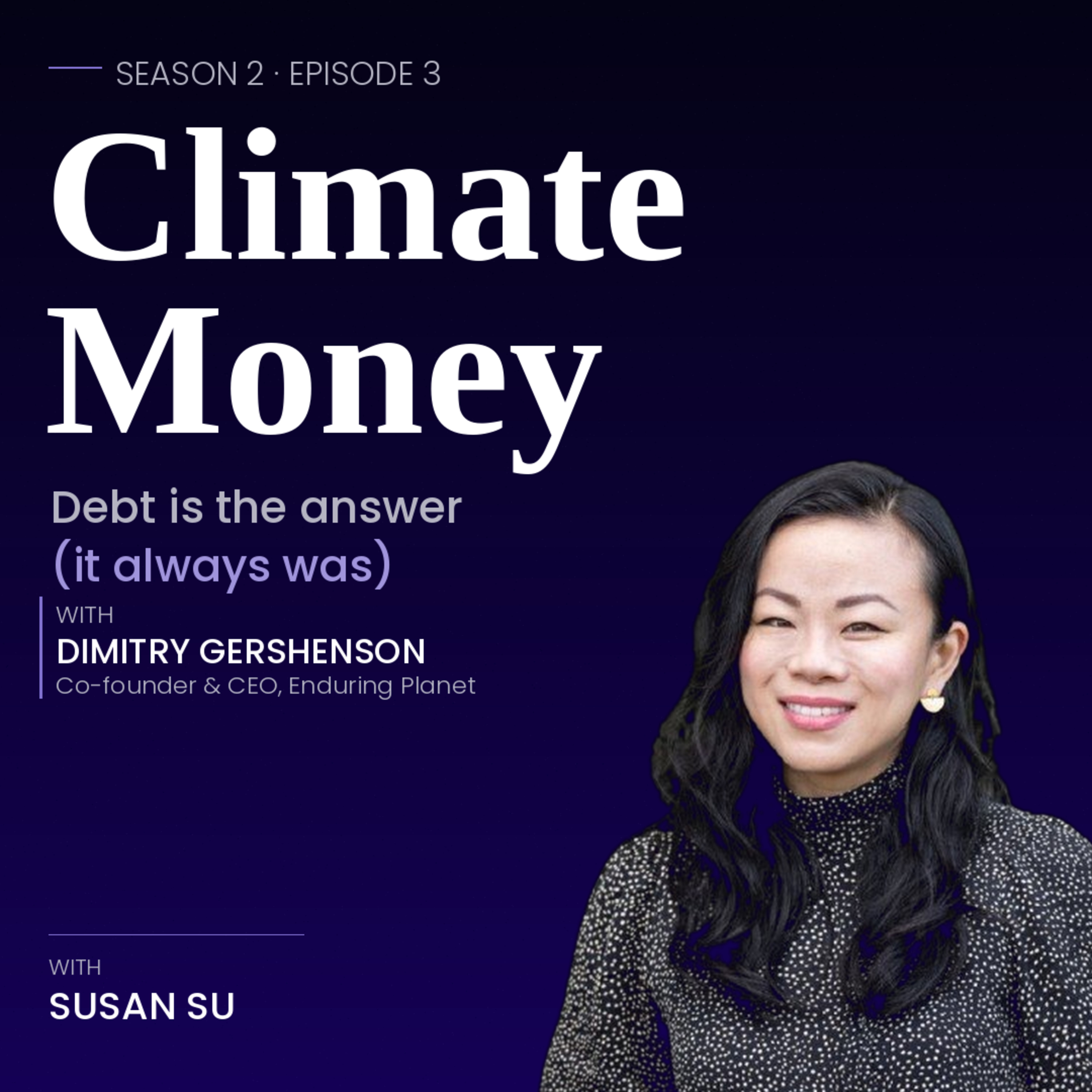
Climate Money S2 E3: Debt is the answer (it always was) — a conversation with Dimitry Gershenson
from Climate Money · host Susan Su
Venture capital for climate companies is drying up, and early stage companies can't exactly get a loan from the bank. So, who's actually financing the companies that are supposed to become tomorrow's bankable assets? Dimitry Gershenson, co-founder and CEO of Enduring Planet, joins us for a dispatch straight from the field. His firm lends against government grants and commercial contracts — starting at $100K, at the moment a contract is signed, not after an invoice is submitted. It's a gap that traditional lenders won't touch and most founders don't know exists. In this episode, we cover: How Enduring Planet evolved from revenue-based financing to grant advances to commercial contract lending — and the painful lessons along the wayWhy the firm has a zero default rate across 100 deals, even post-electionThe real math on why founders are "irrationally scared" of debt while happily giving away half their company in equityWhat Dimitry is seeing in his pipeline right now: the vibe, the mix of government vs. commercial lending, and where things are headedWhy the companies borrowing $100K today will be the ones borrowing $100M tomorrowThe fractional CFO business that grew out of founders showing up with broken booksDimitry has been building financial plumbing for the climate transition since his Peace Corps days in Honduras, through deploying catalytic capital at Meta, to founding Enduring Planet. This conversation is a close up look at what climate lending looks like when you strip away the narratives and look at the deals. Links:Enduring PlanetEnduring Planet case studiesClimate Money newsletter TAGS/KEYWORDS:climate finance, climate debt, climate tech, enduring planet, dimitry gershenson, grant advance, working capital, early stage lending, climate lending, contract financing, venture debt, climate startups, project finance, fractional CFO, climate VC, season 2
What this episode covers
Venture capital for climate companies is drying up, and early stage companies can't exactly get a loan from the bank. So, who's actually financing the companies that are supposed to become tomorrow's bankable assets? Dimitry Gershenson, co-founder and CEO of Enduring Planet, joins us for a dispatch straight from the field. His firm lends against government grants and commercial contracts — starting at $100K, at the moment a contract is signed, not after an invoice is submitted. It's a gap that traditional lenders won't touch and most founders don't know exists. In this episode, we cover: How Enduring Planet evolved from revenue-based financing to grant advances to commercial contract lending — and the painful lessons along the wayWhy the firm has a zero default rate across 100 deals, even post-electionThe real math on why founders are "irrationally scared" of debt while happily giving away half their company in equityWhat Dimitry is seeing in his pipeline right now: the vibe, the mix of government vs. commercial lending, and where things are headedWhy the companies borrowing $100K today will be the ones borrowing $100M tomorrowThe fractional CFO business that grew out of founders showing up with broken booksDimitry has been building financial plumbing for the climate transition since his Peace Corps days in Honduras, through deploying catalytic capital at Meta, to founding Enduring Planet. This conversation is a close up look at what climate lending looks like when you strip away the narratives and look at the deals. Links:Enduring PlanetEnduring Planet case studiesClimate Money newsletter TAGS/KEYWORDS:climate finance, climate debt, climate tech, enduring planet, dimitry gershenson, grant advance, working capital, early stage lending, climate lending, contract financing, venture debt, climate startups, project finance, fractional CFO, climate VC, season 2
NOW PLAYING
Climate Money S2 E3: Debt is the answer (it always was) — a conversation with Dimitry Gershenson
No transcript for this episode yet
Similar Episodes
No similar episodes found.
Similar Podcasts
No similar podcasts found.