
EPISODE · Nov 21, 2024 · 16 MIN
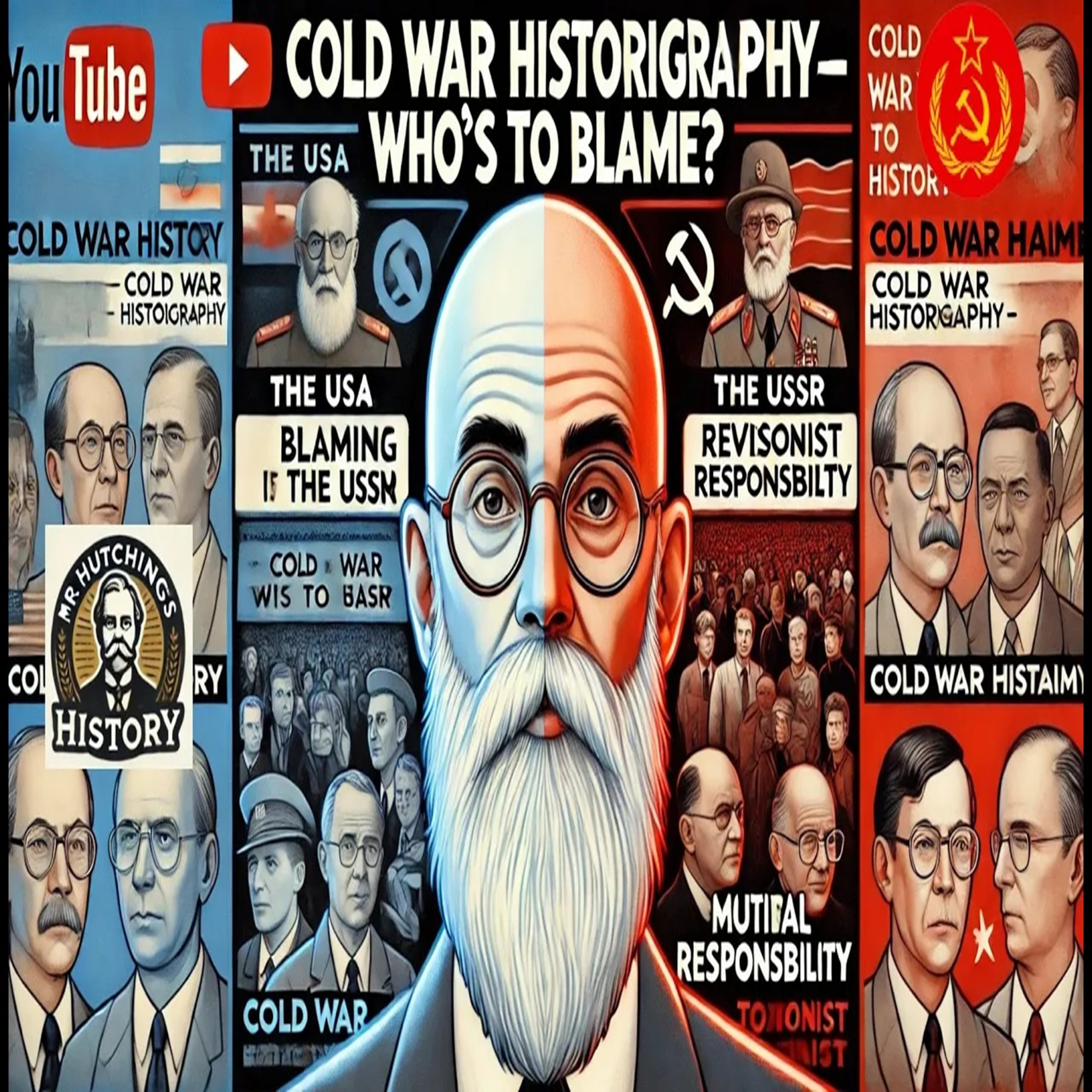
Cold War Historiography – Who’s to Blame?
from Mr. Hutchings History · host Produced, created, and written by Harold M. Hutchings
Welcome to Mr. Hutchings History! In this episode, we tackle the controversial question: Who was responsible for the Cold War? Was it Soviet expansionism, US economic interests, or a combination of both? We'll dive into four schools of thought—Orthodox, Revisionist, Post-Revisionist, and Post-Cold War—exploring how each interprets the origins of the Cold War. From Stalin’s aggressive policies to the US’s economic strategies, we’ll analyze key events like the Berlin Blockade, the Marshall Plan, and the role of Stalin’s personality in fueling the conflict.Join us as we break down the ideological, economic, and military divisions that defined the Cold War and shape the ongoing debate about its origins.Key Topics:Orthodox view: Soviet expansionism and Stalin’s roleRevisionist view: US economic imperialismPost-Revisionist view: Mutual misunderstandings between superpowersPost-Cold War view: Stalin’s personality and decision-makingKey events: The Berlin Blockade, Marshall Plan, Warsaw Uprising#Paper2WorldHistory #ColdWar #Historiography #ColdWarOrigins #SovietExpansion #USImperialism #MarshallPlan #BerlinBlockade #Stalin #TrumanDoctrine #IdeologyAndEconomics #PostColdWar #ColdWarTensionsWorks CitedGaddis, John Lewis. The United States and the Origins of the Cold War. Columbia UP, 1972.--- . We Now Know: Rethinking Cold War History. Oxford UP, 1998.Kolko, Joyce and Gabriel. The Limits of Power. Harper & Row, 1972.Schlesinger, Arthur Jr. Origins of the Cold War. Foreign Affairs, 1967.Chapters(0:00) Introduction – The Mystery of the Cold WarWho was responsible for the Cold War? Let’s explore the debate.(0:32) The Orthodox View – Blaming the SovietsThe dominant early perspective: Soviet aggression caused the Cold War.(1:45) Arthur Schlesinger Jr. – The Soviet ThreatWhy historians saw Soviet ideology as expansionist and dangerous.(3:02) The Berlin Blockade & Airlift – A Soviet Power Move?How Stalin’s blockade cemented the East-West divide.(4:45) The Revisionist View – Was the US to Blame?1960s historians questioned US motives, focusing on economic power.(6:03) The Marshall Plan – Humanitarian Aid or Power Grab?Was US foreign policy about democracy or expanding capitalism?(7:35) Post-Revisionists – A Cold War of MisunderstandingsJohn Lewis Gaddis and the argument for miscalculations on both sides.(9:20) Stalin’s Paranoia – The Security DilemmaDid Stalin’s fear, not ideology, drive Soviet actions?(10:45) The Soviet Archives – A Game-Changer?New evidence revealed Stalin’s ruthless power-driven motives.(12:30) The Warsaw Uprising – A Chilling DecisionHow Stalin let the Nazis crush resistance for his own gain.(14:10) Re-evaluating the Cold War – No Simple AnswersHow each historical perspective adds to our understanding.(15:30) The Legacy of Historiography – What’s Next?How will future historians interpret today’s global tensions?
What this episode covers
Welcome to Mr. Hutchings History! In this episode, we tackle the controversial question: Who was responsible for the Cold War? Was it Soviet expansionism, US economic interests, or a combination of both? We'll dive into four schools of thought—Orthodox, Revisionist, Post-Revisionist, and Post-Cold War—exploring how each interprets the origins of the Cold War. From Stalin’s aggressive policies to the US’s economic strategies, we’ll analyze key events like the Berlin Blockade, the Marshall Plan, and the role of Stalin’s personality in fueling the conflict.Join us as we break down the ideological, economic, and military divisions that defined the Cold War and shape the ongoing debate about its origins.Key Topics:Orthodox view: Soviet expansionism and Stalin’s roleRevisionist view: US economic imperialismPost-Revisionist view: Mutual misunderstandings between superpowersPost-Cold War view: Stalin’s personality and decision-makingKey events: The Berlin Blockade, Marshall Plan, Warsaw Uprising#Paper2WorldHistory #ColdWar #Historiography #ColdWarOrigins #SovietExpansion #USImperialism #MarshallPlan #BerlinBlockade #Stalin #TrumanDoctrine #IdeologyAndEconomics #PostColdWar #ColdWarTensionsWorks CitedGaddis, John Lewis. The United States and the Origins of the Cold War. Columbia UP, 1972.--- . We Now Know: Rethinking Cold War History. Oxford UP, 1998.Kolko, Joyce and Gabriel. The Limits of Power. Harper & Row, 1972.Schlesinger, Arthur Jr. Origins of the Cold War. Foreign Affairs, 1967.Chapters(0:00) Introduction – The Mystery of the Cold WarWho was responsible for the Cold War? Let’s explore the debate.(0:32) The Orthodox View – Blaming the SovietsThe dominant early perspective: Soviet aggression caused the Cold War.(1:45) Arthur Schlesinger Jr. – The Soviet ThreatWhy historians saw Soviet ideology as expansionist and dangerous.(3:02) The Berlin Blockade & Airlift – A Soviet Power Move?How Stalin’s blockade cemented the East-West divide.(4:45) The Revisionist View – Was the US to Blame?1960s historians questioned US motives, focusing on economic power.(6:03) The Marshall Plan – Humanitarian Aid or Power Grab?Was US foreign policy about democracy or expanding capitalism?(7:35) Post-Revisionists – A Cold War of MisunderstandingsJohn Lewis Gaddis and the argument for miscalculations on both sides.(9:20) Stalin’s Paranoia – The Security DilemmaDid Stalin’s fear, not ideology, drive Soviet actions?(10:45) The Soviet Archives – A Game-Changer?New evidence revealed Stalin’s ruthless power-driven motives.(12:30) The Warsaw Uprising – A Chilling DecisionHow Stalin let the Nazis crush resistance for his own gain.(14:10) Re-evaluating the Cold War – No Simple AnswersHow each historical perspective adds to our understanding.(15:30) The Legacy of Historiography – What’s Next?How will future historians interpret today’s global tensions?
NOW PLAYING
Cold War Historiography – Who’s to Blame?
No transcript for this episode yet
Similar Episodes
Dec 24, 2024 ·48m
Nov 16, 2024 ·23m
Oct 27, 2024 ·41m
Oct 27, 2024 ·26m
Oct 27, 2024 ·37m
Oct 27, 2024 ·35m