
EPISODE · Mar 13, 2026 · 38 MIN
Computation, free will and the big bang
from The Jolly Contrarian Life · host The Jolly Contrarian
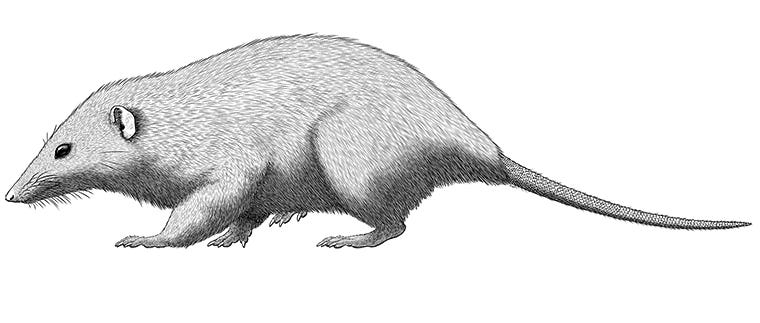
So remember, when you’re feeling very small and insecure—How amazingly unlikely is your birth.And pray that there’s intelligent lifeSomewhere up in space, becauseThere’s bugger all down here on Earth.— Galaxy Song, Monty Python’s Meaning of Life, 1983This piece started out as a book review, of Professor Brian Klaas’ recent book Fluke: Chance, Chaos and Why Everything We Do Matters. It quickly would up as a rumination on a much, much bigger topic for which Fluke, is really only the occasion, not the subject, for it sets off one of the many bees in the JC bonnet.The bee in question is the presently fashionable world-view among tech-bros and people who spend too much time online that everything can be computed. This “computationalist” outlook, and its best practical example, the omnipresent Turing machine, has wormed its way into contemporary intellectual life and is at risk of getting stuck there. This, I think, would be a tremendous pity.The computationalist view runs more or less as follows:* Turing machines are, by design, deterministic.* You can model the human brain as a Turing machine.* Therefore, the brain is a Turing machine.* Therefore, the human brain is deterministic.* Therefore, human agency is an illusion.Professor Klaas himself is a good case study, because much of his book is wise and — excuse the pun — enlightening, but he still winds up mistaking the map for the territory and concluding that since we can be made to seem like machines, we are machines, and are therefore constrained as machines.This seems like a typically dusty academic debate, but it has real-world implications for not just the hypothetical freedoms of metaphysical will, but the real-world freedoms of thought and action. Where you stand on this question makes a political and cultural difference to how you feel about where other people should be allowed to stand on it. We will turn to that at the end.My readers keep me going. For more posts like this — and even better ones — consider supporting the JC. Only half a pint a week and you get to feel like a Florentine arch-duke in 1470, and I get to feel like Sandro Botticelli. Plus, you get access to Premium JC and all kinds of neat stuff.A big “but”I have been grappling for some time with what is so troubling about the modern techno synthesis — End of History millenarianism, truth, data modernism, determinism and the oddly illiberal fix these logical ideas put us in — but have struggled to put my finger on it.In Fluke: Chance, Chaos and Why Everything We Do Matters, “disillusioned social scientist” Brian Klaas helps. But not as he means to.This is a silly book. It makes a great show of being interesting, but then steers off a cliff in its final chapter, which presents as a big “but”. As G.R.R. Martin puts it, “Everything before the word ‘but’ is horseshit.”You might think I am being unfair or uninformed in my opinion, and so I might — it would hardly be the first or last time — but even Professor Klaas would have to admit it is not my fault: I can hardly do otherwise. It is written in the stars.So, you shouldn’t blame me, but if you do that’s not your fault, either: that too, is written in the stars. Indeed, Professor Klaas would oblige himself to concede, as he asks us to, that all of creation — all its galaxies and nebulae, all its tragedy and comedy, its infinite majesty and infinitesimal frippery exactly as it appears, right down to this silly article about that silly book — has been coming, unerringly and ineluctably, since the dawn of cosmic time itself.Which means I have an excuse — nay, a compulsion — to talk about metaphysics.God, mind and free will“And if we are to prevent the lights going out on our lives once more, we should ask ourselves crucial questions.Where are we? How did we get here? Why did we come? Where do we want to go? How do we want to get to where we want to go? How far do we have to go before we get to where we want to be? How would we know where we were when we got there?Have we got a map?”—Rowan Atkinson & Richard Curtis, Marcus Browning MP, 1980Anyone with a tertiary education who didn’t take at least one philosophy course missed the point of the exercise. The sine qua non of the university experience is, surely, stage one metaphysics. Its three great questions — how did we get here, how does consciousness work, and do we have free will? — are not a million miles away from those posed by the hon. Marcus Browning.“God” and “mind” really collapse into “free will”, and that boils down to how you feel about the causal principle: has every action in the cosmos a complete and identifiable set of reliable mechanical causes, or is the universe some how unpredictable, biddable and capricious?Those who embrace the causal principle are broadly classed as “determinist”. Since, given enough information, one can precisely calculate the outcome of any interaction between any objects in the universe, the interaction of composite objects must be a function of their components.Since classical mechanics assumes that, besides elementary particles, all objects are composites it follows that the behaviour of everything can be reduced to the behaviour its components. It is not quite turtles all the way down, though: it stops at these subatomic particles. Their behaviour, theoretically, can be traced back to the singularity whence we, and the whole of creation, came. There is, therefore, nothing new under the sun. All was inevitable, Q.E.D.If this is right, certain popular beliefs about the cosmos cannot be true. There cannot be a non-material interventionist God: if there were, some events would not have a material cause. Humans cannot have free will: all human actions are the product of traceable electrochemical impulses in the brain.While much of the West has acclimatised to the first idea, the second one is taking some getting used to.If this all seems a bit desolate, there are a broad range of non-determinist philosophies that might suit you better. Beyond “non-determinist,” these philosophies have no catch-all label. If it would not lead to confusion you might call them “casual” as opposed to “causal”.They include most types of mysticism and religion and any belief in magic or the occult. They also take in the widely traduced “continental” philosophies of relativism and postmodernism, but also some “rationalist” parts of the intellectual landscape: classical economics, much of behavioural and social science, systems theory, chaos theory and — though it might horrify Professor Dawkins to acknowledge it — evolutionary biology. These are all pragmatic, “emergent” philosophies that take the world as they find it. While they might find their explanations in granularities, they tend not to extrapolate actual predictions from them.Science’s insistence on analytical rigour in inferring causal principles from observed regularities, seems an incontestably good and valuable thing: it has vouchsafed flight, sanitation, aqueducts, viticulture and so on. But if we say, as Professor Dawkins does:“Show me a relativist at 30,000 feet and I’ll show you a hypocrite”.We throw quite a lot of baby out with the mystical bathwater. Like the idea we can have free will.So we are at a bit of an impasse. To enlightened liberals — often the same people as the modern rationalists — free will is also a generally good and valuable thing. All modern polities — not to mention all the ancient ones — depend on it for their basic coherence as social structures.There is no room for any immaterial agency inside a human that can override the eternal logic of cause and effect. To act a propos nothing but “animal spirit” must, at some synaptic level, violate Newton’s laws about conservation of energy.This is a great paradox: if we have free will, science is falsified. If we do not, the entire premise of civilisation is.Thus, the “free will versus determinism” debate presents a dilemma that has animated stage one philosophy classes as long as anyone can remember. Every now and then, someone comes along and tries to sort it out for once and all — the late Daniel Dennett spent the last thirty years of his life trying to do so, for the determinists, but — in my mind at any rate — fell a long way short. Contending that freedom of thought and expression is an illusion is a hard sell.Nor is it one that, in the final analysis, makes a great deal of difference. Either the causal principle is true, or it isn’t, and we could have free will, or none, and it would not make any difference to how we must interact with the universe. Plato had this much right: we have only shadows on the wall of the cave to go by. It doesn’t much matter what causes them.That is why “God, mind and free will” is only a stage one course: it illustrates philosophy’s gift for paradox and at the same time, its deeply-rooted irrelevance. The debate is titillating but, at the same time, stale: causal principles seem to hold, and we seem to have moral agency, and humankind has managed the theoretical conflict ever since we first looked up at the stars.The transparently silly answers the paradox throws up suggest it is a silly question. So, for the longest time the scientists and humanities have kept out of each other’s way. But developments on our ways of being occasionally reopen the debate. The alarming advances in “compute” are doing that now: there is a generation of technologists who are once again yearning to solve the universe.Professor Klaas is here to help them.The great divideIn modern academic discourse, there are two strands of thought: the icy rationalism of the STEM disciplines and the post-modernist mumbo jumbo of the humanities. This is, of course, an outrageous generalisation, but it also, kind of, isn’t.Occasionally, shots ring out across the aisle: mendacious physicists fox humourless sociology journals into publishing PoMo-tinged gobbledegook, while philosophers and historians ruffle biologists’ feathers by pointing out that their discipline cannot be as rational as they would have us believe.For all that, there is buyer’s remorse on either side: a clique of humanities academics, uncomfortable with Post-modernism’s reductio ad absurdum that nothing means anything, have organised themselves into a rationalist stance, huddled around the theory of evolution. Prominent among them are linguist Steven Pinker and late philosopher of mind Daniel Dennett but their high priest — if you’ll forgive the expression — is biologist Richard Dawkins. This group is outspoken in its criticism of religion, relativism and other ostensibly magical accounts of human ingenuity.You may wonder, as I do, whether there isn’t something ironic about this, given the contingency of “Darwin’s dangerous idea”. As Professor Dawkins explains it, the evolutionary process takes us away from an imperfect now; it does not converge upon a perfect later.It was Professor Dennett who did the most to integrate evolutionary concepts into the humanities, sheeting them back to information theory by means of that algorithm — the “universal acid” that explains everything. Evolution is profoundly algorithmic — that is Darwin’s Dangerous Idea, in a nutshell — and so, of course, are computers: Turing machines. So if this is how evolution works, and this is how computers work, why not brains?At the other end of the STEM spectrum, information theorists and cyberneticists strive to apply their inorganic learnings to human systems. They work backwards towards the meatware, noting the calculable “Shannon entropy” of the symbol strings by which humans communicate. Cybernetics is a positivist sort of systems theory that strives to solve things from the middle — to solve the management conundrum — but there are better forms of systems theory that start at the edges of the network, with agents and their immediate interests, and let the middle of the system look after itself. See the end-to-end principle.Now, computation is a bounded, mathematical, calculable, zero-sum endeavour. It is fully causal. It is intensely deterministic. Therein lies the rugged beauty of the Turing machine: fast, cheap and utterly predictable. It doesn’t make mistakes. It doesn’t pick up the wrong end of the stick. It can’t. It is obliged to follow a determined causal chain of reactions. All steps can be reverse-engineered. This makes it quite a neat nomological machine.This compels a worldview where everything is directly, bi-directionally causal: assuming a given operation, a machine state N’ can be computed by reference to machine state N that preceded it, and vice versa. One can journey up and down this chain of reactions indefinitely without losing fidelity or risking a different outcome.It would be great — some think — if we could quantise and optimise human intelligence the way we optimise computing. But while we understand pretty well how Turing machines work we don’t, very well, understand how brains do. In particular, we don’t understand how consciousness works. We don’t know what it is. We don’t even know if it is.Professor Dennett was not the first to see in Turing machines a framework for understanding human consciousness, but he pushed the idea harder and more successfully that anyone before him.But this is not so much to anthropomorphise machines as to robomorphise humans. For a Turing machine is a weak metaphor for human intelligence. Turing machines are not like humans: as George Gilder drily noted, that is why we build them. Humans are inconstant, slow, easily bored and they take up space. They are hopeless in the environments in which machines excel. But in the chaotic, unbounded, inchoate complex environments in which humans excel, machines — even generative AI — are hopeless. It is precisely human flexibility, imagination — our freedom from causal constraints that gives us this edge. Humans can imagine. Machines cannot.There is a flip side: as a result, humans are inconstant. They can “misinterpret”. They can pick up the wrong end of the stick.FlukeThis is the category error Professor Klaas makes in the last part of his book, having made a great show of avoiding it in the first three quarters. There is much to agree with in his groundwork — he talks perceptively about the pervasive contingency of complex systems, but it turns out that he has deliberately taken up what he must regard as the wrong end of the stick to make a point. Because all computer operations are provably causal — garbage in, garbage out — and because computers superficially resemble brains, the temptation is to infer that humans are unavoidably causal too. This Oolon Colluphid-style “puff of logic” prioritises causality. It rules out God, the mischievous supernatural and all those big-shirted French post-structuralists — but jettisons the principle of free will, too.Hence, if true, the inevitability, from the Big Bang, of this review. I had no choice but to read Professor Klaas’s book, and no choice but to be exasperated by it. If there is a God, she is mendacious indeed. But she is also as pointless as the universe she has created.Though the universe seems disinclined to random irregularities — it conforms, after a fashion, to our cosmological models — our sample size is minuscule in a spacetime of incomprehensible proportions. The data upon which we found our assumptions of universal causation is, for all intents, nil. And it is vulnerable to our own evolutionarily-conditioned selection bias. What we see is all there is. We have evolved to truck in regularities. Ostensible irregularities we suppose, without evidence, can be explained by as yet undetected causes. But even that is a contingency.So, this is all a bit wishful — for those who don’t find it utterly desolate.Still, Fluke starts off brightly. There is good discussion of path dependence, contingency and convergence. Our existence here is the product of a colossal sequence of flukes. Things would not have had to be very different at any point in our evolution for us not to be here at all.For such a glib observation, Professor Klaas hammers it hard. Before long, we see why. He turns to chaos theory and invokes the familiar metaphor of Amazonian butterflies. But the lesson of chaos theory is not that “a butterfly’s wing-flap caused the Ottoman Empire to collapse”, but that for all we know a butterfly’s wingflap could have.That is illustrated by the marvellous contingencies Klaas illustrates — but he is looking out his rear window at them, as he drives away, by which stage, they are no longer contingencies. They are crystallised histories. They are no longer emblematic of chaos. They are now — to the extent they were recorded at all — fixed historical data. The contingent process — our observation of these data — is complete. What remains can be represented, without much loss, as a string of symbols. It is but a single path between two points in a garden not just of forking paths, but infinite, random, interconnections. To choose one path is to forgo all the others. This is the opportunity cost of existence.The string of symbols we are left with have no meaning until we run our information processing apparatus over them. It matches against familiar patterns and creates a narrative. In this way our symbol strings produce meaning. This is not a binary, Turing-style symbol-processing operation, but an imaginative one. It, too, is contingent, a willed extraction of one meaning from a vast plurality of possibilities. We fox ourselves that the story we chose is the “true” one. That is the pattern we draw on the side of the Texan barn. But we are not Turing machines. It is not inevitable until it is made.At least with history there are data. We have at least something to draw our fancy casual chains over and declare sacred and “true”. This is not true of the future. Here our uncertainty is “aleatory” — it has not happened, so we cannot know it — and not merely “epistemic” — it has happened, unobserved, so we don’t know it.In a complex adaptive system filled with intentional agents, building that narrative and generating consensus about what has already happened is hard enough. Predicting what will happen next is much harder and, as the horizon recedes, quickly becomes hopeless. Complex adaptive systems adapt. They have autonomy. Intentional agents intend. They have agency. Pretending they are mechanical ducks for the sake of a commitment to causation gets us nowhere.Professor Klaas even states this, outright: he cites a neat experiment in which social scientists were presented with sets of historical input data about human subjects and asked, based on their own published theories, to predict behavioural outcomes. They were, of course, systematically unable to get anything right. Physical scientists laugh up their sleeves at social science, but the outcome would be no better were you to ask a biologist, in a double-blind test, to predict the present form of juramaia sinensis, a tiny, nocturnal, insectivore from the Jurassic era. And nor would the mechanical physicists do any better. We are not puzzled that professors of ballistical mechanics are no better at cricket than anyone else.Here we must be careful not to make another category error. There is, thereby, little practical difference between “unknown events in the past” — epistemic uncertainties — and “unknowable events in the future” — aleatory uncertainties. But — and this is rather the point — there are different things to take from that similarity. Professor Klaas proves it by drawing an opposite conclusion to the one I would have: rather than taking it to illustrate how unreliable historical data is, he takes it to show that the future that is no less set in stone than the past.At this late stage Professor Klaas declares, as might a newly-minted philosophy undergraduate, that there are two alternatives: either the causal principle holds, the cosmos flies by calculable wire, and the reason we can’t better predict it is due to our own inadequacy and lack of suitable data, or there is free will, science is worthless and the universe is random.Doing without causation seems unthinkable, and the cosmos appears to be ordered and science seems to be worthwhile, so Professor Klaas, with more exhilaration and less regret than I would, embraces causality and gives free will the old heave-ho.The thing is, on their face, both are plainly preposterous positions. Professor Klaas has boxed himself in with a silly stage one a priori thought experiment.Given that he calls his blog “the garden of forking paths” — named for a Borges short story— seems to be all about contingency and unpredictability of complex systems, so it is a bit baffling that Professor Klaas still concludes that everything is pre-ordained.Since, even if so, we have no practical ability to predict what will happen, and we seem to have autonomy, and in any case there is no way of knowing, then what do we achieve by saying “well, it is all predetermined”. How does that even help us?The computationalist view, the infinite, and the end of political freedom“It wasn’t infinity, in fact. Infinity itself looks flat and uninteresting. Looking up into the night sky is looking into infinity — distance is incomprehensible and therefore meaningless. The chamber into which the aircar emerged was anything but infinite, it was just very, very, very big, so big, that it gave the impression of infinity far better than infinity itself.”—Douglas Adams, The Hitch-Hiker’s Guide to the GalaxyThe question is not without its practical consequences. In one sense it is a desolate view, hankering to get to the end to the journey we define ourselves by being on: life. The computationalist view offers the same desolate resolution as do the Abrahamic religions: an end state, where everything is solved, everything is managed, a benevolent higher intelligence silently ensures everything is optimised, and no-one wants for anything. Religions promise that in an afterlife: computational techbros promise it here, if not now, then in the foreseeable future. But a universe without problems to be solved, lots to be improved or games to be played — with no riddles, mysteries or hazards — of unlimited accommodation is hell as much as it is heaven. Utopia and dystopia are the same. No-one would like such a world, and we can already see what happens when we approach it: people wilfully ruin it.Francis Fukuyama — he has had some bad press, including from me — captured it well:Experience suggests that if men cannot struggle on behalf of a just cause because that just cause was victorious in an earlier generation, then they will struggle against the just cause. They will struggle for the sake of struggle. They will struggle, in other words, out of a certain boredom: for they cannot imagine living in a world without struggle. And if the greater part of the world in which they live is characterised by peaceful and prosperous liberal democracy, then they will struggle against that peace and prosperity, and against democracy.Heaven would be awful. The Devil has all the best tunes.But there’s a more insidious implication, too. A causal, solvable universe implies a single truth. It means those who have that truth are justified in suppressing anyone who promotes a different idea. Scientism leads to this: we see harmless forms of it in Richard Dawkins’ grumpy (and uninformed) tracts against religion. Elsewhere, the religious are just as guilty of the same kind of intellectual imperialism.But, either way, it is an illiberal instinct: to assert a single solution — let alone to enact it — is to stop people from living their lives as they would choose. Citizens should be free to make their own mistakes: who knows? We might all learn from them. Preventing it might deprive us of the serendipities that have characterised scientific discovery over centuries. In any case we should not wish ourselves to a utopian endpoint that none of us would like much if we got there. We are not non-player characters. We are not hopeless invalids better hooked up to a pleasure machine for our own wellbeing. We do not want to spend an eternity making small-talk with do-gooders. We came here to struggle and make sense of things.I’ve wittered on enough and have to finish this now to get out the door to a talk by Iain McGilchrist, whose marvellous book The Master and his Emissary gives a much more hopeful perspective on this very question.See also* Robomorphism* The Master and his EmissaryThanks for reading! This post is public so feel free to share it. This is a public episode. If you'd like to discuss this with other subscribers or get access to bonus episodes, visit jollycontrarian.substack.com/subscribe
Embed this episode
Ready to play
Computation, free will and the big bang
No transcript for this episode yet
Similar Episodes
No similar episodes found.
Similar Podcasts
No similar podcasts found.