
EPISODE · Jan 31, 2025 · 4 MIN
Copalis Ghost Forest Soundwalk
from Soundwalk · host Chad Crouch
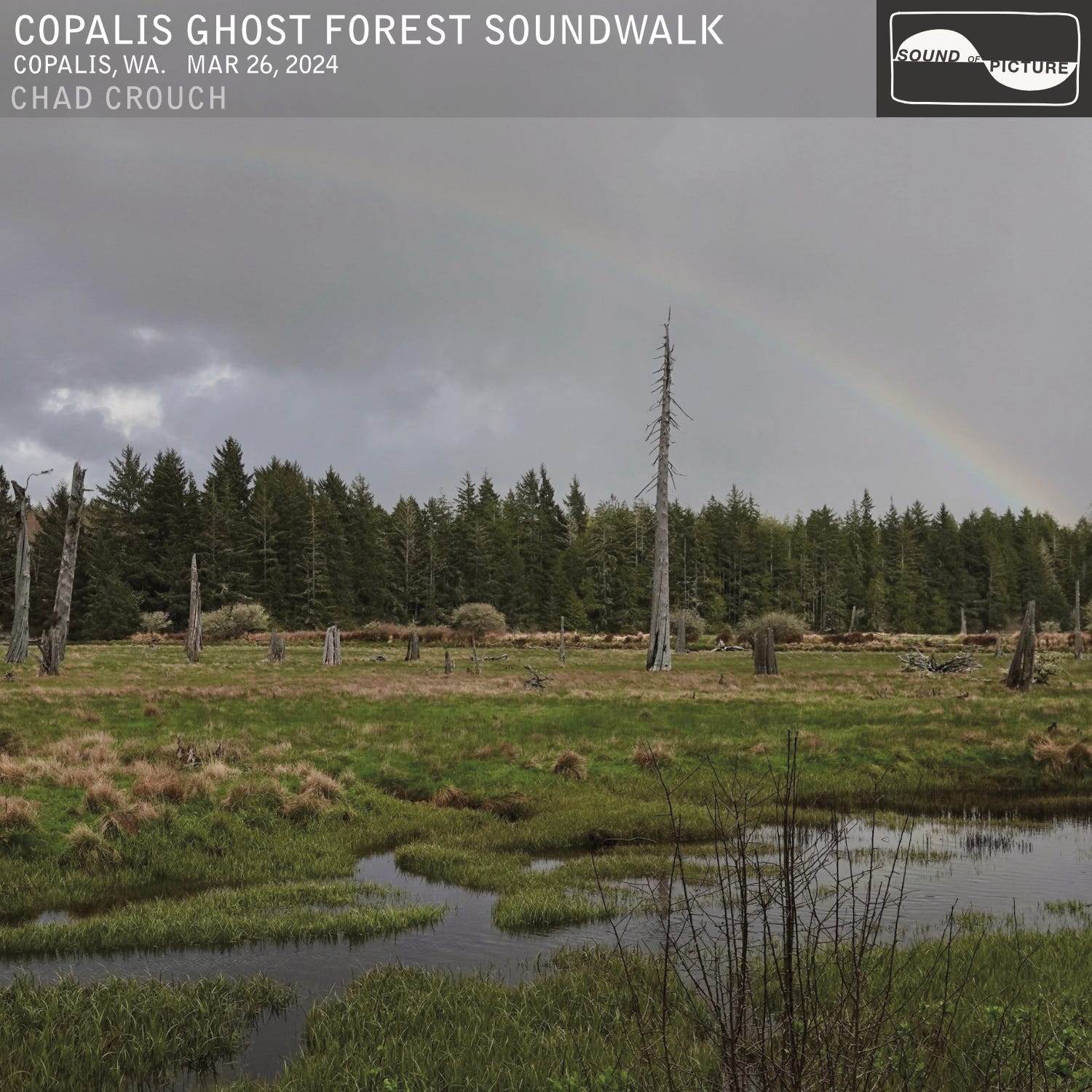
This is a free preview of a paid episode. To hear more, visit chadcrouch.substack.com I want to tell you a ghost story. But, first a music story. In the music industry the story of an album is told in a “one sheet”. Typically a few paragraphs in length, the one sheet explains the outlines of album personnel, timeline, context, and often place, but not always. There are tropes of course, as it is with any kind of writing: there’s the comeback album, the vision quest album, the concept album, the crisis and/or rebound album, the joined forces album… In the past two years I’ve created 60 soundwalk albums and 0 one sheets. Instead, I first added spoken commentary to the top of podcast versions of the soundwalks. (Think spoken liner notes.) These focused on the place and time the field recording was made, and secondarily offered insights into the composition and instrumentation. When I shifted my podcast over to Substack, I nixed the spoken intro and wrote posts about whatever I found interesting about the various places. I leaned into more research, wanting to understand the places over time. These writings didn’t resemble one sheets at all. Still, I enjoyed the learning that came from them, and I figured the reader could decide whether or not it was of interest to them. I can’t imagine writing all those one sheets. What a chore! And so it goes, the ghost story beats the music story. The ghosts at Copalis are the dead trees, and they provide a 325-year-old link to the geologic history of the Pacific Northwest. The Copalis Ghost Forest is the site geologist Brian Atwater used to prove the theory that the Pacific Northwest periodically experiences megathrust earthquakes that cause powerful tsunamis (like the 2011 Tōhoku Quake in Japan that registered 9.0 on the Richter scale.) But what does that have to do with the music, really? And what does that have to do with the soundscape I recorded on March 26th, 2024? Well let’s just start with a first impression: It’s gorgeous here. The weathered grey stand of snags in the estuary wetland are instantly mysterious, evoking a scene of ruin; an old cemetery of wooden markers in states of advanced decay. Nurse logs play host to a diverse microcosm of life, islands of regeneration. The wildlife in the soundscape evokes that pastoral beauty: the clicky ribbit of Pacific tree frogs, the quiet, glitchy cro-cro-cro of Common Mergansers, the chittery peal of a Belted Kingfisher, and the brisk R2-D2-esque chatter of a Marsh Wren. Then there is the subtle sound of open space and weather, the tapping of an ephemeral rain shower on the tin roof of a fishing shack. Shhhhhh… Being here alone on an overcast day, I felt something akin to the reverence of a pilgrim. This place is a testament to the energy pent up in the Cascadia Subduction Zone, a coiled spring with the force of 25,000 nuclear bombs. Brian Atwater and David Yamaguchi used soil cores and tree ring dating to show that the trees here died in the winter of 1700. They linked this date to a written record of an "orphan tsunami" recorded in Japan on January 26, 1700, suggesting that the land subsided in a great earthquake, drowning the grove in salt water, and sending a tsunami all the way to Japan. He and his colleagues published these findings in Science magazine in 1995. Here is Atwater in 2014, making a short video recounting a Copalis River visit for an 8th Grade class. Putting together the stratigraphic evidence—from landslides in undersea canyons—scientists further revealed the Pacific Northwest experienced major quakes roughly every 200–800 years. Since the 1990’s we’ve known it’s not a matter of if but when. “The Big One” will surely come. So, that’s the story of Copalis Ghost Forest in a nutshell. But being here, well, it’s much less cerebral and more visceral. That’s where music comes in. Music goes where words cannot. For my score I leaned into vibrato drones, plaintive piano, electric piano melodies, lonesome electric guitar, and simmering dulcimer. As always, it’s probably best experienced in headphones or a quiet space. Copalis Ghost Forest Soundwalk is available on all streaming platforms (Spotify, Apple, Tidal, Amazon, YouTube…) on Friday, January 31st. For Further Watching Here Nick Zenter explains the Copalis Ghost Forest with excellent visual storytelling (but you may want to skip the 30 second intro).
Embed this episode
Ready to play
Copalis Ghost Forest Soundwalk
No transcript for this episode yet
Similar Episodes
No similar episodes found.