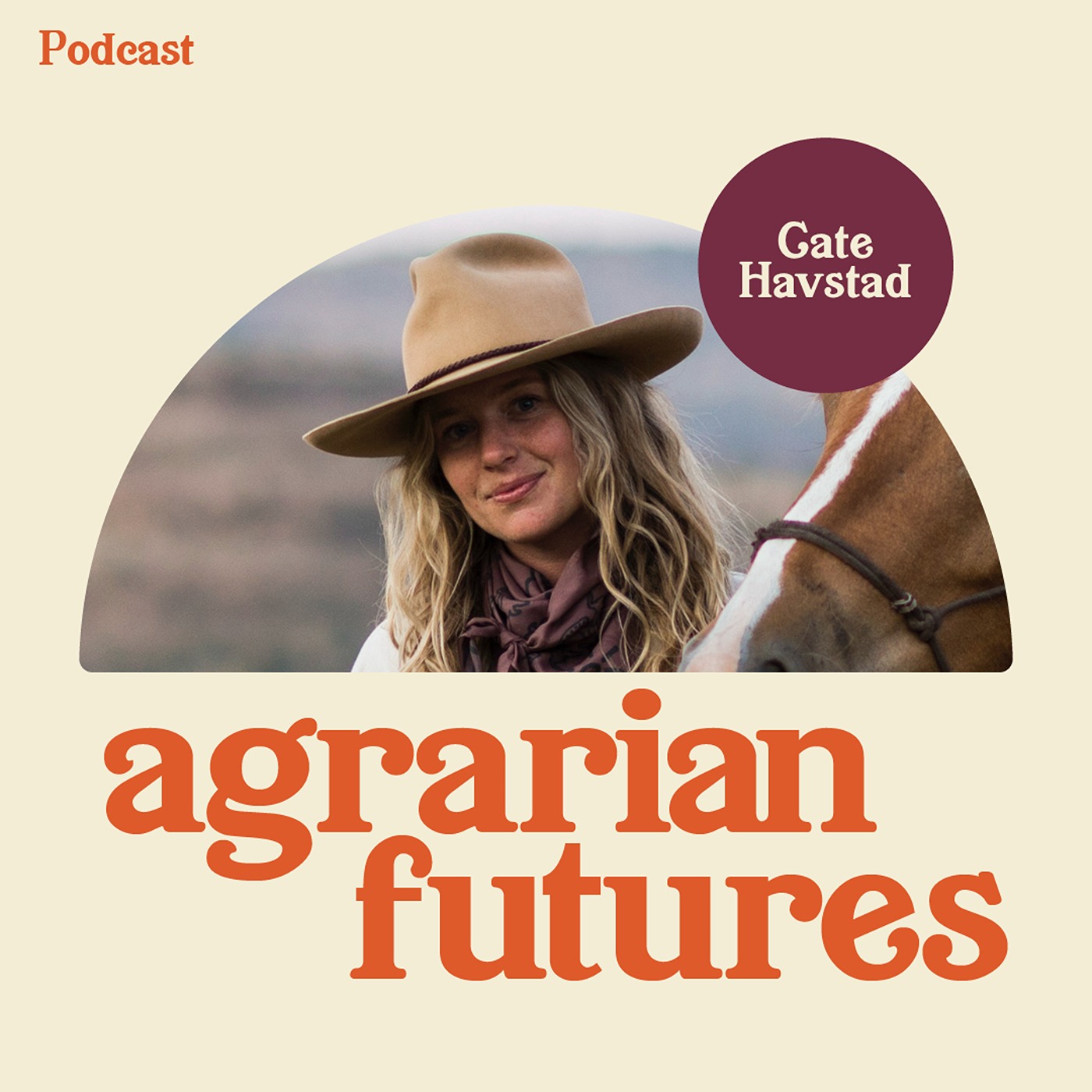
Could Leather Be the Missing Piece for Regenerative Ranching? with Cate Havstad of Range Revolution episode artwork

EPISODE · Feb 3, 2026 · 35 MIN

Could Leather Be the Missing Piece for Regenerative Ranching? with Cate Havstad of Range Revolution

from Agrarian Futures · host Agrarian Futures

We’ve spent a lot of time on this show digging into the dire state of modern farming and ranching, and the challenging economics for those trying to build a regenerative future. Our guest today, Cate Havstad, is no stranger to these challenges as a first-generation farmer and rancher. That experience led directly to an innovative solution that could be an important missing piece in this economic puzzle.As she explains, only about 65 percent of the cattle she sent out to slaughter was actually used, leaving hides and other materials treated as low-value byproducts rather than essential parts of a living system. That waste isn’t just ecological. It’s economic, and it puts real pressure on ranchers trying to do things the right way.Cate is changing that. As the founder of Range Revolution, she’s building a new market for regenerative hides, turning them into high-quality leather goods while creating an additional revenue stream for ranchers committed to land stewardship. Her work challenges the idea that sustainability and luxury are incompatible, and shows how value-added products can help make regenerative ranching financially viable.In this episode, we dive into: • Why hides have been devalued in the modern meat system • How waste in the supply chain undermines regenerative ranchers • What it takes to build a leather supply chain aligned with land health • Why luxury markets can play a role in regenerative economics • The hidden costs of conventional leather production • How whole-animal utilization strengthens rural livelihoods • What a more honest pricing of materials could unlock for agricultureMore about Cate and Range Revolution:Cate Havstad-Casad is a first-generation farmer/rancher, designer, systems-thinker and agricultural advocate.At the age of 23 Cate founded Havstad Hat Company and began her career as a designer and maker. She has crafted hats for Post Malone, Shania Twain, Kacey Musgraves among other notable pop-culture icons.Cate began farming with her husband in 2014, both first generation farmers. Starting on 5 acres of leased land, Cate and her husband now manage 1400 acres of farmland & rangeland at Casad Family Farms in Madras, Oregon. This work on the ranch and in building markets for regenerative meats informed the launch of Range Revolution in 2021; a category-defining regenerative leather goods company which is building 100% of its products out of traceable American cattle hides coming from verifiably regenerative ranches. Range Revolution addresses the 5 million cattle hides that are thrown into the trash each year, rebuilding systems for whole-carcass utilization, increasing margins for processors and producers, and harnessing brand building to tell stories that reconnect citizens to natural fibers and regional supply chains. Range Revolution offers both a collection of finished goods as well as B2B material development.Cate believes deeply in building businesses that support regional, decentralized systems for agriculture of the middle to thrive, and that human health and ecosystem health are one in the same.Agrarian Futures is produced by Alexandre Miller, who also wrote our theme song. This episode was edited by Drew O’Doherty.

We've spent a lot of time on this show digging into the dire state of modern farming and ranching, and the challenging economics for those trying to build a regenerative future. Our guest today, Cate Havstad, is no stranger to these challenges as a first-generation farmer and rancher. That experience led directly to an innovative solution that could be an important missing piece in this economic puzzle. As she explains, only about 65 percent of the cattle she sent out to slaughter was actually used, leaving hides and other materials treated as low-value byproducts rather than essential parts of a living system. That waste isn't just ecological. It's economic, and it puts real pressure on ranchers trying to do things the right way. Cate is changing that. As the founder of Range Revolution [https://rangerevolution.com/?srsltid=AfmBOoqwOmqB0g6bvjxI_oEm4JUr0_F3hTAtYKSCaTdBAYawQEuM-bkI], she's building a new market for regenerative hides, turning them into high-quality leather goods while creating an additional revenue stream for ranchers committed to land stewardship. Her work challenges the idea that sustainability and luxury are incompatible, and shows how value-added products can help make regenerative ranching financially viable. In this episode, we dive into: • Why hides have been devalued in the modern meat system • How waste in the supply chain undermines regenerative ranchers • What it takes to build a leather supply chain aligned with land health • Why luxury markets can play a role in regenerative economics • The hidden costs of conventional leather production • How whole-animal utilization strengthens rural livelihoods • What a more honest pricing of materials could unlock for agriculture More about Cate and Range Revolution [https://rangerevolution.com/?srsltid=AfmBOoqwOmqB0g6bvjxI_oEm4JUr0_F3hTAtYKSCaTdBAYawQEuM-bkI]: Cate Havstad-Casad is a first-generation farmer/rancher, designer, systems-thinker and agricultural advocate. At the age of 23 Cate founded Havstad Hat Company and began her career as a designer and maker. She has crafted hats for Post Malone, Shania Twain, Kacey Musgraves among other notable pop-culture icons. Cate began farming with her husband in 2014, both first generation farmers. Starting on 5 acres of leased land, Cate and her husband now manage 1400 acres of farmland & rangeland at Casad Family Farms in Madras, Oregon. This work on the ranch and in building markets for regenerative meats informed the launch of Range Revolution in 2021; a category-defining regenerative leather goods company which is building 100% of its products out of traceable American cattle hides coming from verifiably regenerative ranches. Range Revolution addresses the 5 million cattle hides that are thrown into the trash each year, rebuilding systems for whole-carcass utilization, increasing margins for processors and producers, and harnessing brand building to tell stories that reconnect citizens to natural fibers and regional supply chains. Range Revolution offers both a collection of finished goods as well as B2B material development. Cate believes deeply in building businesses that support regional, decentralized systems for agriculture of the middle to thrive, and that human health and ecosystem health are one in the same. Agrarian Futures is produced by Alexandre Miller, who also wrote our theme song. This episode was edited by Drew O'Doherty.

NOW PLAYING

Could Leather Be the Missing Piece for Regenerative Ranching? with Cate Havstad of Range Revolution

0:00 35:43

No transcript for this episode yet

We transcribe on demand. Request one and we'll notify you when it's ready — usually under 10 minutes.

Soft, Earthen Futures Storywork Studio Soft, Earthen Futures is a podcast about imagining and crafting a more whole world. We explore what it means to stand at the threshold between what has been and what is trying to emerge, tending to that in-between space, listening for what the earth is dreaming through us, and giving those visions form. This show is for wild-hearted creatives, entrepreneurs, and visionaries. Hosted by founder, story doula, and eco-somatic depth guide, Daje Aloh. What Needs to Get Done – Right Now Its-all-here This is the moment where futures are forged. Where men rise by doing what others delay.So I ask: What needs to get done—right now? The tastylive network tastytrade The tastylive network teaches investors innovative, simple ways to trade stocks, options, and futures, take advantage of market volatility and build a successful portfolio. Tom Sosnoff leads an irreverent and playful band of floor traders who are showing America a new way to quickly find low risk, high return strategies in bullish, bearish and sideways markets. Ray Dalio Academy of Achievement Ray Dalio is the founder and owner of Bridgewater Associates, the world's largest and richest hedge fund. The firm manages approximately $130 billion in global investments for institutional clients including foreign governments and central banks, pension funds, university endowments and charitable foundations. The son of a jazz musician, Dalio began investing at the age of 12 when he bought shares of Northeast Airlines for $300, tripling his investment when the airline merged with another company. After completing his education at Long Island University and Harvard Business School, Dalio worked on the floor of the New York Stock Exchange and invested in commodity futures. In 1975, at age 26, he founded Bridgewater Associates in his two-bedroom Manhattan apartment. As the firm expanded, he wrote a 100-page essay, 'Principles,' to share his management philosophy with his employees. Dalio believes his team must be 'radically truthful and transparent' to achieve excellence. 'We need to kn

Frequently Asked Questions

How long is this episode of Agrarian Futures?

This episode is 35 minutes long.

When was this Agrarian Futures episode published?

This episode was published on February 3, 2026.

What is this episode about?

We’ve spent a lot of time on this show digging into the dire state of modern farming and ranching, and the challenging economics for those trying to build a regenerative future. Our guest today, Cate Havstad, is no stranger to these challenges as a...

Can I download this Agrarian Futures episode?

Yes, you can download this episode by clicking the download button on the episode player, or subscribe to the podcast in your preferred podcast app for automatic downloads.
URL copied to clipboard!