
EPISODE · Jan 13, 2026 · 12 MIN
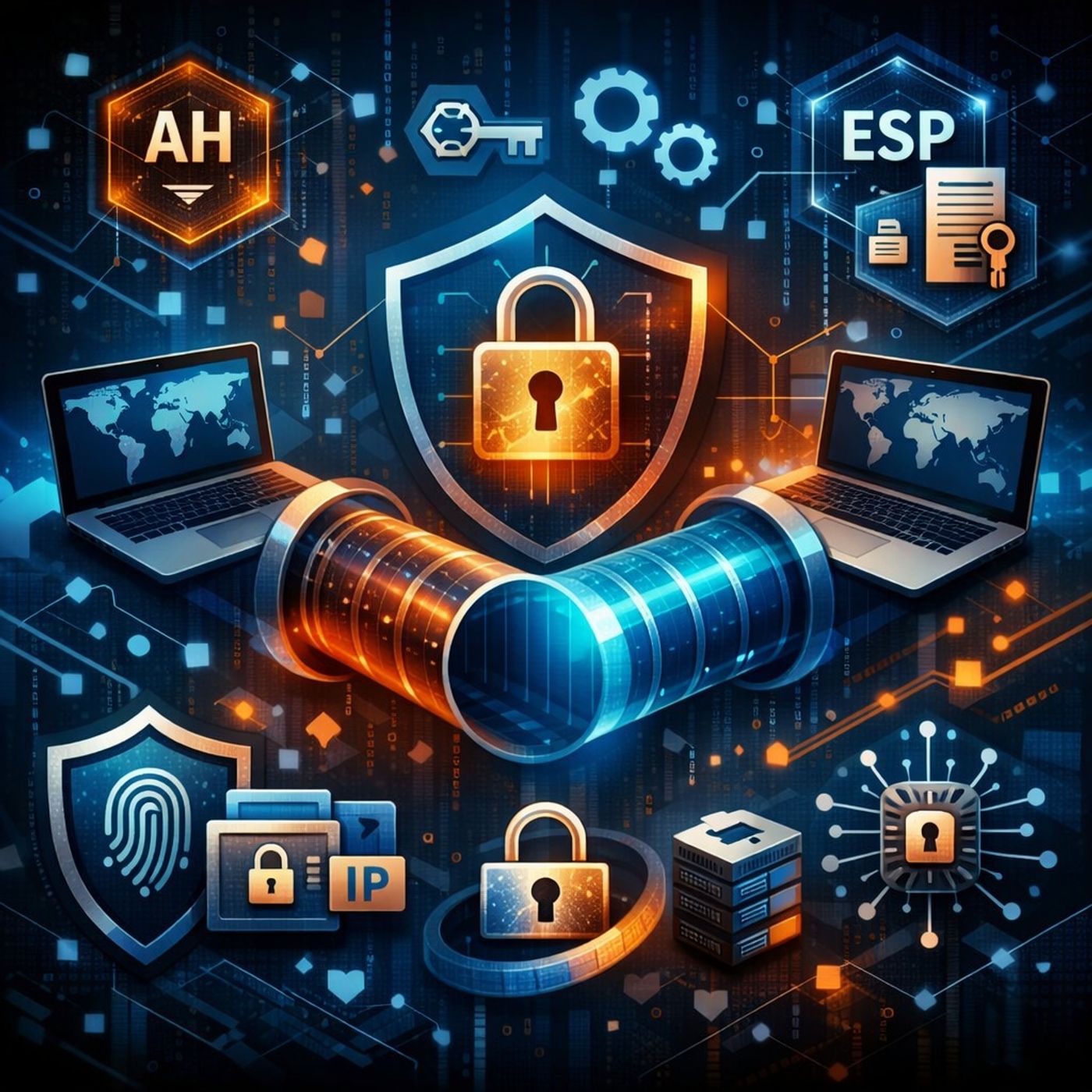
Course 17 - Computer Network Security Protocols And Techniques | Episode 9: Foundations of VPN Security: The IPsec Protocol Suite
from CyberCode Academy · host CyberCode Academy
In this lesson, you’ll learn about:The fundamentals of VPNs and IPsecKey management and Security Associations (SA)IPsec protocols: AH vs. ESPOperational modes: Transport vs. Tunnel1. VPNs and IPsec FundamentalsA VPN (Virtual Private Network) creates a secure, logical tunnel over the public internet, allowing private communication without costly dedicated lines.IPsec (Internet Protocol Security) operates at the network layer and supports both IPv4 and IPv6.Security services provided by IPsec include:Access Control – Only authorized users can send/receive dataData Origin Authentication – Verify the source of the packetIntegrity Protection – Ensure data hasn’t been tampered withConfidentiality – Encrypt the packet contentsAnti-Replay – Detect and discard duplicated or malicious packets2. IPsec Framework and Key ManagementEncryption algorithms: DES, 3DES, AES for confidentialityIntegrity algorithms: MD5, SHA to create digital signatures (MACs)Key exchange: Diffie-Hellman ensures a shared secret is established securely3. Security Associations (SA) and IKEAn SA is a unidirectional logical connection, identified by:SPI (Security Parameter Index)Destination IP addressBidirectional communication requires two SAs.IKE (Internet Key Exchange) establishes SAs and manages keys:IKE Phase 1: Creates a secure management tunnel (authenticates parties, negotiates algorithms, performs Diffie-Hellman exchange)IKE Phase 2: Sets up the actual data tunnel (negotiates AH/ESP and operational mode)IKEv2 is the modern version, supporting NAT traversal and keep-alive, and is widely used in 5G networks.4. IPsec Protocols: AH vs. ESPProtocolSecurity ProvidedNotesAH (Authentication Header)Integrity & authenticationDoes not encrypt; ignores changing IP header fields like TTLESP (Encapsulating Security Payload)Integrity, authentication, encryptionPreferred protocol for most VPNs and mandatory for 5G5. Operational Modes: Transport vs. TunnelTransport Mode: Only the payload is encrypted; original IP header is visibleTunnel Mode: Entire original IP packet (header + payload) is encrypted inside a new IP packetMost common setup: Tunnel Mode + ESP (encrypts everything and ensures privacy)Analogy:Transport Mode: Transparent envelope with coded letter inside – address is visible, content protectedTunnel Mode: Envelope inside an opaque crate – both content and sender/receiver are hiddenYou can listen and download our episodes for free on more than 10 different platforms:https://linktr.ee/cybercode_academy
Embed this episode
Ready to play
Course 17 - Computer Network Security Protocols And Techniques | Episode 9: Foundations of VPN Security: The IPsec Protocol Suite
No transcript for this episode yet
Similar Episodes
No similar episodes found.