
EPISODE · Jan 30, 2026 · 13 MIN
Course 21 - Digital Forensics: Windows Shellbags | Episode 1: Windows Shellbags: Forensic Fundamentals and Deep Dive Analysis
from CyberCode Academy · host CyberCode Academy
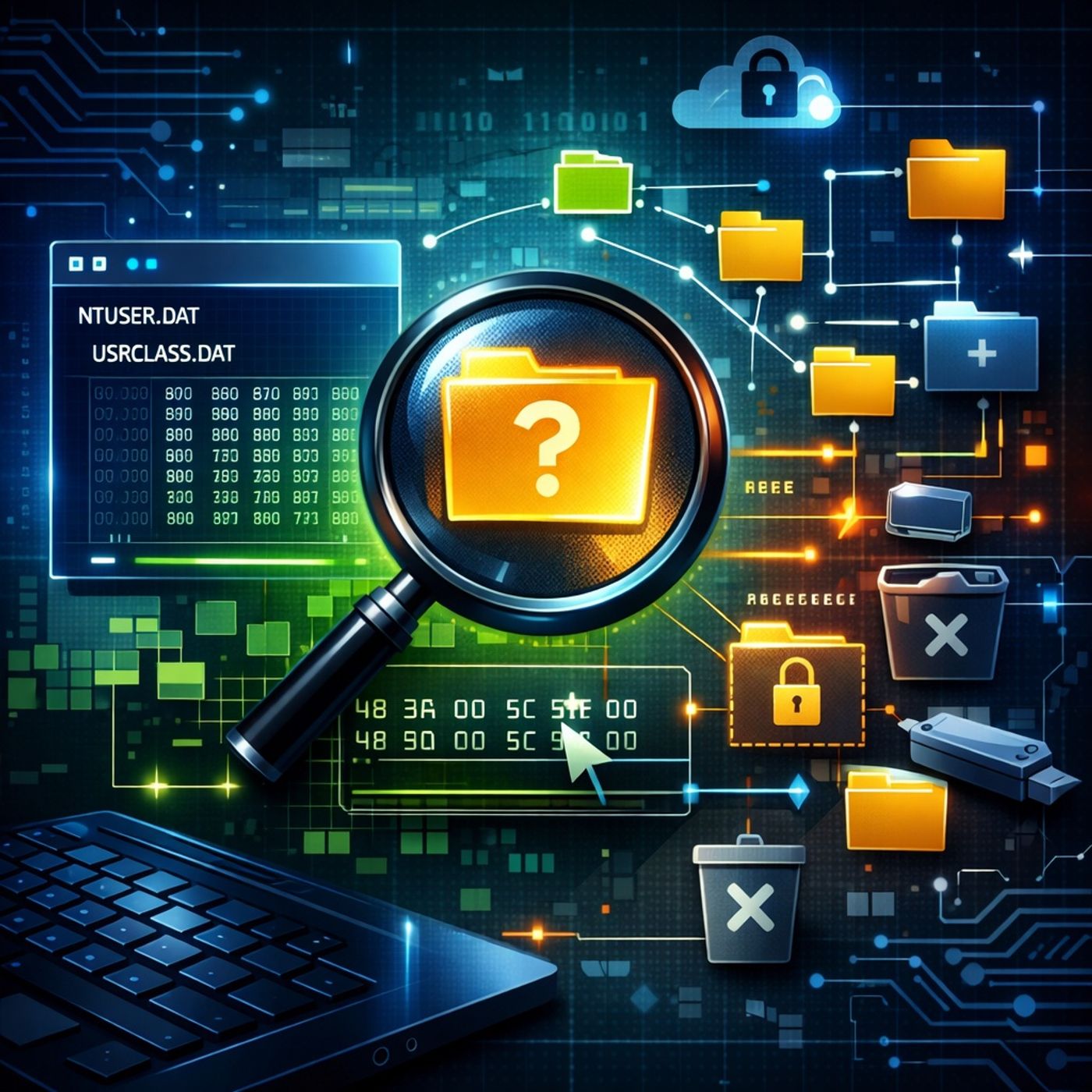
In this lesson, you’ll learn about:What Windows Shellbags Are and Why They MatterHow shellbags are registry-based artifacts created by Windows Explorer to store folder view preferences.Why they are a powerful source of user activity evidence, even when files or folders no longer exist.How Shellbags Are Created and UpdatedThe specific user actions that trigger shellbag updates, such as resizing windows or changing icon views.Why even casual folder browsing can leave long-lasting forensic traces.Forensic Value of ShellbagsHow shellbags persist even after folders are deleted or external/network drives are removed.How they enable user attribution, allowing investigators to determine which user accessed which path and when.Registry Locations and Data SourcesThe role of NTUSER.DAT and USRCLASS.DAT in storing shellbag data.The importance of the BagMRU registry key for tracking hierarchical folder navigation.Manual Reconstruction and ValidationHow investigators can manually “walk” BagMRU subkeys to reconstruct exact directory paths.Using hex and Unicode analysis to identify drive letters and folder names.Why manual validation is essential for evidence verification and expert testimony, even when automated tools are used.By the end of the episode, you’ll understand how Windows Shellbags record user navigation activity, where this data lives in the registry, and how to manually reconstruct folder paths to validate forensic findings with confidence.You can listen and download our episodes for free on more than 10 different platforms:https://linktr.ee/cybercode_academy
Embed this episode
Ready to play
Course 21 - Digital Forensics: Windows Shellbags | Episode 1: Windows Shellbags: Forensic Fundamentals and Deep Dive Analysis
No transcript for this episode yet
Similar Episodes
No similar episodes found.