
EPISODE · May 20, 2026 · 20 MIN
Course 34 - Cybersecurity Kill Chain | Episode 3: Delivery, Exploitation, and Installation
from CyberCode Academy · host CyberCode Academy
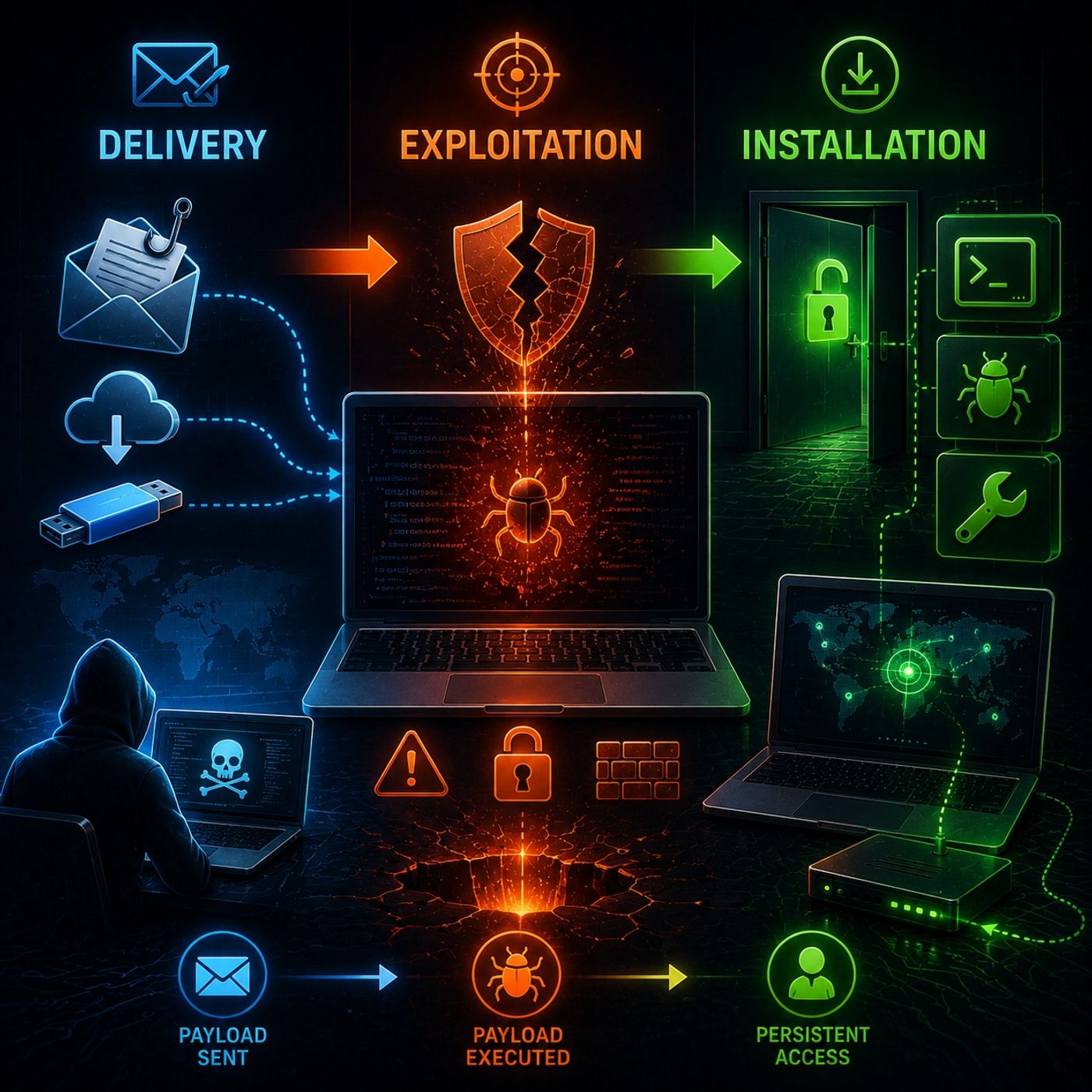
In this lesson, you’ll learn about: Delivery, Exploitation, and Installation in the Cyber Kill Chain1. Delivery Phase (Getting the Payload to the Target)🔹 DefinitionThe process of transferring the malicious payload to the victim🔹 Common Delivery Methods📡 Technical MethodsUsing exposed services:FTP uploadsWeb downloads💾 Physical MethodsInfected USB drives left in:OfficesPublic places🎭 Social Engineering (Most Effective)Tool:Social Engineering Toolkit (SET)Used for:Spear-phishing campaignsMass phishing emails👉 Key idea:Trick the user into executing the payload themselves2. Exploitation Phase (Triggering the Attack)🔹 DefinitionThe moment the payload:executes successfullybypasses security controls🔹 How Exploitation HappensExploiting:Software vulnerabilitiesMisconfigurations🔹 Most Common Weakness👉 Human behaviorClicking malicious linksEntering credentials on fake pages3. Installation Phase (Maintaining Access)🔹 DefinitionEstablishing a persistent foothold on the system🔹 GoalEnsure attacker can:Reconnect anytimeMaintain control🔹 Common ConceptInstalling:BackdoorsPersistent malware🔹 Tool ExampleMetasploitUsed to:Set up a listenerWait for incoming connection from victim👉 Once connected:A session is openedAttacker gains remote control4. Exploitation vs Installation (Key Difference)PhasePurposeResultExploitationBreak into the systemInitial accessInstallationStay inside the systemPersistent access5. Full Flow UnderstandingDeliveryGets payload to victimExploitationExecutes payload successfullyInstallationKeeps long-term accessKey TakeawaysDelivery relies heavily on social engineeringExploitation is about triggering executionInstallation ensures persistenceHumans are often the weakest linkTools automate the process, but logic remains consistentBig PictureThese phases represent:👉 From sending the attack → to owning the systemDelivery = Entry pointExploitation = Break-inInstallation = PersistenceMental ModelThink of it like:Delivery → “Send the package”Exploitation → “Open the door”Installation → “Stay inside the house”You can listen and download our episodes for free on more than 10 different platforms:https://linktr.ee/cybercode_academy
Embed this episode
Ready to play
Course 34 - Cybersecurity Kill Chain | Episode 3: Delivery, Exploitation, and Installation
No transcript for this episode yet
Similar Episodes
No similar episodes found.