
EPISODE · Nov 19, 2025 · 12 MIN
Course 9 - Internet of Things Security | Episode 1: Introduction to the IOT: Components, Architectures, Use Cases, and Security
from CyberCode Academy · host CyberCode Academy
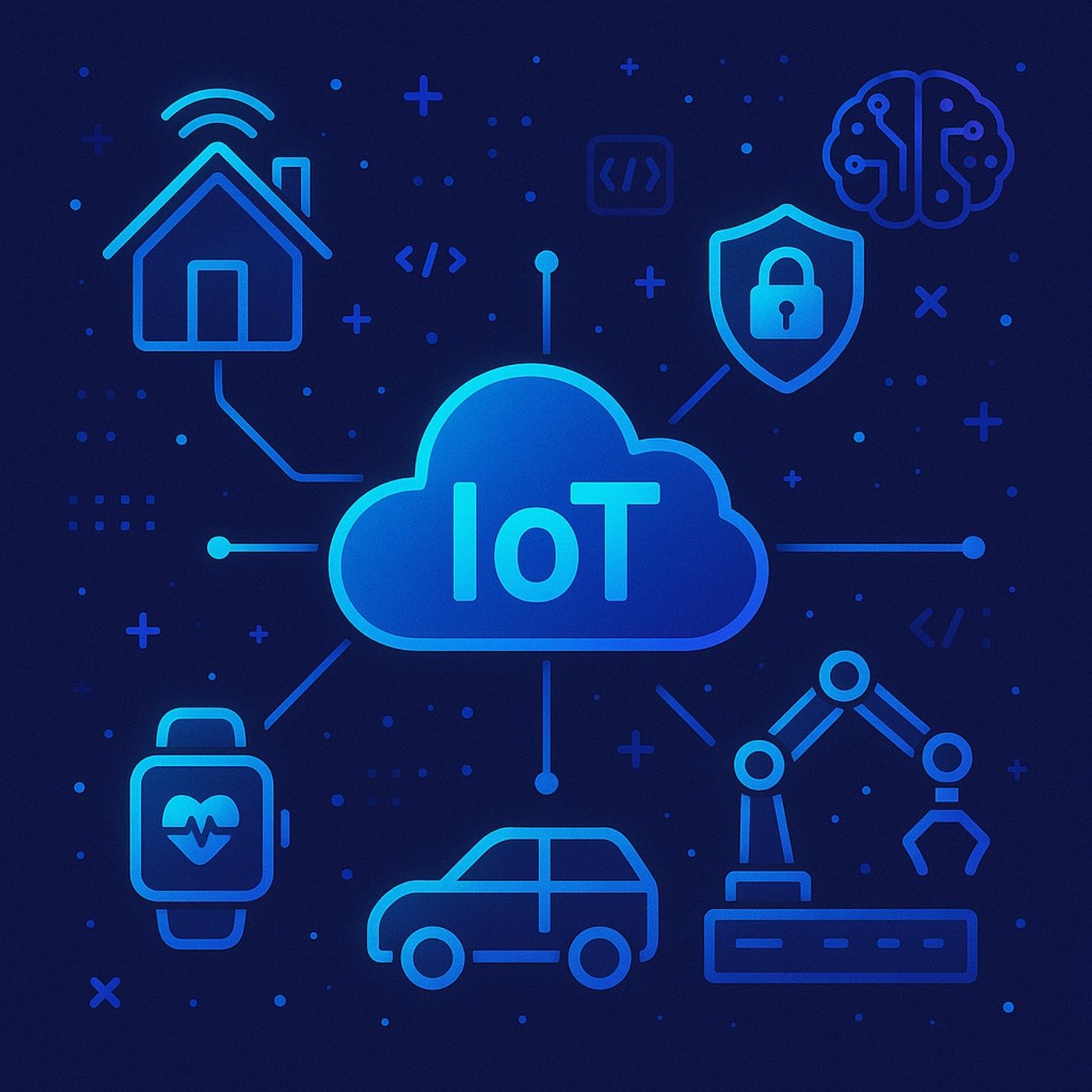
In this lesson, you’ll learn about:The definition and core concept of the Internet of Things (IoT)Key characteristics and capabilities of IoT “things”IoT network types, from small-scale to specialized networksCommon IoT protocols and interfacesIoT architectural models and connectivity methodsReal-world IoT applications and benefits across multiple sectorsSecurity threats and vulnerabilities affecting IoT devices, networks, and dataBest practices and preliminary recommendations for securing IoT systems1. IoT Definition and Core ConceptThe IoT consists of an evolving set of cyber and/or physical entities and networks.“Things” are devices that can be connected, interacted with, and controlled.Core capabilities include: network connectivity, data sensing and storage, computation, communication, autonomous operation, and response to commands.2. IoT Network TypesSmall-Scale Networks: PANs (Personal Area Networks) and BANs (Body Area Networks), e.g., wearables like Fitbits or pacemakers.Localized Networks: LANs (Local Area Networks), WLANs (Wireless LANs), and HANs (Hospital/Home Area Networks).Large-Scale Networks: MANs (Metropolitan Area Networks) and WANs (Wide Area Networks).Specialized Networks: M2M (Machine-to-Machine) networks and Wireless Sensor Networks.3. IoT Protocols and InterfacesIoT leverages standard networking protocols, as well as IoT-specific protocols:RFID (Radio Frequency Identification)MQTT (Message Queuing Telemetry Transport)Bluetooth Low Energy (BLE)Other protocols for IoT-specific communication4. IoT Architectural ModelsDirect Device-to-Device Communication: Example: smart bulb communicates directly with a switch.Local Hub Connectivity: Example: smoke alarm sending data to a local laptop.Gateway-to-Cloud Communication: Example: devices connected via a phone or gateway for cloud-based processing and analysis.5. Real-World Applications and BenefitsSmart Environments: Smart cities (e.g., Singapore, Barcelona), smart homes, and university research labs.Daily Life: Transportation (autonomous vehicles), personal assistants, access control systems, and smart retail (e.g., smart fridges).Health and Wellness: Remote monitoring, elderly “aging in place” support, and wearable fitness trackers.Industry and Finance: Factory floor automation via sensors, financial services personalization, and insurance risk management.6. IoT Security Threats and VulnerabilitiesPhysical or logical infrastructure theft or tamperingData leakage and breachesAuthentication bypass or weak credential managementDenial of Service (DoS) attacksFirmware malware and unpatched vulnerabilitiesHomogeneity of devices increasing systemic riskChallenges with accountability in autonomous systems (e.g., self-driving vehicles)7. Security RecommendationsConnect devices selectively and avoid unnecessary network exposureSegment networks (e.g., separate IoT devices from main networks)Verify and adjust default security settings on devicesSecurely dispose of old devices and sensitive dataMinimize unnecessary communication points to reduce attack surfacesYou can listen and download our episodes for free on more than 10 different platforms:https://linktr.ee/cybercode_academy
Embed this episode
Ready to play
Course 9 - Internet of Things Security | Episode 1: Introduction to the IOT: Components, Architectures, Use Cases, and Security
No transcript for this episode yet
Similar Episodes
No similar episodes found.