
EPISODE · Jun 29, 2021 · 27 MIN
COVID-19:Being a Caregiver, Season 3- Episode 30
from Dementia Dialogue · host dementiadialogue
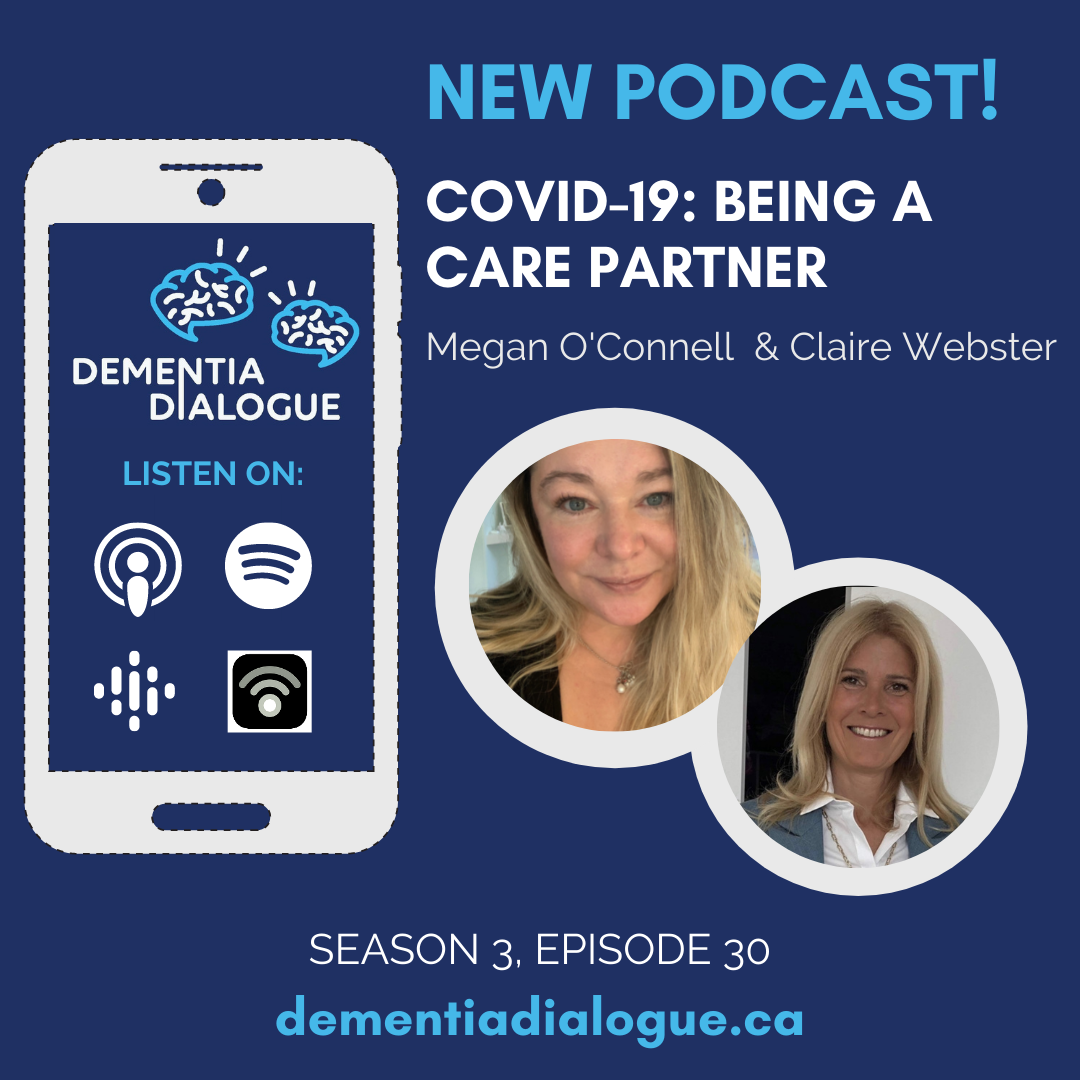
Early on, Megan O’Connell and Claire Webster sensed the impact that COVID-19 would have on care partners of people living with dementia in the community. Megan is based at the University of Saskatchewan and Claire who was caregiver for her mother before she died, has her own company http://www.carecrosswalk.com and is lead for McGill Cares http://www.mcgill.ca/dementia As members of the Alzheimer Society Of Canada Task Force on COVID-19, https://alzheimer.ca/en/help-support/dementia-resources/managing-through-covid-19/covid-19-tips-caregivers, they undertook a scoping review https://link.springer.com/article/10.17269%2Fs41997-021-00500-z which concluded that “COVID-19 has severely impacted the lives of people with dementia and their care partners”. People with dementia and care partners experienced care partner fatigue and burnout, confinement challenges, and worsening neuropsychiatric symptoms and deteriorating cognitive function. These were worsened if people lived alone, had advanced dementia and were confined for a long time. Through the Rural and Remote Memory Clinic team at USask, www.ruraldementiacare.usask.ca, Megan was already experimenting with technology to extend services to rural areas and reduce travel burden. She helped the Alzheimer Society of Saskatchewan www.alzheimer.ca/sk adapt their services to an online model to compensate for the loss of caregiver supports. Claire likewise migrated her caregiver service using ZOOM and the McGill Cares went online. Megan and Claire talk about their observations of the experience of care partners and families during COVID 19 and the success of technological changes in help mitigate people’s isolation. They agree that more consideration needs to be given to how decisions impact people’s rights and reiterate the central role of care partners and families as advocates for those who cannot speak for themselves. Other related research by Dr. O’Connell et al: Going From Zero to 100 in Remote Dementia Research: A Practical Guide https://www.jmir.org/2021/1/e24098/ Using Twitter to Understand the COVID-19 Experiences of People With Dementia: Infodemiology Study https://www.jmir.org/2021/2/e26254 Claire Webster recommends The Care of the Older Person” written by colleagues from McGill “to provide concrete answers for care providers …as well as spouses and children of the elderly. Most importantly, this information is for seniors themselves… “ https://careoftheolderperson.com/
What this episode covers
Early on, Megan O’Connell and Claire Webster sensed the impact that COVID-19 would have on care partners of people living with dementia in the community. Megan is based at the University of Saskatchewan and Claire who was caregiver for her mother before she died, has her own company http://www.carecrosswalk.com and is lead for McGill Cares http://www.mcgill.ca/dementia As members of the Alzheimer Society Of Canada Task Force on COVID-19, https://alzheimer.ca/en/help-support/dementia-resources/managing-through-covid-19/covid-19-tips-caregivers, they undertook a scoping review https://link.springer.com/article/10.17269%2Fs41997-021-00500-z which concluded that “COVID-19 has severely impacted the lives of people with dementia and their care partners”. People with dementia and care partners experienced care partner fatigue and burnout, confinement challenges, and worsening neuropsychiatric symptoms and deteriorating cognitive function. These were worsened if people lived alone, had advanced dementia and were confined for a long time. Through the Rural and Remote Memory Clinic team at USask, www.ruraldementiacare.usask.ca, Megan was already experimenting with technology to extend services to rural areas and reduce travel burden. She helped the Alzheimer Society of Saskatchewan www.alzheimer.ca/sk adapt their services to an online model to compensate for the loss of caregiver supports. Claire likewise migrated her caregiver service using ZOOM and the McGill Cares went online. Megan and Claire talk about their observations of the experience of care partners and families during COVID 19 and the success of technological changes in help mitigate people’s isolation. They agree that more consideration needs to be given to how decisions impact people’s rights and reiterate the central role of care partners and families as advocates for those who cannot speak for themselves. Other related research by Dr. O’Connell et al: Going From Zero to 100 in Remote Dementia Research: A Practical Guide https://www.jmir.org/2021/1/e24098/ Using Twitter to Understand the COVID-19 Experiences of People With Dementia: Infodemiology Study https://www.jmir.org/2021/2/e26254 Claire Webster recommends The Care of the Older Person” written by colleagues from McGill “to provide concrete answers for care providers …as well as spouses and children of the elderly. Most importantly, this information is for seniors themselves… “ https://careoftheolderperson.com/
NOW PLAYING
COVID-19:Being a Caregiver, Season 3- Episode 30
No transcript for this episode yet
Similar Episodes
No similar episodes found.
Similar Podcasts
No similar podcasts found.