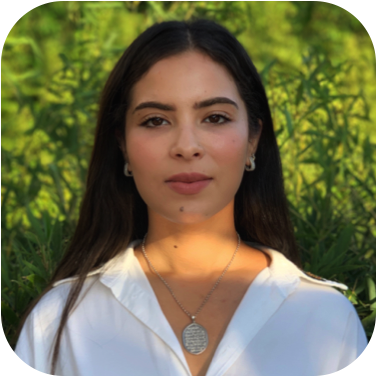
Criminal Justice and the Formulation of State-Society Relations in Morocco episode artwork

EPISODE · Jan 16, 2020 · 13 MIN

Criminal Justice and the Formulation of State-Society Relations in Morocco

from Maghrib in Past & Present | Podcasts · host themaghribpodcast.com

Episode 82: Criminal Justice and the Formulation of State-Society Relations in Morocco In this podcast, Fatim-Zohra El Malki seeks to retrace the socio-legal history of Morocco’s criminal justice system and its impact on the formulation of state-society relations. El Malki argues that Morocco’s Penal Code (PC) can serve as a useful object of analysis for tracing how the Moroccan state used the criminal system to deepen and consolidate its power following independence. Through the historicization of the criminal system, El Malki aims to center the legal processes that contributed to the territorial construction and consolidation of what is now the Kingdom of Morocco. Rather than focusing on the trajectory of the codes and legal systems, this presentation is an attempt to understand the mechanisms of violence and repression embedded in the legal system across time, of which the penal code is only a fragment. This discussion unravels an enduring paradox: how the makhzen’s deepening authority and territorial expansion created a strong central state at the expense of the progressive alienation of the citizen from the central power. In relation to criminal justice, the makhzen’s monopoly over judicial power placed a chokehold on the sphere of checks and balances between the citizen and the central authority. The PC constitutes a space for the legal expression of political violence perpetrated by the state against society, bearing in mind that the violence of the law is not inevitably illegitimate nor unethical. The unbalanced interplay of power dynamics, which lead to the overwhelming monopoly of violence by the state is what constitutes the core of the argument that places the PC at the center of this space. El Malki argues that reforming the system today would mean transferring the discursive monopoly of violence outside this scope, therefore shaking the safeguarded equilibrium of power that the modern Moroccan state holds. Fatim-Zohra El Malki is a DPhil student at the University of Oxford. Her research project revolves around the making of the criminal justice system in Morocco, with a particular focus on the Penal Code. Fatim-Zohra El Malki holds master’s degrees in Arab Studies from Georgetown University’s Edmund A. Walsh School of Foreign Service (2016) and in Security Studies from Queen's University of Belfast (2013).  This podcast is part of the Contemporary Thought series and was recorded on 21 June 2019. at the  Centre d'Études Maghrébines à Tunis (CEMAT). We thank Dr. Tamara Turner, Ethnomusicologist and Research Fellow at the Max Planck Institute for Human Development, Center for the History of Emotions, for her interpretation of Natiro/ Ya Joro, from the Hausa repertoire of diwan. Posted by Hayet Lansari, Librarian, Outreach Coordinator, Content Curator (CEMA).

In this podcast, Fatim-Zohra El Malki seeks to retrace the socio-legal history of Morocco’s criminal justice system and its impact on the formulation of state-society relations. El Malki argues that Morocco’s Penal Code (PC) can serve as a useful object of analysis for tracing how the Moroccan state used the criminal system to deepen and consolidate its power following independence. Through the historicization of the criminal system, El Malki aims to center the legal processes that contributed to the territorial construction and consolidation of what is now the Kingdom of Morocco. Rather than focusing on the trajectory of the codes and legal systems, this presentation is an attempt to understand the mechanisms of violence and repression embedded in the legal system across time, of which the penal code is only a fragment. This discussion unravels an enduring paradox: how the makhzen’s deepening authority and territorial expansion created a strong central state at the expense of the progressive alienation of the citizen from the central power. In relation to criminal justice, the makhzen’s monopoly over judicial power placed a chokehold on the sphere of checks and balances between the citizen and the central authority. The PC constitutes a space for the legal expression of political violence perpetrated by the state against society, bearing in mind that the violence of the law is not inevitably illegitimate nor unethical. The unbalanced interplay of power dynamics, which lead to the overwhelming monopoly of violence by the state is what constitutes the core of the argument that places the PC at the center of this space. El Malki argues that reforming the system today would mean transferring the discursive monopoly of violence outside this scope, therefore shaking the safeguarded equilibrium of power that the modern Moroccan state holds. Fatim-Zohra El Malki is a DPhil student at the University of Oxford. Her research project revolves around the making of the criminal justice system in Morocco, with a particular focus on the Penal Code. Fatim-Zohra El Malki holds master’s degrees in Arab Studies from Georgetown University’s Edmund A. Walsh School of Foreign Service (2016) and in Security Studies from Queen’s University of Belfast (2013).

NOW PLAYING

Criminal Justice and the Formulation of State-Society Relations in Morocco

0:00 13:31

No transcript for this episode yet

We transcribe on demand. Request one and we'll notify you when it's ready — usually under 10 minutes.

MG Show MG Show The MG Show, hosted by Jeffrey Pedersen and Shannon Townsend, is a leading alternative media platform dedicated to uncovering the truth behind today’s most pressing political issues. Launched in 2019, the show has grown exponentially, offering unfiltered insights, comprehensive research, and real-time analysis. With a commitment to independent journalism and factual integrity, the MG Show empowers its audience with knowledge and encourages active participation in the political discourse. Eat to Live Jenna Fuhrman, Dr. Fuhrman Our health is our most precious gift and smart nutrition can change your life. Each month, join Dr. Fuhrman and his daughter, Jenna Fuhrman as they discuss important topics in the world of nutrition. Eat to Live will change the way you eat and think about food. French Your Way Jessica: Native French teacher founder of French Your Way Boost your French listening skills and test your comprehension with this one of a kind series of podcasts. Get the chance to listen to a real conversation between native speakers talking at normal speed AND customise your learning experience through carefully designed sets of questions (2 levels of difficulty) available for download at www.frenchvoicespodcast.com. All interviews also come with the transcript. French teacher Jessica interviews native speakers of French from around the world who share a bit of their life and passion. Where else would you meet in one same place a French yoga teacher based in Melbourne, a soap manufacturer from Provence, or a couple cycling around the world? XXX Tech by SOVRYN Dr. Brian Sovryn The crossroads between technology, sensuality, and metaphysics - and the longest running anarchist podcast in the world! Brought to you by Dr. Brian Sovryn.

Frequently Asked Questions

How long is this episode of Maghrib in Past & Present | Podcasts?

This episode is 13 minutes long.

When was this Maghrib in Past & Present | Podcasts episode published?

This episode was published on January 16, 2020.

What is this episode about?

Episode 82: Criminal Justice and the Formulation of State-Society Relations in Morocco In this podcast, Fatim-Zohra El Malki seeks to retrace the socio-legal history of Morocco’s criminal justice system and its impact on the formulation of...

Can I download this Maghrib in Past & Present | Podcasts episode?

Yes, you can download this episode by clicking the download button on the episode player, or subscribe to the podcast in your preferred podcast app for automatic downloads.
URL copied to clipboard!