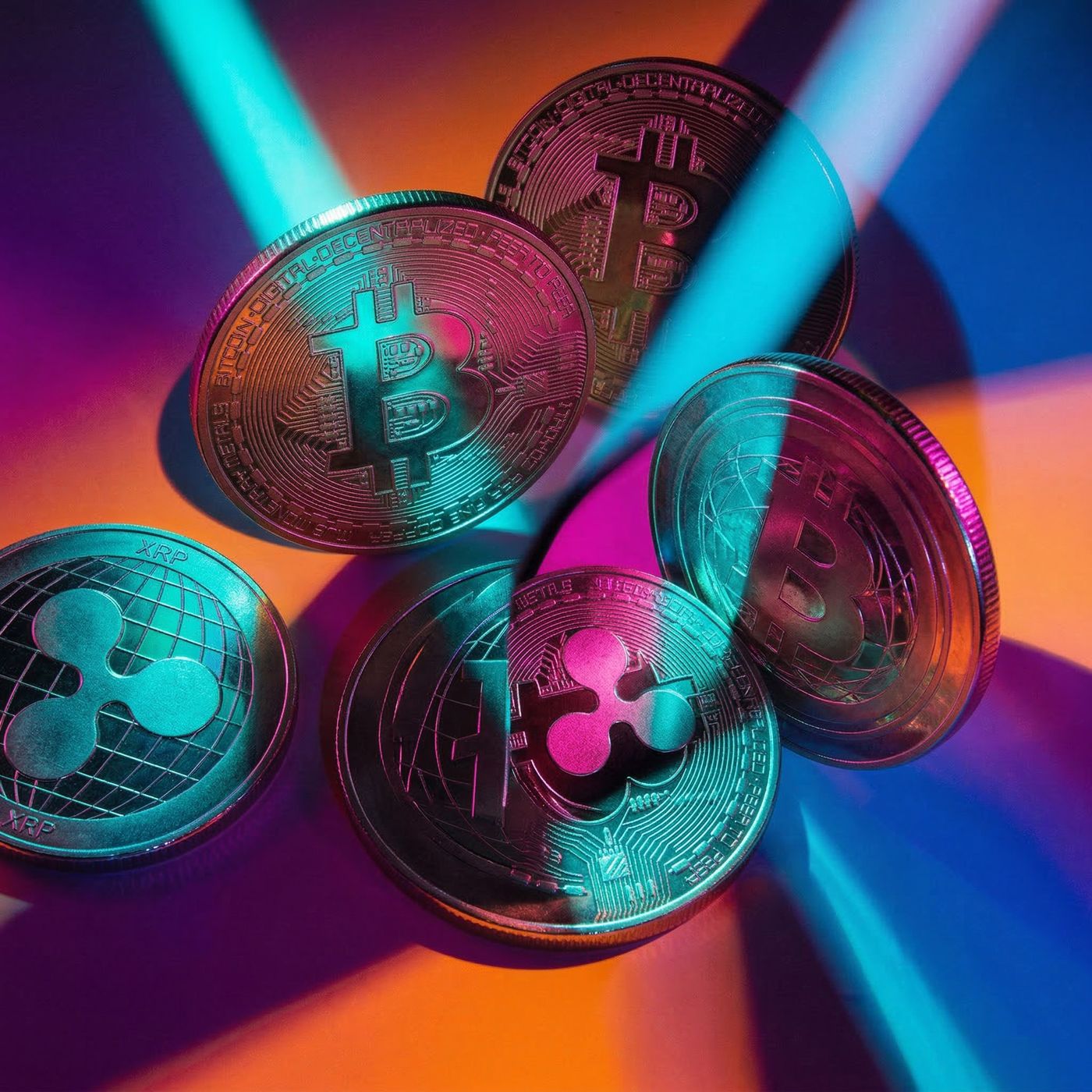
Crypto Market Outlook 2026: The Institutional Case for XRP and Bitcoin episode artwork

EPISODE · Mar 20, 2026 · 30 MIN

Crypto Market Outlook 2026: The Institutional Case for XRP and Bitcoin

from The Money Lab · host Norse Studio

The cryptocurrency market in 2026 is navigating a complex landscape following a period of record highs and subsequent volatility. Bitcoin remains the primary digital asset, serving as a global store of value primarily due to its programmed scarcity. With nearly 95% of its total 21 million supply already in circulation, its protocol ensures a declining issuance rate that appeals to those seeking a hedge against traditional market fluctuations. Its decentralized architecture and the security of the blockchain have reinforced its reputation as a "digital gold" for both individual and institutional investors. Furthermore, the establishment of regulated exchange-traded funds has integrated it more deeply into traditional financial systems.In contrast, XRP is positioned as a utility-focused asset designed to facilitate efficient cross-border payments. It acts as a bridge currency within a specialized payments network, aiming to provide nearly instant settlement at a fraction of the cost associated with traditional banking systems. Unlike assets that derive value solely from scarcity, the growth of XRP is closely tied to the real-world adoption of its underlying technology by global financial institutions. The resolution of significant regulatory challenges in 2025 has provided the legal clarity necessary for institutions to begin adopting the asset with more confidence.When comparing the two as investments, they offer distinct risk and reward profiles. Bitcoin is often favored during periods of economic uncertainty because of its deep liquidity and institutional priority. However, the massive market capitalization of Bitcoin—reaching approximately $2 trillion—means that substantial new capital is required to drive significant price increases. XRP, with a much smaller market capitalization of around $120 billion, offers a potential for asymmetric upside. In this context, even modest institutional allocations can lead to much larger percentage gains for XRP compared to Bitcoin.Despite these opportunities, structural hurdles remain for both. For XRP, success of the underlying ledger does not always translate into demand for the token itself, as some participants may use the technology without holding the digital asset. To mitigate the impact of volatility in transactions, stablecoins have been introduced to provide more price consistency within the network. Bitcoin's role as a stable store of value was also tested in late 2025 when it experienced sharp declines during a period of geopolitical tension while gold prices surged.Current market data indicates that Bitcoin tends to exhibit more resilience during market corrections, often outperforming alternative assets when investors move toward safer holdings. On-chain analysis suggests that while retail sentiment may fluctuate, institutional interest remains robust, with significant accumulation occurring during price dips. Ultimately, the trajectory for both assets heading through 2026 depends on whether the market rewards established scarcity or the growing utility of blockchain-based payment infrastructure.Become a supporter of this podcast: https://www.spreaker.com/podcast/the-money-lab--6886555/support.

The cryptocurrency market in 2026 is navigating a complex landscape following a period of record highs and subsequent volatility. Bitcoin remains the primary digital asset, serving as a global store of value primarily due to its programmed scarcity. With nearly 95% of its total 21 million supply already in circulation, its protocol ensures a declining issuance rate that appeals to those seeking a hedge against traditional market fluctuations. Its decentralized architecture and the security of the blockchain have reinforced its reputation as a "digital gold" for both individual and institutional investors. Furthermore, the establishment of regulated exchange-traded funds has integrated it more deeply into traditional financial systems.In contrast, XRP is positioned as a utility-focused asset designed to facilitate efficient cross-border payments. It acts as a bridge currency within a specialized payments network, aiming to provide nearly instant settlement at a fraction of the cost associated with traditional banking systems. Unlike assets that derive value solely from scarcity, the growth of XRP is closely tied to the real-world adoption of its underlying technology by global financial institutions. The resolution of significant regulatory challenges in 2025 has provided the legal clarity necessary for institutions to begin adopting the asset with more confidence.When comparing the two as investments, they offer distinct risk and reward profiles. Bitcoin is often favored during periods of economic uncertainty because of its deep liquidity and institutional priority. However, the massive market capitalization of Bitcoin—reaching approximately $2 trillion—means that substantial new capital is required to drive significant price increases. XRP, with a much smaller market capitalization of around $120 billion, offers a potential for asymmetric upside. In this context, even modest institutional allocations can lead to much larger percentage gains for XRP compared to Bitcoin.Despite these opportunities, structural hurdles remain for both. For XRP, success of the underlying ledger does not always translate into demand for the token itself, as some participants may use the technology without holding the digital asset. To mitigate the impact of volatility in transactions, stablecoins have been introduced to provide more price consistency within the network. Bitcoin's role as a stable store of value was also tested in late 2025 when it experienced sharp declines during a period of geopolitical tension while gold prices surged.Current market data indicates that Bitcoin tends to exhibit more resilience during market corrections, often outperforming alternative assets when investors move toward safer holdings. On-chain analysis suggests that while retail sentiment may fluctuate, institutional interest remains robust, with significant accumulation occurring during price dips. Ultimately, the trajectory for both assets heading through 2026 depends on whether the market rewards established scarcity or the growing utility of blockchain-based payment infrastructure.Become a supporter of this podcast: https://www.spreaker.com/podcast/the-money-lab--6886555/support.

NOW PLAYING

Crypto Market Outlook 2026: The Institutional Case for XRP and Bitcoin

0:00 30:21

No transcript for this episode yet

We transcribe on demand. Request one and we'll notify you when it's ready — usually under 10 minutes.

MG Show MG Show The MG Show, hosted by Jeffrey Pedersen and Shannon Townsend, is a leading alternative media platform dedicated to uncovering the truth behind today’s most pressing political issues. Launched in 2019, the show has grown exponentially, offering unfiltered insights, comprehensive research, and real-time analysis. With a commitment to independent journalism and factual integrity, the MG Show empowers its audience with knowledge and encourages active participation in the political discourse. Ask A Spaceman Archives - 365 Days of Astronomy Ask A Spaceman Archives - 365 Days of Astronomy Podcasting Astronomy Every Day of the Year Breaking News Show | eTurboNews Juergen Thomas Steinmetz News is relevant to the global travel and tourism industry, human rights and global issues.Breaking news when it happens and only from the source. いろはにマネーの「ながら学習」 IrohaniMoney この番組では、インターン生2人が、金融、経済、投資関連の気になる情報を分かりやすくお伝えしていきます。インターン生の会話を「ながら聴き」する感覚で一緒に勉強していきましょう!ご意見箱フォーム:https://forms.gle/TTGaVP2TJksNMKJo7ぜひお便りや感想をお待ちしています!公式X:https://x.com/irohanimoney番組のハッシュタグは「#いろはにながら」です。番組への感想をお待ちしています!いろはにマネー:https://www.bridge-salon.jp/money/姉妹サイト:https://kabu.bridge-salon.jp/姉妹サイト:https://bridge-salon.jp/(株)インベストメントブリッジ運営

Frequently Asked Questions

How long is this episode of The Money Lab?

This episode is 30 minutes long.

When was this The Money Lab episode published?

This episode was published on March 20, 2026.

What is this episode about?

The cryptocurrency market in 2026 is navigating a complex landscape following a period of record highs and subsequent volatility. Bitcoin remains the primary digital asset, serving as a global store of value primarily due to its programmed scarcity....

Is there a transcript available for this episode?

Yes, a full transcript is available for this episode. You can read the complete transcript on the episode page.

Can I download this The Money Lab episode?

Yes, you can download this episode by clicking the download button on the episode player, or subscribe to the podcast in your preferred podcast app for automatic downloads.
URL copied to clipboard!