
Wait, you're listening to RadioLab from WNYC. Hey, I'm Jan Abenrod. I'm Robert Croweich. This is RadioLab, and today.
Well, today we're going to tell you a story which we hope does not become your future, but it raises a simple question. We all have computers, we love computers, we depend upon computers, but what if the cost of using your computer becomes more than you're willing to pay? Two stories today which suggest that we might be at the very beginning of a nightmare. The first comes from journalist Alina Simone and her mother Ena.
I mean, do you want to start with my mom because it really happened to her? You know, she only got in touch with me maybe on day six. Yeah. Okay.
So what? Yeah, day one. What was the first thing that happened? On day one, what happened that I called Tufts University IT Services because my husband, Phil, said Tufts complaining that my computer isn't verbally and verbally slow.
She stills IT. I don't know what's going on every time I try and open a window. It's like, click... Click.
Click. So practically stopped working. What do I do? They checked whatever, said probably nothing, rebooted, so did nothing.
Then... She went away for the weekend. And when I came back, I turned the computer on and like it was doing something. And I saw many, many windows covering her screen.
And those windows multiplied. I cannot open any of them. And I could not figure but it was very late at night. So...
She went to bed. Got the next day. Called Tufts again asking for help. They had no idea what was going on.
No. She says at this point, whatever the computer had been doing. It was done. All the windows disappeared.
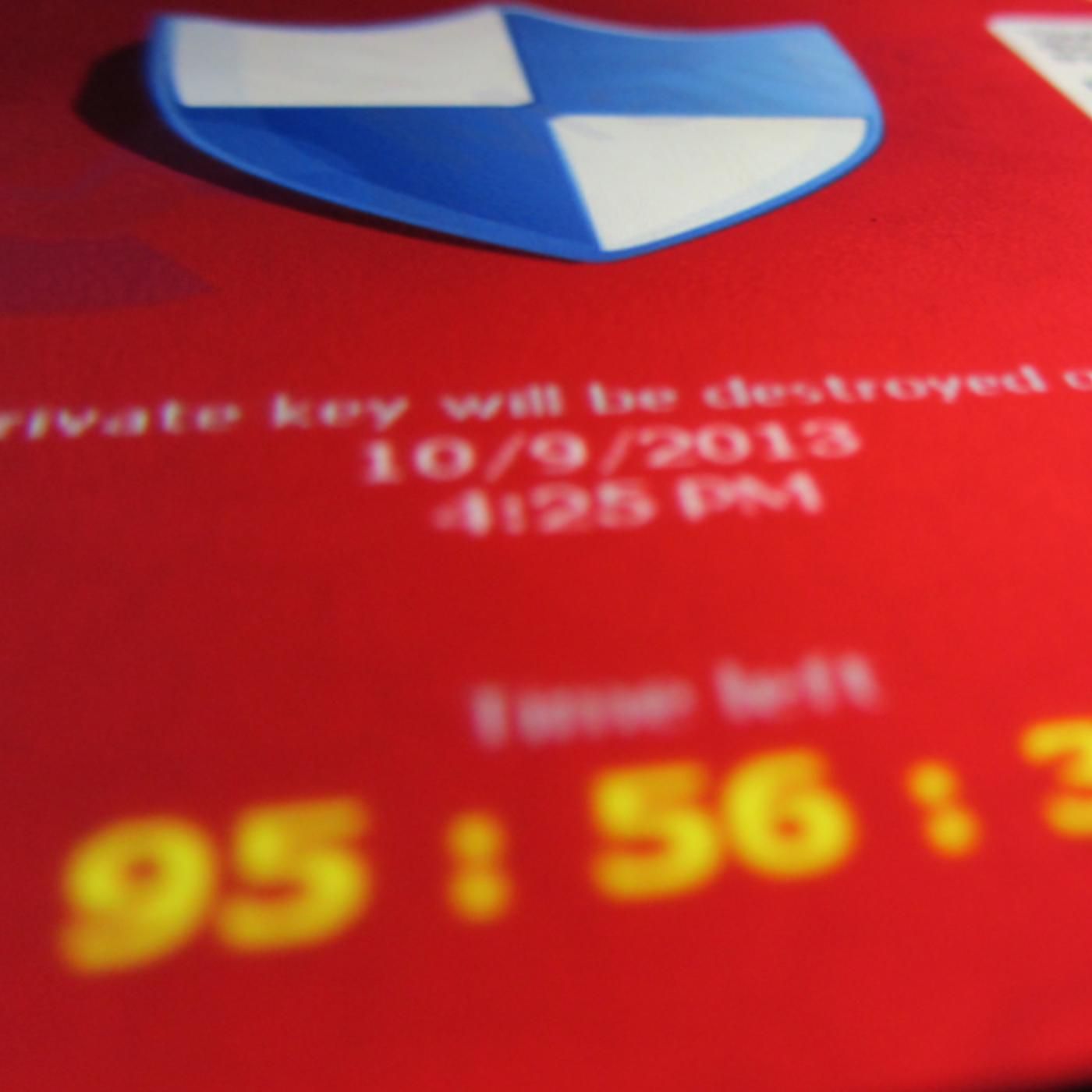
Except now, anytime she tried to click any of her files. The pictures, videos, I cannot open any of them. Instead, every time this message would pop up. And the message says...
What happened to your files? All my files. All of your files have been protected with a strong encryption. Using crypto wall, this means that the structure and data within your files have been irrevocably changed.
And in order to get them back... To unlock files, you must pay 500 US dollars. If you really value your data, then we suggest that you do not waste valuable time searching for the solutions because they do not exist. You're saying that somebody went into your computer and locked up all of your things?
Yeah, they gave me the exact count. 5,726 files encrypted. Wait, wait, wait, wait. You say they?
Did you have any image in your head of whom? My first thought was Russia or Ukraine, which is even better. Why? Because, you know, everybody talks about excellent, fantastic education there.
Especially math. I'm from there, I know. You know, she's right. They surpassed the US in educating their kids when it comes to math and science.
And they've got a severe underemployment problem. Especially outside of the major cities, which is where these viruses often trace down to. Not Moscow and St. Petersburg, but we're talking about, you know, backwater.
I was so positive that it comes from that part of the world that I wrote them in Russian. Apparently the criminal said provider a link to a website where she could send them a message, you know, customer sport. I wrote them, I don't know how to translate it in English, more accurately. Something like, I wish you all die or draw that.
When you all die. About an in Russian language, there is a word to die for humans or another word for animals. She said, use the animal. Yes, not a curse.
But they got the message. Now, Ena says she thought about just wiping the computer clean so that she wouldn't have to pay. But then it occurred to her that her husband had all these files on there. Which he needed.
You know, like business receipts that he hadn't filed yet. Which he's lazy to do so he has me to help. And she's right that like, you know, she has this tax information, this reimbursement information. And ultimately, it's worth more than $500.
My husband did not want to pay. I over rolled him. So Ena decides to follow the instructions basically. One, download and install a tour browser.
So she goes and installs this browser called Tor, which apparently is not traceable. Two, run the browser and we for initialization. She does that. Three, type in the address bar, kpy7, ycr7, jxq.
Then she's directed to a site where basically tells her, look, if you don't trust us. We can decrypt one of your files for free. As a sample that when you pay us, you would know that you could really get all your files back. And I was curious.
I decided that I will try. So she clicked the button and said yes. And I got one file back. But as soon as I did, the clocks that ticking.
Literally, she says it will clock appear to the top of the browser. They gave me exactly seven days. 167 hours, 59 minutes, 59 seconds. So you decrypt the thing and then suddenly it's a countdown?
Yes, they say, if you won't pay by this day, then the file will be doubled. And if you won't pay in one movie, then you will lose your files forever. And you will never get it back. Now, in the message, I told Ena that she had to pay that $500 fine, not in dollars.
But in Bitcoin, you know, this was the first time in my life ever. I heard the term Bitcoin. So I found this website called coin cafe where you can buy bitcoins and to buy this bitcoins is a nightmare. It's a fortune.
What you needed to do was exchange 500 bucks for the requisite amount of bitcoins. And at the time, 500 bucks equaled 1.37 bitcoins. But before she could even make that exchange, she had to fill out all these forms of all these questions. What happened?
What is the reason to buy Bitcoin? And everything is well listed. One of them was ransom. So they knew that's her category.
Yes, it was the first reason to pay a ransom to the criminals. Next, she says, after you fill out all the forms, you have to make a picture and send them a photograph through the internet. Okay. I did not have a camera because she says her camera happened to be in the shop.
Oh, more than that, I have to make a picture of my husband holding a driver's license, send them this picture back. Is this the bank or the criminals? No, this is the people who sell you bitcoins in exchange for your money. I told you that it's a toy, it's unbelievable.
But eventually she was able to find a neighbor, borrow the camera, take the picture she needs to take. Then she had to get the money she wanted to exchange to coin cafe. And it turns out the preferred way to do it, the most secure way to do it, is not online, but through a money order. At least the day, right before the thing is given Wednesday.
She still had about six days before the deadline, so she thought, all right, I'll just pop down at the post office, get a money order. But live from Boston, WBSR. So she plows through the snow, almost kills herself, but gets there, gets everything together, sends it off, and just like, all right. So finally, I send everything out.
The post office assured me that they will get it on Friday, which is the first working day after the Thanksgiving. Okay, so, on Friday. She called coin cafe. They did not get it.
On Saturday, they did not get it. On Monday, in the morning, nothing was delivered, and I was desperate because my deadline was Tuesday, something like 12 o'clock, and I started calling the post office, whatever, nobody knows anything. They said, yes, two days, but there is no guarantee. Finally.
Or o'clock in the afternoon on Monday. But 24 hours before the deadline? They got it. Yeah.
And they sent me bitcoins in exchange because they got my money. But she says when she went online to check her Bitcoin account. I'm $13 short. Because of the exchange.
You got only $400. And I start calling them. Basically, the exchange rate had changed on her. She bought it at $500, and now it was worth $487.
I asked them, how often do we change the exchange rate? And they said, every minute. But it's not a joke. Yeah, every minute.
I said, are you crazy? I was a double victim. I was victim square or victim cube. You see what I mean?
Because driving was terrible. I have to stand on my head to get a camera. And then I was struggling to send them. That's the problem with this crime.
And the criminals need a better way to get money from the victims. But everything else is traceable. I'm on the edge of my seat here. So you're $13 short.
I'm calling a day they said, there is one more way. One more way. And what is it? We have an ATM machine.
You said what? Yeah. We have an ATM machine. Only one.
And I said, where is it? It's in Brooklyn. Brooklyn, New York? Oh, no.
200 miles away. Wait a second. I don't understand this. There is one ATM that is in the borough of Brooklyn where you do not live.
Exactly. But luckily her daughter, Alina, lives in Brooklyn. That's me. My daughter got a little bit.
So she calls Alina? Yeah. My mom called me the night before the ransom was due. Were you aware of any of this at that point?
No, no. I remember, you know, I was at night at the TV on and I have a toddler. You know, all these things going on. I was probably on my laptop too.
I was doing like 12 things. And my mom called and she was like upset with a capital U. She started ranting about criminals and ransom. And I literally thought she was like talking in air quotes.
I'm like, oh yeah, I know. And I go to Texas and like, yeah, there's extortion. And my mom was like, no, like no, it's really a ransom. They're really criminals.
My mom told her Google crypto wall. And I was like, holy s***, this is really a thing. Plus, I started Googling as she suggested I do and found out that police departments had paid this, that Sheriff's Department and Dicks in Tennessee had just paid it to unlock like, you know, 70 plus thousand case files. And I was like, yeah, I was like, these crooks go after police departments.
They've gone after governments, universities, corporations, police departments. And did the question ever come up in your mind? Like, why my mom? No, not at all.
Because like a million people in the US have been infected with. With this area. Yes. Anyhow, next day, less than six hours left.
You know, says to Alina, please go to this ATM so we can just be done with this whole thing. You can cut it later, but I can tell you that in the morning she said, I have a date for my granddaughter date to play. I won't be able to do it until 12 o'clock. And I called again, I said, I'm crazy.
I don't have time. So I go out to Green Point, this ATM. And you know, I just want to add that. But you had your play date.
Like, I don't know. I didn't. I called you. You shorten it.
You make it. Right. Okay. So I cut my play date short.
Sorry. I'm just going to be 57 people all wind up at the single ATM. There were totally not 57 people. I mean, most people do take care of this remotely.
Like, there was no one at the ATM. I mean, what was funny about the ATM is like, I'm expecting like, I've been to an ATM. Like, I have a Capital One account. I know what an ATM is.
You know, but this is on like the second floor of a work share space in Brooklyn. It was like, in the hallway, there was like a bike hanging from a wall kind of blocking it. And there was like a paper sign taped to the wall that just had a printout from a computer that just said, Bitcoin ATM, all lowercase letters in an arrow to this phone booth. It looked very Soviet.
Like, if you've seen photos of those phones with no buttons and there's just a receiver. And it's totally scary. It's like a red line. Yeah, like you just pick it up and like somebody's always on the other line or something.
It was like that. It was just this box with a screen and no buttons and a camera eye. Oh my God. And what you do is you hold up your QVC code.
Is that what they're called? QVC? What did it call? QRC?
The barcode thing? Yeah, yeah. It's like a barcode thing. So there's this QRC code and my mom had emailed it to me and was like, you need to print this out.
And this is a sent. This essentially gives you access to my account to top it off. You know, and so I put this QRC code up to the camera eye and it kind of went bloop. And then it was like, we are accessing your account.
And then I got a spinny wheel. You got the wheel of death? Yeah. No.
Oh, spinny wheel. Elena starts frantically dialing her mom. The guy's at Quinn Cafe. I called, you know, I left like three phone messages and I left five.
So finally they called me back like 20 minutes later, said, okay, we're sending a technician over to fix the machine, which was very cool. I didn't think that would happen. And so, you know, the technician was there and he fixed the machine and he helps me deposit these $25. And then he was talking and he was like, yeah, you know, he knew my mom.
He's, you know, he'd been talking to her on the phone. He's like, I feel so bad for your mom. We've been getting so many of these cases. And I'm like, why are you, why are you, why are you, yeah, I was like, why are you guys getting so, why is everyone coming to you?
And he's like, oh, I know why because in the ransom note that they give a list of preferred vendors and we are number one or two. What the **** the introduction? What a bad introduction to Bitcoin. Like we're going to hold you ransom for all your information until you, you know, use this new currency to pay us off.
I mean, that's terrible. This is Mike Hodes and John Haud. They are the co-owners of Quinn Cafe. I had a few weeks back at grandmother who was in tears.
She was going to lose all of her family photos because the deadline was coming up, you know, crying on the phone to me and it got it. Now, clearly people who sell Bitcoin just believe that there should be a digital currency that is decentralized. It doesn't rely on the banks, but unfortunately has become the currency of choice for ransom. And so they're in this weird position.
So it's a tricky thing because I can't sell Bitcoin to someone who I know is going to do something illegal with it, right? That's Will Wheeler who runs a Bitcoin exchange called Express Coin. And he says he and the other exchanges are really worried right now that if they keep helping the little guys pay the ransom in order to get their files back, they are in effect making themselves accessories to a crime. I finally got a call back from FinCen, which is the federal authority for financial crime enforcement network.
I said that we could perceive paying a ransom as unlawful activity. And so they might choose to use that against the company who helps out, right? And likely until we get a straight answer from FinCen will take the overly cautious approach and start declining these transactions. Even though in your heart you want to help.
Well, yeah, I mean, do I want to risk being indicted for helping you get your travel receipts and reimburse from your company? And I mean, to me, the answer is no. In any case, after Alina deposits the extra $25 in her mom's Bitcoin account, Ena, the mom goes online. He clicked and it was gone.
But then about an hour later, I went to my computer and wrote another message that you are late. It turns out that I was two and a half hours late. You have to pay $1,300 roughly. I did not have anybody to tune to.
So she went to that same website where you can write the message. I wrote them that I was late, but I mentioned the snowstorm, the things given, which they probably went out of my office. And of course, the wonderful US mail service, I said that I tried and I was only two hours late. And then all of a sudden I'm getting a message.
You paid in full. Without any explanation, nothing. You paid. That's it.
And I got all my files back. Do you think they took pity on her? Maybe. I felt that it's over.
Finally, it's really over. It does make you wonder, like, who these people are? We have a story about that up next. Hello, this is Michelle from Kaka Akahuwai.
RadioLab is supported in part by the Alfred P. Sloan Foundation, enhancing public understanding of science and technology in the modern world. More information about Sloan at www.slone.org. Mahalo.
Each story you hear online at many starts with a question. What happens if we refund tariffs? Why are groceries so expensive? At NPR, we stand for your right to be curious because the forces shaping our world can be hard to see.
We're talking about the real NPR's Planet Money, wherever you get your podcasts, and start seeing how the economy really works. Hey, I'm Jada Boonran. I'm Robert Grohlich. This is RadioLab.
So here's the next obvious question. Who did this to you? Do we know anything about them? We put that question to Joseph Men, investigative reporter for Reuters, who's done a ton of work in this area.
And his hunch was that he was right. We're talking people Russian speaking folks, by and large. You heard about Fatal System Error, which is a deep dive into the Russian hacking scene. And much of it is, as you'd expect, young guys, early 20s, kind of grubby.
By and large, they do not live a lavish lifestyle. There are guys at the top of these criminal organizations that are very flashy. And they're like sort of top icons, some of them, in the same way that rap stars are in the US. There's a hacker magazine, which has guys with their sports cars and the supermodels and whatever, buying bottle service at discos between the morning.
Those are the guys who hire the 20-year-olds? They hire the 20-year-olds where they're franchising. And he says the 20-year-old runs work at office parks. Yeah, it's like a call center type of atmosphere.
So is there like, you know, that's producer Kelsey Pachit? Ivan, in a cubicle, at his computer, bored. He has a meeting later with Judy in HR, and he's mad about it. Is that the kind of environment that these people are in?
For the most part, I think so, yes. The larger point is that it's not just like your lone wolf, pimply-faced hacker. Anymore. Cybercrime is now super organized.
It is often corporate. It is big business. And the whole sort of economy seems to revolve around these secret sites where people come together to buy and sell things like that ransomware from our last story. There are these underground web forums.
The enders are right. Some are available. You can reach on the open internet. The more impressive ones are password protected.
You know, you have to know somebody to get in. They're really, really fancy ones. You have to have a couple of people vouch for you. You actually have to apply with your resume.
Your hacker's resume. Here are the things I can bring. These are the kinds of hacking exploits that I've had. And therefore, I should be part of your exclusive club.
Let's do a temple rest in NPR's Cybercrime Correspondent. She's been tracking the government's attempts to shut down some of these sites, which she describes as sort of a hacker's black market bazaar. So let's say someone is looking for a bunch of credit card numbers that have been stolen. You can get it there.
There's one price if they're MasterCard Gold and another price for, you know, a higher level credit, whatever. Let's say you wanted to know about a boss or an employee or a girlfriend. You can get this piece of software that allows you to turn on their phone at any time. You could basically eavesdrop on them because you're in the pocket.
And for $300 a month, you would actually get customer service. And the prices actually keep coming down. It's a very, very evolved fluid marketplace. There's feedback and there's escrow.
There are feedback forums? That's not really, didn't do the robbery, right? Absolutely. Particularly for something you'll see it a lot for freshness of credit cards.
Because, you know, it's easy to say, you know, here are 10,000 credit card numbers. But if they're credit card numbers, they've been out for a while and get declined, everybody. You've just wasted your money. And these people are called rippers in.
They're ripping you off and they will get banned from the forum. Wow. So it's reputational, just like everywhere else. Yeah.
And it's as good as eBay. If you feel safe doing business on eBay, there's no reason you shouldn't feel safe doing business with the criminals. Now, all of this, to me, frankly, felt like just sexy hacker talk. Well, a couple of months ago, Dina started telling us about this one particular site.
Actually, the biggest of these kinds of sites, it's out there. It's called DarkCode. Yeah. The way it has been described by law enforcement is sort of an Amazon.com for hackers.
Actually, here's specifically how U.S. Attorney David Hicks then described it to her in an interview. DarkCode is the largest English speaking criminal cyber crime forum in the world. I think most people know Silk Road and they know, for example, you could get a contract hit from Silk Road and drugs and guns and everything else.
So would it be right for me to say that this was sort of a Silk Road for hackers? Yeah. I wouldn't want to draw that direct comparison. I think it's probably accurate.
I'll measure a cyber crime that you see and watch around the world with some form or fashion connected to it. So we got really interested in this world of this site, DarkCode, and the people in it. And so with Dina, we started calling around trying to find anyone that would talk. And after weeks of searching and calling and lawyering, we found a guy who agreed to go on the record.
My name is Daniel Plasik and I am a reformed hacker. And as far as we know, Dan has never talked about this publicly. So how did you get involved with DarkCode? Well, I was one of the people who created it.
A very long time ago. Daniel's story begins not in Russia, but in Milwaukee. Sure. Well, let me start with a little bit.
Where? Right outside Milwaukee. You have brothers and sisters? Two younger brothers and two younger sisters.
Big family. Did you have to share rooms with them or were you in your own little kingdom? I shared a room with both my brothers for a lot of years. In fact, that sort of plays into the story because he says what he would do to sort of escape.
He's go to the basement and play video games. So yes, the stereotypical hacker in his parents' basement. I know. It's quite hilarious.
Dan says his hacking began innocently enough when he would monkey with games like Age of Empires. I'd changed the graphics, changed the artificial intelligence in the game, the way it plays. We work to create new maps, that type of thing. Something I enjoyed.
And slowly throughout my teenage years that developed into something more. I did not get along well with a lot of my peers in great middle school. So I spent a lot more time on the computer by myself than I did socially, at least at that age. And he says one day he was in a chat room.
In a chat room. It was called Game Search. Talking with a bunch of other people about video games. And at some point along the way, he meets this guy.
This particular guy was into botnets. Oh, yes, botnets. We all try. Yes.
Just remind us what's going on there. But the methods are malware, viruses, and botnets are the way to centrally control a whole lot of infected computers. Just to put this in context for a second, because I think it's totally fascinating. Joseph Men says this whole botnet situation.
It started with spam. One of the easiest ways to make money on the internet back to 2000 was spam. Spam is in an opinion extension. All that stuff.
What happened was that in the olden days most servers, mail servers acted as open relays. Meaning the mail people wouldn't really pay attention to who was sending what. So the spammers with spam with abandon. And then spam got to be enough of a problem that the techies of the world decided that's it.
They started to block people. Like if they found a guy who they thought was sending too many product emails or whatever, they would block his IP address so that he couldn't send any more mail. So what the spammers and their contractors then needed to do was to have a bunch of clean IP addresses and send spam from that. So what they did, which is totally genius, totally evil, is they hired a bunch of programmers to create a bunch of viruses, disseminated those viruses across the internet.
People would accidentally click or open something, get them onto their computer, and then suddenly the spammers could now remote control our computers at a distance. Whatever they wanted for maybe just an hour or two a night to send out their spam. Because these were clean IP addresses. Now of course what happened is that once the spammers had these botnets, they started thinking, hey, I could do something else with this.
And the next thing that came along was denial of service attacks. You can have all of them try to contact ebay.com at the same time and knock over ebay. This first gentleman that I ran to, he had about nets of well over a thousand computers, which at the time was amazing to me. You know, by today's standards, a thousand for a botnet is nothing.
Now they can get up into the millions. But back then it was quite incredible to me. Because he says he was in this chat room. This guy was there.
This guy would get into fights with people. Anytime he did, he'd point his 1000 computer drone army at that enemy. That few man, I'm going to knock your internet offline. There's nothing you can do about it.
You know, if it was something in a game, he could knock the game server that they were playing on offline, you know, stop their game, things like that. It's like you can take away your ball back in 1935. Yes. That is exactly it.
Taking away someone else's ball over the internet. So this for some reason intrigued you. Yes, it was amazing to me. I'm like, you have control with 1000 computers?
Wow. You know, how did you do this? You know, I, at the time I'd never heard about nets. I didn't know about any of this stuff.
Like, how did you get the software to do this? How did you get it onto all these computers? And he was quite happy to tell you all that. Oh, he certainly was.
This particular gentleman had a very large ego. And did you see him as a bad guy? To be honest, I think at that age, I didn't really think about it that deeply. It's the internet.
It's a lot harder to kind of quantify right and wrong there. I mean, now it's easy to look back and say, yeah, this is wrong, but it's not like going up to someone and punching them in the face. There's no human connection there. You don't see these people or feel these people.
He says at the time it was just sheer curiosity. So he says he asked this piedpiper guy to send him somewhere the bot software that made the botnet go. That really intrigued me. You know, digging through the source code trying to understand.
What does this thing doing? This guy was a good coder. Was he good at it? Was he good at it?
No. No, in hindsight now, he's what I would classify as a script kitty. You know, someone who... Script kitty.
You know what that is, but it's a whole new cursor. Script kitty. So a script kitty is someone who has just enough technical ability to kind of take some tools and software that other people have created and just use them. Fast forward.
As Dan went, the opposite direction of the script kitties and got better and better and started making these botnets that could literally spy on people as they were using their computers. Interesting to see all the porn that people are watching, that type of thing. He says he found himself in another chat room. That was called Bot Talk.
It's kind of place where hackers swap tips, brag. Like, hey, look what I did. I had to face this website, take a look. And he says one day he was talking with a coder friend of his, a guy named Izerda.
We were talking and why don't we set up a community where we can really filter who gets to join and let all these script kitties and idiots in. I actually chose the name. I came up with that nice lame name. I actually think it's pretty good.
What's the name again? Dark code. Dark code. It's like the arcade.
It seems cooler with the K. Yeah, so we chose the name and started getting the site set up. The rules were it would be invite only. And each new person would be required to demonstrate their skill.
Here's a piece of software that I created. Or here's a video of my botnet in action. And at some point, I'm not too long after it was created. It was decided for one reason or another that, hey, we got all these programmers on here.
That's great. But they also want to be able to sell some of the stuff they're making. So let's invite some people who would be willing to buy some of this stuff. This now begins to sound like a fair.
You say, I have a burglish tool. Do you have a door you want to burgle? And then I'll read you my tool. That's a simplification.
But yeah, people would post and say, I am looking to buy X. Or here's this piece of software I created. Here's all the things it does. Here's some screenshots of it in action.
And here's the price. Could be a certain type of botnet software. It could be buying a botnet itself. If you don't want to build one yourself, you want to buy one that somebody else already created and has going.
I mean, I can get you on to 200,000 or 20,000 computers. Just give me a check. Yeah. What they call them were installs.
Hey, guys, I've got installs and they're $10 per 1000. Something like that. Now, this is something that's surprising to us when it comes to botnets. That there's this whole rental market that's bright and really affordable.
Yeah. It's bargain basement. In fact, we were talking with one reporter, Kelly Jackson Higgins, who's the executive editor of darkreading.com, who's the executive director of the studio. And she told us, you can actually rent a botnet if you really wanted to.
You could rent a botnet for one hour for about $38 a month. In some cases, it was always 20. Yes, it was always $20 a month. I could rent a botnet for 20 bucks a month.
You could. It's like renting space here. You want to use this to go do damage somewhere or you want to make a statement or you have some plan for it. You want to send some spam.
Here you go. You could go online right now and probably find somewhere out there on the net. Somebody who will sell you access computers for a sense of peace. And these are like people's computers.
Like your computer, my computer. And Dan says as dark code got bigger and bigger, he began to see more of this kind of activity on the site. One guy would have a botnet of 5,000 computers. Another guy would have some software like the ransomware.
Software guy would then rent the botnet from Guy 1, install his ransomware. Ransom these poor people, then move on. Some of the people were doing some pretty unpleasant things. You know, moving more into the financial crimes territory, which is something that I really never had a desire to be involved in.
It was largely because of that, he says, that in 2009 he decided to get out. But unfortunately the next year. I got a lovely visit from the FBI. They promptly kicked down your door type situation.
They knocked. They knocked. What was that like? Pretty terrifying.
You know, what's going to happen to me? What's going to happen next? What did happen next? I don't know how much of that I can talk about, but I did cooperate with the government and I have cooperated with them for the last 5 plus years now.
It was a kick in the butts. You know, my parents kind of kicked me out. Not that kicked me out, but assisted me with a rapid move out. And I've been living on my own since then and became gamefully employed, had a few jobs, became a little bit more and more serious with my then girlfriend who was not my wife.
So, you know, it's given me an opportunity over the last 5 years to really make some serious changes to my life. Meanwhile, over the same 5 years, Dark Code grew into this massive cyber criminal swap meet, where tens of thousands of stolen social security numbers were bought and sold, huge databases of personal information on emails, and malware and software of various kinds were bought and sold. And this continued, according to Dina Temple Rasten, right up in July 15th of this year, July 15th 2015. Today marks a milestone in our efforts to bring to justice some of the most significant cyber criminals in the world.
What ended up happening on July 15th is that the FBI had actually gotten into Dark Code with a number of intelligence services from around the world, and they had an 18-month investigation in which they took down in the end 28 people. The FBI has effectively smashed the hornet's nest, and we are in the process of rounding up and charging the hornet's. But here's what's amazing, right? So they take down more than 2 dozen people, 2 weeks later, Dark Code is up again.
Let's just pop back up. Just pop back up. A deep grab of 2 to NPR's Dina Temple Rasten, who's reporting really got us going on this whole project. He had props to Kelsey Pajit to produce our first segment, and he may also produce the second segment, and who can from memory give you the extended family tree of Dark Code.
He's just right out of his head. He's got original music this hour from Dubmoud and the Octave. Yeah, wow. Thanks also to Andrew Zollum, Michael Shamos, Gunther Omen, Lynn Levy, Kathy Roder, and Kathy too.
Don't forget attorney David Baccaro and the whole crew at the Microsoft Cyber Crimes Unit. And do you, Robert? Thank you to you. Alright, why me?
Because you're part of my botnet. Because I'm Jad Evanroj. I'm Jon Robert Kovich. Thanks for listening.
Message 21. Hey, this is Dina Temple Rasten, and I'm reading the credits. Radio Labs produced by Jad Evanroj. Our stars include Brenna Perro, David Gable, Dylan Keith, Matt Kilti, Andy Mills, Bletive Nasser, Kelsey, Pajit, Ariane Wack, Molly Webster, Soren Wheeler, and Jamie York.
With help from Simon Edler, Alexandra Eeyung, Abby Gail Field, and Alexandra Brennham. Our thoughts here are Yvonne Dasha and Michelle Harris. End of message.