PodParley PodParley

Desiderata by Max Ehrmann

About Desiderata and Max Ehrmann The name Deside…

An episode of the Radiant Whispers podcast, hosted by Gabriel Porras, titled "Desiderata by Max Ehrmann" was published on June 29, 2025 and runs 3 minutes.

June 29, 2025 ·3m · Radiant Whispers

0:00 / 0:00

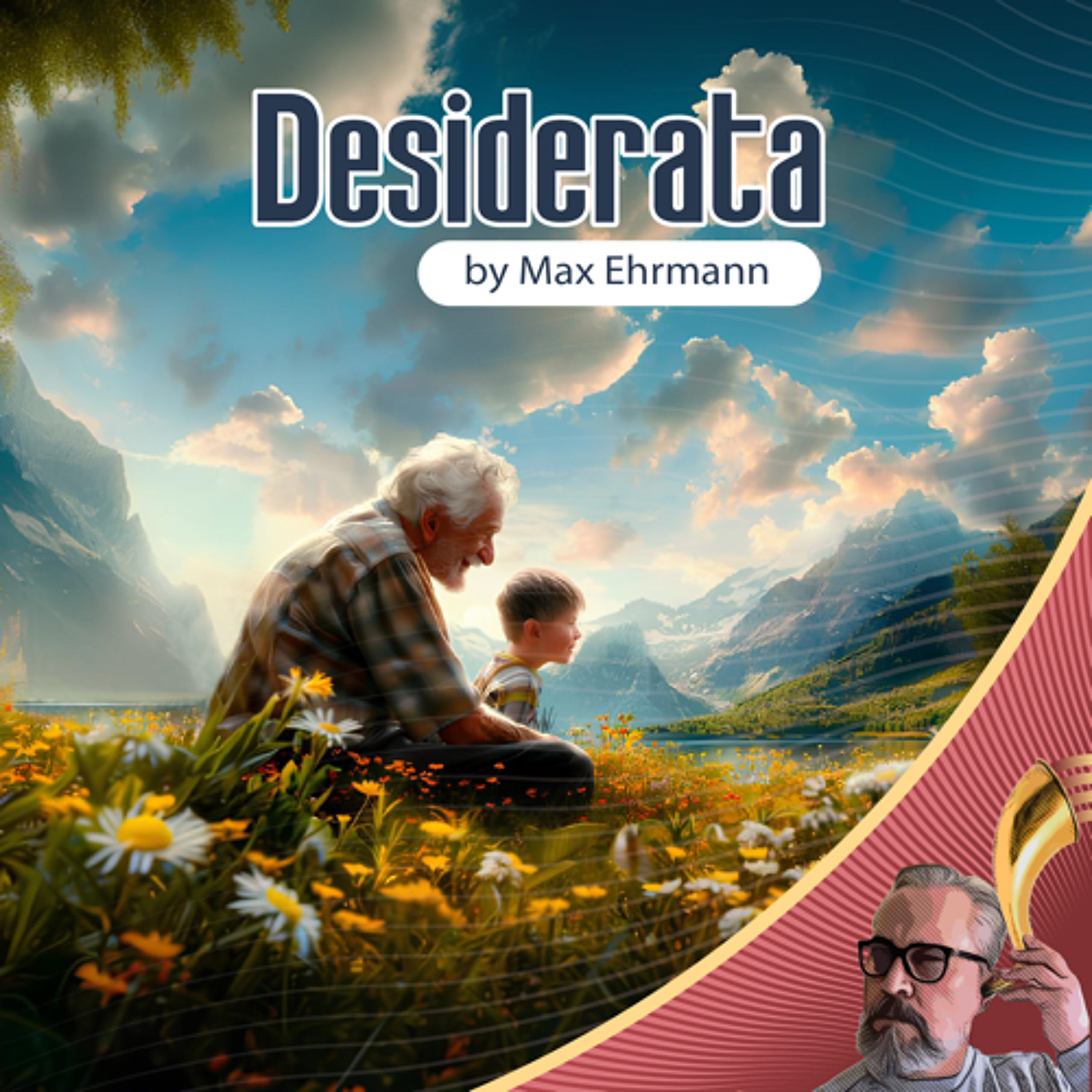
About Desiderata and Max Ehrmann The name Desiderata comes from Latin and means ‘things desired’ or ‘essential’, an appropriate title for a poetic manifesto on how to live wisely and well. Max Ehrmann (1872-1945) was an American poet and lawyer who studied philosophy and law at Harvard and worked in publishing and law before turning to writing full-time at the age of 40. Ehrmann wrote Desiderata in 1927, during the interwar period, a time when the world was reeling from World War I and unknowingly heading towards the Great Depression of 1929. His timeless advice for inner peace, authenticity and resilience is all the more remarkable in this context of uncertainty. Interestingly, Desiderata was not well known during Ehrmann's lifetime. It became famous after his death, when it was erroneously claimed that it had been found in a 17th century church. This myth spread rapidly in the 1960s and 1970s, during the hippie movement, when many found in its words a balm for modern life. Max Ehrmann described this poem as: “a word for the weary, to help inspire them with faith, hope and courage.” May it be so for you! Credits: Recorded and produced by Gabriel Porras, voice artist and producer for gabrielvoice.com and radiantwhispers.com. Cover by Ricardo Gil ([email protected]). Image created with AI on Freepik.com. Music: ‘Echo of Sadness’, by TURNIQUE. Bensound.com/royalty-free-music License code: DWVR885RV4DTZOFC

About Desiderata and Max Ehrmann The name Desiderata comes from Latin and means ‘things desired’ or ‘essential’, an appropriate title for a poetic manifesto on how to live wisely and well. Max Ehrmann (1872-1945) was an American poet and lawyer who studied philosophy and law at Harvard and worked in publishing and law before turning to writing full-time at the age of 40. Ehrmann wrote Desiderata in 1927, during the interwar period, a time when the world was reeling from World War I and unknowingly heading towards the Great Depression of 1929. His timeless advice for inner peace, authenticity and resilience is all the more remarkable in this context of uncertainty. Interestingly, Desiderata was not well known during Ehrmann's lifetime. It became famous after his death, when it was erroneously claimed that it had been found in a 17th century church. This myth spread rapidly in the 1960s and 1970s, during the hippie movement, when many found in its words a balm for modern life. Max Ehrmann described this poem as: “a word for the weary, to help inspire them with faith, hope and courage.” May it be so for you! Credits: Recorded and produced by Gabriel Porras, voice artist and producer for gabrielvoice.com and radiantwhispers.com. Cover by Ricardo Gil ([email protected]). Image created with AI on Freepik.com. Music: ‘Echo of Sadness’, by TURNIQUE. Bensound.com/royalty-free-music License code: DWVR885RV4DTZOFC
Bhagavad Gita Chapter 12, Bhakti Yoga - Non-Dual Devotion Andre Vas Come, step into the warm embrace of Bhagavad Gita Chapter 12, lovingly called Bhakti Yoga - the "Yoga of Devotion" - and let its timeless wisdom touch your heart through the gentle lens of Advaita Vedanta. This beautiful chapter feels like a whispered secret from Lord Krishna to Arjuna, and to you too, showing how bhakti (devotion) and jnana (self-knowledge) aren’t distant cousins but soulmates on the journey to moksha (liberation). Can you imagine? Even the wise Advaita Vedanta masters, like Adi Shankaracharya, were also radiant bhaktas - their hearts overflowing with love for the divine, even as they rested in the oneness of the Self (Atman). It’s a reminder that devotion and wisdom can dance together in your life too.In Bhagavad Gita Chapter 12, Krishna offers us a hand to hold - a practical, loving guide to weave Vedantic truth into our everyday moments. He shows us how turning to Ishvara (that vast, universal intelligence) fills us with emotional maturity, lightens the heavy load Murmullos Radiantes Gabriel Porras Vamos a hablar aquí de cultura universal, de historia antigua y denuestras sociedades modernas. Nuestros invitados serán los grandes poetas, autores, músicos, artistas, filósofos, profetas, visionarios y místicos de todos los tiempos, y los escucharemos en lecturas dramatizadas de poesía, fábulas, teatro, novelas y cuentos. Radiant Rest Podcast with Tracee Stanley Tracee Stanley Inspired by the desire to reclaim our collective birthright of deep rest, author and spiritual teacher Tracee Stanley explores tools, practices, and techniques that lead to deep rest. She shares her candid conversations with inspiring teachers and thought leaders about the power of rest, lucid dreaming, yoga nidra, self-care, napping as a path to liberation, restorative yoga, and sleep. Tracee is the best-selling author of Radiant Rest and The Luminous Self. She lives in Northern New Mexico, where she leads rest and writing retreats. Music Composition by Baron Rinzler on Season 1. Season 2 Muci and composition by Baron Rinzler and Edwin "Pupa" Santiago. Season 2, produced by Edgard Rivera Worship & Teachings from Radiant Church - Ann Arbor Radiant Church - Ann Arbor This podcast is another way to experience Radiant Church on the go. Sunday Services are posted here.
URL copied to clipboard!