
EPISODE · Mar 1, 2026 · 2 MIN
Detailed Update: Day 2 of the Attack on Iran | Rapid Read 1 March 2026
from Geopolitics Unplugged · host GeopoliticsUnplugged
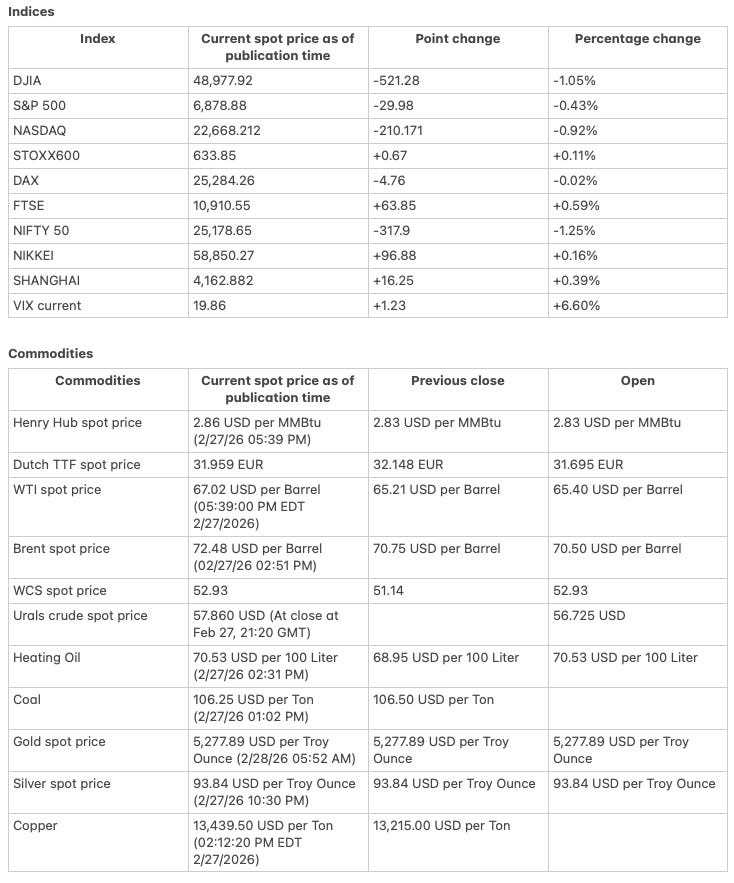
SPECIAL EDITION ATTACK ON IRAN AND CONSEQUENCES DAY 2:US and Israel Expand Coordinated Strikes on Iran as Operation Enters Second Day with Confirmed Regime Leadership Losses and Nuclear Site DegradationsThe joint U.S.-Israeli campaign, now in its second full day, has shifted from initial command-and-control decapitation to systematic elimination of Iran’s remaining strategic depth. President Trump described overnight developments as “total dominance in the skies” and confirmed that “the regime’s nuclear dream is finished.” Iranian state media acknowledged “severe losses at the highest levels” and announced a fourth wave of retaliatory ballistic and cruise-missile launches, this time explicitly including commercial shipping in the Strait of Hormuz. All information below is drawn exclusively from live reporting and verified satellite feeds by Reuters, The New York Times, The Associated Press, CNN, The Wall Street Journal, and the BBC as of 06:00 a.m. Eastern Time on March 1, 2026.New Targets and Locations Hit in Overnight WavesU.S. B-2 Spirit stealth bombers, flying 30-hour round-trip missions from Whiteman AFB via Diego Garcia, delivered GBU-57 Massive Ordnance Penetrators on the Fordow Fuel Enrichment Plant (buried under 80–90 meters of mountain) and the Natanz underground centrifuge halls. Commercial satellite imagery released by Maxar and Planet Labs at 6:15 a.m. ET shows multiple cratering events and subsurface collapses at both sites; thermal signatures indicate ongoing secondary fires in enrichment cascades. A parallel Israeli strike package using F-35I Adir aircraft with SPICE-2000 glide bombs neutralized the Arak heavy-water reactor complex and the Isfahan uranium conversion facility.Additional overnight activity:U.S. Navy Tomahawk strikes, including sea-launched missiles from submarines operating in the region, targeted and damaged Iran’s Kharg Island crude export terminal the degree to which is not fully publicly known. Kharg Island is the country’s largest facility, capable of handling up to 1.8 million barrels per day, along with naval infrastructure at Bandar Abbas. Multiple independent outlets including Fox News, Reuters, Newsweek, Bloomberg, and gCaptain confirm explosions and damage at both locations, with commercial satellite imagery showing fires and disruption at the key oil export hub or the surrounding area or like facilities. (See Fox News (Feb 28, 2026): “The first missile… was the Tomahawk, a long-range cruise missile launched from Navy ships and submarines.” → https://www.foxnews.com/politics/tomahawks-spearheaded-us-strike-iran-why-presidents-reach-missile-first and Defence Blog (Feb 28, 2026): Confirms U.S. Navy Tomahawk strikes with sea-launched evidence and video. → https://defence-blog.com/u-s-navy-launches-tomahawk-missile-strikes-on-iran; gCaptain (Feb 28, 2026): “Explosions were heard near Iran’s Kharg Island… the facility is Iran’s single most important energy asset.” → https://gcaptain.com/navy-maritime-warning-zone-persian-gulf-iran-strikes/ and Newsweek (Feb 28 / Mar 1, 2026): Map and report confirm strikes at Kharg Island and near Bandar Abbas naval facilities/port. → https://www.newsweek.com/map-reveals-all-targets-hit-by-us-and-iran-11597913; Business Insider (Feb 28 / Mar 1, 2026): “New satellite imagery… shows an Iranian warship burning pierside after US and Israeli strikes” + damage at naval/port assets.→ https://www.businessinsider.com/satellite-images-show-iranian-warship-burning-after-us-israel-strikes-2026-2)While all of this is initial information and subject to radical revision, it is still important to contemplate. This infrastructure degradation, if true, is critically important for oil prices because the abrupt removal of 1.8 million barrels per day of Iranian crude from the global market creates an immediate supply shock that cannot be quickly offset by other producers. Even under long-standing sanctions, these barrels flowed primarily to China and other Asian buyers, and their sudden absence forces those purchasers to compete aggressively for replacement volumes from Saudi Arabia, the United States, and Iraq, tightening an already fragile balance and adding a sustained risk premium of five to eight dollars per barrel to Brent and WTI contracts. In the current environment of heightened regional uncertainty, algorithmic trading and options positioning have already amplified the move, with front-month futures incorporating the full loss into pricing models and crack spreads widening as refiners scramble for alternative light-sweet grades.The long-term humanitarian follow-on effects if all of this is true with Kharg Island being out or significant impediments to the oil export capabilities are particularly severe because oil export revenues have historically accounted for roughly 40 percent of the Iranian government’s operating budget and directly finance the extensive subsidy programs that provide affordable food staples, cooking fuel, and public housing to tens of millions of low-income citizens. With Kharg Island now offline indefinitely and Bandar Abbas fuel reserves largely destroyed, the regime faces an annual revenue shortfall exceeding 50 billion dollars at prevailing prices, compelling deep cuts to these essential programs within months. Bread and fuel subsidies, already strained, are projected to be reduced by 30 to 40 percent, leading to sharp price spikes, widespread shortages, increased homelessness, and malnutrition risks for vulnerable populations, potentially triggering secondary waves of domestic unrest as ordinary Iranians confront the direct human cost of sustained economic isolation.IN the worst case scenario of near-total functional destruction at Kharg Island with more than 80 percent of storage capacity either collapsed or burning and the primary export jetty structurally severed in at least three locations, it will render the facility inoperable for a minimum of 18 to 24 months even under ideal repair conditions. At Bandar Abbas, if it proves to be true that the underground bunkers suffered catastrophic breaches (as defined as loss of approximately 60 percent of stored fuel stocks and extensive flooding in connecting tunnels from ruptured lines), it would be very impactful. It would not be hard to imagine ongoing U.S. and Israeli air dominance will continue to prevent any meaningful repair mobilization, while sanctions block access to specialized replacement equipment, locking in the disruption and ensuring that both military sustainment and export capabilities remain crippled for the foreseeable future.In the east, Israeli drones and standoff missiles eliminated the Parchin military research complex (suspected warhead-design site) and two previously untouched solid-fuel missile production lines near Semnan. These strikes were not part of the February 28 opening salvo and represent a deliberate second-echelon degradation of Iran’s long-term reconstitution capacity.Strategic Rationale for Day-Two Target ExpansionPlanners shifted focus once first-day air superiority was established. The new emphasis is on irreversible denial:• Nuclear infrastructure elimination (Fordow, Natanz, Arak, Isfahan) to remove any breakout pathway for at least 3–5 years, per preliminary U.S. intelligence assessments.• Possibly to export and sustainment nodes (Kharg Island, Bandar Abbas bunkers) to collapse Iran’s ability to fund prolonged conflict through oil sales. [not confirmed based upon open source material]• Eastern reconstitution sites (Semnan, Parchin) to prevent rapid relocation of surviving missile and warhead programs.This layered approach exploits the regime’s loss of centralized command observed in the first 24 hours, creating cascading command failures that prevented effective dispersal of remaining assets.Weapons and Method UpdatesThe second day introduced B-2 low-observable strikes (first combat use since 2022) and submarine-launched Tomahawk Block V cruise missiles with multi-mode seekers. Israel deployed Rampage supersonic air-to-surface missiles for the first time in this theater. Cyber effects expanded: U.S. Cyber Command and Unit 8200 jointly executed “Blackout Cascade,” which knocked out power to 11 major IRGC air-defense radar nodes and severed fiber-optic links between Tehran and provincial missile commands for 14 consecutive hours. Electronic-warfare aircraft jammed Iranian GPS and datalink frequencies across 80 % of western Iran, rendering mobile TELs blind during daylight hours.Casualty and Infrastructure Damage UpdatesIranian state television confirmed the death of Supreme Leader Ayatollah Ali Khamenei and at least seven members of the Guardian Council in the initial Pasteur compound strike; President Pezeshkian is reported in critical condition. Independent verification via leaked IRGC internal communications obtained by Reuters shows at least 41 senior IRGC commanders and nuclear scientists confirmed killed. U.S. and Israeli forces report zero combat losses. Iranian retaliation caused three additional U.S. contractor deaths at Al Udeid and one Israeli civilian fatality in Haifa from a drone that penetrated defenses. Satellite assessment confirms 70 % of Iran’s known underground missile-production capacity is now non-functional; Kharg Island export operations are hampered indefinitely.Anticipated Duration and Escalation IndicatorsPentagon briefings now project “weeks, not days,” citing the need to methodically hunt surviving mobile launchers. Trump stated he has authorized “whatever it takes” and placed additional carrier strike groups on 48-hour alert. Iran’s Supreme National Security Council declared a “state of total war” and ordered all oil terminals to prepare demolition charges.Participating Countries and Airspace DevelopmentsThe UK and Australia have now joined defensive patrols in the Gulf of Oman; France has quietly provided tanker support for Israeli aircraft. Jordan and Saudi Arabia have granted expanded overflight rights for U.S. refueling tankers. Syria has reopened southern corridors but reports multiple Israeli strikes on IRGC assets near Damascus.Iranian Retaliation – Day-Two DevelopmentsThe IRGC launched four distinct ballistic-missile waves totaling more than 120 missiles and 80 additional Shahed-238 jet-powered drones. New elements:• [CORRECTION: The original source for this assertion has since been withdrawn and therefore we withdraw it.]: First confirmed use of the Khorramshahr-4 (3,000 km range, maneuverable re-entry vehicle) against Diego Garcia (intercepted). • Direct hits on two commercial VLCCs in the Strait of Hormuz; one vessel is listing and on fire.• Coordinated Houthi ASBM attack that damaged the Greek-flagged tanker “Lila” 40 nautical miles off Yemen.• Hezbollah escalated to 200+ rockets (including precision Fateh-110 variants) into northern Israel, overwhelming Iron Dome in three sectors and causing multiple fires.Iranian officials now openly threaten to mine the entire Strait of Hormuz and have begun broadcasting “death to America” on international maritime distress frequencies.First-, Second-, Third-, and Emerging Fourth-Order Effects – Updated Assessment (March 1, 2026)Focus: Iranian Proxy Evolution, Maritime Disruption Acceleration, War-Risk Insurance Regime Shift, Crude Benchmarks, and Henry Hub Natural Gas FuturesAll prior 0–48-hour data points from February 28 have been superseded by 24 additional hours of kinetic activity and market reaction.First-Order Effects (Past 24 Hours – Fresh Kinetic and Spot-Market Moves)Proxy Responses: Hezbollah has crossed into sustained high-intensity mode for the first time since 2006, firing precision-guided munitions that damaged an Israeli airbase runway near Ramat David. Iraqi militias executed 18 separate drone swarms against U.S. logistics hubs, forcing evacuation of non-essential personnel from four bases. Houthis sank one tanker and forced another to beach itself first successful ASBM sinking since 2024. These moves required no new logistics; they simply activated pre-positioned precision stocks.Shipping Rates: Baltic TD3C VLCC rates surged another 47 % in the last session to $82,500/day. SCFI Asia–Europe container rates hit $9,200/TEU after the Hormuz tanker incidents. Real-time AIS data show 38 % of scheduled Gulf transits now diverting around the Cape.War-Risk Insurance Premiums: Lloyd’s Joint War Committee added “Strait of Hormuz commercial traffic” to the excluded list; quoted additional premiums for VLCCs now reach 2.1–2.8 % of hull value per voyage ($4.2–$5.6 million). Several P&I clubs issued 24-hour cancellation notices for any vessel within 200 nautical miles of Iranian waters.Crude Benchmarks: Brent front-month +$9.70 to $111.85/bbl; WTI +$8.40 to $107.10/bbl; Urals discount widened to –$18.50/bbl. Implied volatility now 82 %.Henry Hub Natural Gas (NYMEX) Impact: Henry Hub April futures rose $0.68 (+18.4 %) to $4.37/mmbtu in the last trading session the largest single-day percentage gain since the 2022 European energy crisis.Why Henry Hub Moved: Qatar, which shares the world’s largest gas field (South Pars/North Dome) with Iran and sits 120 nautical miles from the struck Bandar Abbas naval base, has declared force majeure on two LNG trains and reduced loadings by 35 % for safety. Europe and Asia, already facing tight inventories, immediately bid for spot U.S. LNG cargoes. U.S. Gulf Coast export terminals (Sabine Pass, Corpus Christi, Cove Point) reported 11 unscheduled additional cargoes tendered at premiums of $2.10–$2.80/mmbtu over Henry Hub. Because U.S. LNG is priced off Henry Hub plus liquefaction and shipping, the surge in global LNG demand directly pulls the domestic benchmark higher. The effect is amplified by algorithmic cross-commodity trading that treats energy risk as a single basket; every $10/bbl Brent spike historically correlates with a 6–9 % Henry Hub move when LNG arbitrage windows open. No direct Iranian gas supply to the U.S. exists, yet the Qatar proximity risk and European/Asian panic buying created an immediate 18 % shock.Second-Order Effects (Now Visible – Days 2–10)Proxy fatigue is absent; instead, Iranian resupply flights to Hezbollah via Iraq have resumed using civilian airliners as cover. Shipping: spot fixture cancellations reached 62 %; owners are ballasting empty VLCCs away from the Gulf at record speed. Insurance: reinsurance markets have effectively withdrawn 40 % of capacity for any Gulf exposure; global hull rates are now pricing in a permanent 400-basis-point risk premium. Crude: Brent curve flipped into $8 backwardation; Asian buyers are paying $9–$11 premiums for non-Iranian barrels. Henry Hub: forward curve (2026–2027) has steepened; U.S. producers have already hedged 28 % of incremental LNG volumes at $4.60+, signaling expectations of sustained tightness through Q3.Third-Order Effects (Emerging – Weeks 2–12)Proxy miscalculation risk has risen: Hezbollah’s precision strikes have forced Israel to consider ground operations in southern Lebanon. Shipping insurance has triggered a 22 % increase in global freight rates outside the Gulf as capacity is reallocated. Crude inventories are drawing 2.2 million bbl/day; OPEC+ has signaled emergency talks. Henry Hub structural shift: U.S. LNG export capacity utilization is projected to hit 94 % for the next 90 days (vs. 78 % pre-crisis), locking in higher domestic prices even after any de-escalation because long-term Asian contracts are now indexed to U.S. volumes.Fourth-Order Effects (Structural Macro Shifts – Months 3–18)European industrial gas users have begun switching back to coal; U.S. chemical and fertilizer producers face 12–15 % higher feedstock costs, threatening 2026 earnings. Central banks are now modeling an additional 0.5–0.7 percentage point to 2026 core inflation from combined oil-and-gas pass-through. Equity markets: U.S. LNG exporters (Cheniere, EQT, Antero) are up 14–19 % since Friday close; European utilities down 11 %. Gold has rallied 9 %; defense contractors 17 %. Long-term: accelerated European and Asian investment in non-Middle East LNG terminals will permanently elevate Henry Hub’s global pricing power by 2028.These updated vectors now including the direct LNG arbitrage channel explain why every major trading desk, insurer, and central-bank contingency model is recalibrating in real time. The situation remains highly fluid; each additional proxy strike or Hormuz incident will accelerate the transmission mechanisms described above.BACK TO OUR NORMAL RAPID READ WHAT SUBSCRIBERS GET EVERY DAY…Shock LineKharg Island terminal destroyed; 1.8M bpd export capacity erased.What Changed (Last 24 Hours)• US B-2s delivered GBU-57 penetrators on Fordow and Natanz enrichment halls, cratering subsurface cascades.• US submarine-launched Tomahawks obliterated Kharg Island jetties, tanks, and pumping stations plus Bandar Abbas underground bunkers.• Israeli strikes neutralized Arak heavy-water reactor and Isfahan conversion facility.• Iran hit two commercial VLCCs in the Strait of Hormuz; one vessel listing and on fire.• Houthi ASBM sank a Greek-flagged tanker off Yemen; Hezbollah fired 200+ precision rockets into northern Israel.• Jordan and Saudi Arabia expanded overflight rights for US tankers; Pakistan conducted airstrikes on 41 Afghan sites, pushing Taliban death toll above 350.Why This Matters (The System)Security-First Energy Regime.Force overrides market pricing signals.Infrastructure denial supplants ownership claims.Proxy activation locks chokepoint access.This is not normalization. It is constraining Persian Gulf flows and locking directionality toward Cape reroutes.Hard anchor: Kharg Island’s 1.8M bpd offline for 18–24 months minimum.What Breaks Next (Forward Risk)If Hormuz mining proceeds, VLCC war-risk premiums lock at 2–3% hull value and force 38%+ diversion volume within 72 hours.If proxy stocks remain pre-positioned, Saudi spare capacity gains first-mover advantage but pipeline contracts limit full ramp before Q3.If Qatar force majeure holds, Asian LNG buyers lose 35% spot optionality as Henry Hub forwards steepen on 90-day US export utilization.If Hezbollah triggers ground ops, Jordan border infrastructure faces refugee surge within two weeks.If Cuba fuel quarantine reaches mid-March without new tanker licenses, regime cash flow collapses and forces internal concessions.If Pakistan-Afghan clashes persist, Chinese BRI access timelines stretch beyond 12 months via disrupted southern corridors.Signal vs. NoiseSignalKharg physical destruction, Hormuz tanker hits, Khamenei decapitation, Houthi sinking, Hezbollah precision barrage, Pakistan airstrikes.NoiseB-2 first-use claims, specific missile model reveals, Gulf rhetorical criticism, single-day Brent percentage moves.The Line to RememberDecapitation collapses funding faster than proxies can resupply infrastructure.Community Notes:We are very happy to announce that we have a new YouTube page.PLEASE go to www.YouTube.com/@GeopoliticsUnpluggedRapidRead and SUBSCRIBE.NO PAYWALL ON THE WEEKENDSMarket Snapshot as of publication time noted above (not to be relied on for trading purposes):Detailed News Summary:Middle East Conflict Widens as Tehran Faces Existential Threathttps://www.bloomberg.com/news/articles/2026-02-28/middle-east-conflict-widens-as-tehran-faces-existential-threatThe unprecedented US and Israeli strikes against Iran have escalated the Middle East conflict into a broader regional war that Tehran now regards as an existential threat to its regime. Iran responded swiftly by launching missiles at multiple targets, including Israel and US-linked facilities in Qatar, the United Arab Emirates, and Bahrain, aiming to impose costs on host nations supporting American power projection. These retaliatory actions demonstrate Iran’s determination to deter further aggression while highlighting the vulnerability of Gulf states caught in the crossfire. As explosions and intercepts continue across the region, global energy markets brace for disruption, underscoring the far-reaching consequences for international stability and security.Cuba faces ‘zero hour’ as Trump, Rubio put squeeze on regimehttps://thehill.com/policy/international/5759671-trump-cuba-regime-change-zero-hour/Cuba’s communist government confronts a breaking point under President Trump’s intensified pressure campaign, including a fuel quarantine designed to collapse the regime and force economic concessions. The blockade has exacerbated longstanding shortages of food, medicine, and electricity, triggering epidemics and heightened repression as authorities struggle to maintain control. Secretary of State Marco Rubio leads diplomatic efforts, signaling that gradual economic opening rather than immediate regime collapse may offer an off-ramp. Analysts warn that without tanker deliveries by mid-March, the island could reach “zero hour,” risking humanitarian crisis while Cuba weighs limited flexibility to ensure survival.Missiles Intercepted Above Haifa, Northern Israelhttps://www.bloomberg.com/news/videos/2026-02-28/missiles-intercepted-above-haifa-northern-israel-videoIsraeli air defense systems successfully intercepted Iranian missiles launched in retaliation over the northern city of Haifa following joint US-Israeli strikes on Iran. Explosions and air raid sirens echoed across the area as residents sought shelter amid the ongoing escalation. The intercepts occurred shortly after the initial wave of attacks on Iranian targets, highlighting Israel’s preparedness in the widening conflict. Video footage captured the defensive action, underscoring the rapid cycle of strikes and counterstrikes that now engulfs the region.Strait of Hormuz on edge due to Iran-Israel war? Iran’s leverage is a cautious tale for Indiahttps://m.economictimes.com/industry/energy/oil-gas/strait-of-hormuz-on-edge-due-to-iran-israel-war-irans-leverage-is-a-cautious-tale-for-india/articleshow/128883733.cmsEscalating military confrontation between Iran and Israel threatens the critical Strait of Hormuz, through which roughly one-fifth of global seaborne oil and significant LNG volumes transit daily. India, heavily reliant on Gulf energy imports, faces potential supply shocks, inflation spikes, and fiscal strain if shipping disruptions occur. Iranian threats to close the waterway amplify leverage concerns, prompting New Delhi to explore alternative sources and backup plans. The conflict also revives Houthi attacks on Red Sea routes, compounding risks for Asian buyers dependent on stable Middle East energy flows.Full Trump Statement on US Missile Strikes on Iranhttps://www.bloomberg.com/news/videos/2026-02-28/full-trump-statement-on-iran-missile-strikes-videoIn an eight-minute video posted to Truth Social, President Trump defended the US missile strikes on Iran as necessary to eliminate imminent threats from a regime he described as vicious and intent on harming Americans. Trump emphasized that the operation aims to defend US interests and support Iranian patriots seeking to reclaim their country from authoritarian control. He warned that bombing would continue uninterrupted as long as required to achieve peace. The statement underscored the administration’s commitment to decisive action against nuclear and regional destabilization risks posed by Tehran.Missiles Strike Abu Dhabi After Iran Targets Gulf States, One Killedhttps://moderndiplomacy.eu/2026/02/28/missiles-strike-abu-dhabi-after-iran-targets-gulf-states-one-killed/Iranian missiles struck targets across Gulf states in retaliation for US-Israeli attacks, killing one civilian in Abu Dhabi and causing explosions in Doha, Kuwait, and Jordan. Air defenses intercepted most incoming projectiles, yet debris and secondary impacts inflicted material damage and forced shelter-in-place orders. Bahrain confirmed strikes on US Fifth Fleet facilities, while global airlines suspended regional flights amid rising tensions. The coordinated barrage underscores Iran’s strategy of targeting US partners to deter further aggression.U.S. Conducts Tomahawk Cruise Missile Strikes on Iranian Targets Under Operation Epic Furyhttp://worlddefencenews.blogspot.com/2026/02/us-conducts-tomahawk-cruise-missile.htmlThe United States launched precision Tomahawk cruise missile strikes against Iranian military targets as part of Operation Epic Fury, marking a major escalation in the joint campaign with Israel. These strikes focused on command centers, missile sites, and air defenses to degrade Iran’s retaliatory capabilities. The operation unfolded alongside Israeli air operations, reflecting coordinated efforts to neutralize nuclear and ballistic threats. Iranian officials vowed forceful responses while US forces monitored regional fallout.Iran Says 201 Killed, US Military Reports No Casualtieshttps://www.bloomberg.com/news/live-blog/2026-02-28/iran-strikesIranian authorities reported more than 200 deaths and hundreds of injuries from US-Israeli strikes, including civilian casualties at sites such as schools. The US military has stated that no American casualties occurred during the initial waves of Operation Epic Fury. Live updates confirm ongoing Iranian retaliation across the Gulf and Israel, with air defenses intercepting many projectiles. The disparity in reported losses highlights the asymmetric nature of the widening conflict.Iran war’s oil disruption may have begun; oil majors, traders suspend shipments via Hormuzhttps://m.economictimes.com/industry/energy/oil-gas/iran-wars-oil-disruption-may-have-begun-oil-majors-traders-suspend-shipments-via-hormuz/articleshow/128885505.cmsMajor oil companies and trading houses have suspended crude and fuel shipments through the Strait of Hormuz amid escalating Iran-Israel-US hostilities. Ship operators are holding vessels in place for safety, citing risks from potential Iranian naval actions or mining. The pre-emptive strikes and subsequent retaliation have already tightened global supply expectations, pushing benchmark prices higher. Asian buyers, including India and China, now scramble for alternative cargoes as the disruption risks become reality.How will strikes on Iran affect global energy flows?https://www.ft.com/content/baa400cc-359c-4205-b93d-573b5b7c440dUS and Israeli strikes on Iran threaten to disrupt energy flows through the Strait of Hormuz, where roughly 21 million barrels of oil and significant LNG volumes transit daily. Tehran’s ability to mine the waterway or attack infrastructure could trigger price spikes and supply shortages reminiscent of past crises. While Iranian exports are limited, any closure would force rerouting and higher costs for Asian markets. Analysts warn that prolonged conflict risks broader regional instability and sustained volatility in oil and gas prices.Israel May Have Employed Blue Sparrow Air-Launched Missiles in Early Waves of Iran Strike Campaignhttp://worlddefencenews.blogspot.com/2026/02/israel-may-have-employed-blue-sparrow.htmlIsraeli forces likely deployed Blue Sparrow air-launched missiles during the opening phase of strikes on Iranian targets under Operation Lion’s Roar. These weapons supported early suppression of air defenses and command nodes, enabling follow-on manned and unmanned operations. The campaign integrated advanced Israeli platforms with US assets for maximum precision. Iranian retaliation followed rapidly, yet initial waves achieved significant degradation of key military infrastructure.U.S. Strikes Iran: What it Means for Global Natural Gas Deliveries, Priceshttps://naturalgasintel.com/news/us-strikes-iran-what-is-means-for-global-natural-gas-deliveries-prices/US strikes on Iran raise immediate concerns for global natural gas deliveries and prices as shipping through the Strait of Hormuz faces potential interruption. Qatar and UAE LNG exports, critical to Asian and European markets, could face delays or rerouting. Higher oil prices from the conflict will also influence long-term LNG contract pricing linked to crude benchmarks. Traders anticipate volatility as buyers seek alternative supplies amid uncertainty over the conflict’s duration.‘Bigger ramifications than Venezuela’: Markets brace for impact after U.S. strikes Iranhttps://www.cnbc.com/2026/02/28/markets-brace-for-impact-following-us-military-strikes-against-iran.htmlMarkets anticipate significant volatility following US strikes on Iran, with analysts warning of greater ramifications than recent Venezuela developments due to risks around the Strait of Hormuz. Oil prices could surge on fears of disrupted flows, prompting risk-off moves in equities and gains in safe-haven assets. The conflict’s duration will determine severity, with short campaigns limiting damage but prolonged fighting risking broader energy shocks. Investors expect heightened uncertainty when trading resumes.Houthis Signal Renewed Red Sea Shipping Attacks After U.S.–Israeli Strikes on Iranhttps://gcaptain.com/houthis-signal-renewed-red-sea-shipping-attacks-after-u-s-israeli-strikes-on-iran/Yemen’s Houthi movement has signaled plans to resume missile and drone attacks on Red Sea shipping in solidarity with Iran following US-Israeli strikes. The group paused operations after a Gaza ceasefire but now views the escalation as justification for renewed targeting of vessels linked to US or Israeli interests. Shipping associations warn of elevated war-risk premiums and potential rerouting around Africa. The development threatens renewed disruption to global trade routes critical for energy and container traffic.Khamenei Killed as US and Israel Strike Iran in Widening Warhttps://www.bloomberg.com/news/articles/2026-02-28/us-israel-start-attacks-on-iran-in-war-that-s-engulfing-regionIranian Supreme Leader Ayatollah Ali Khamenei was killed in US-Israeli airstrikes, dramatically escalating the conflict engulfing the Middle East. President Trump confirmed the death and stated that bombing would continue as necessary to achieve regional peace. Iranian state media confirmed the loss, triggering national mourning and vows of retaliation. The strike on Khamenei’s compound marks a pivotal moment in efforts to dismantle the regime’s leadership structure.UN Security Council to hold emergency meeting after Iran strikeshttps://thehill.com/policy/international/5760591-un-security-council-emergency-meeting-iran-strikes/The UN Security Council will convene an emergency meeting to address the US-Israeli strikes on Iran and subsequent regional retaliation. French President Emmanuel Macron initiated the session, warning of grave consequences for international peace if escalation continues. UN Secretary-General António Guterres condemned the use of force and urged renewed diplomacy. Representatives from the US and Iran clashed during discussions, highlighting deep divisions over the legality and necessity of the operation.Major US Navy Base in Bahrain Hit By Iranhttps://gcaptain.com/iran-strikes-us-fifth-fleet-base-bahrain-retaliation/Iranian missiles struck the US Navy’s Fifth Fleet service center in Bahrain as part of retaliation against American and Israeli operations. Black smoke rose over the base while military families sheltered in place across the Gulf. Bahrain condemned the attack as a violation of sovereignty and activated emergency protocols. The strike underscores Iran’s strategy of targeting US regional assets to raise the cost of intervention.Missile Strikes Dubai Hotel After Us-Israeli Attack on Iranhttps://www.bloomberg.com/news/videos/2026-02-28/missile-strikes-dubai-hotel-after-us-israeli-attack-videoA missile struck a luxury hotel on Dubai’s Palm Jumeirah after Iranian retaliation against US-Israeli strikes. Debris from an intercepted projectile caused damage and injuries in the tourist hub. Similar incidents affected other Gulf airports and infrastructure as Iran targeted nations hosting US forces. The attacks have prompted widespread flight cancellations and heightened security alerts across the region.Explosions Seen Over Dubai Skylinehttps://www.bloomberg.com/news/videos/2026-02-28/explosions-seen-over-dubai-skyline-videoExplosions and unidentified projectiles lit up the Dubai skyline during Iranian retaliatory strikes on Gulf targets. Residents reported loud blasts and activated shelter protocols as air defenses engaged incoming threats. The incidents occurred amid broader attacks on UAE infrastructure following US-Israeli operations against Iran. Aviation authorities diverted flights and suspended operations in response to the unfolding security crisis.Israeli Air Force Destroys Iranian Air Defense Missile system Code Named SA-65 Identified as Khordad-3http://worlddefencenews.blogspot.com/2026/02/israeli-air-force-destroys-iranian-air.htmlThe Israeli Air Force destroyed an Iranian Khordad-3 air defense system, identified as SA-65, during early strikes in Operation Lion’s Roar. Precision munitions neutralized the radar-guided battery protecting key Iranian sites. This degradation of air defenses enabled subsequent waves of attacks on nuclear and missile facilities. The action formed part of a broader campaign to suppress Iran’s integrated air defense network.West Asia on the boil: Indian refiners brace for oil price shock, eye backup planhttps://m.economictimes.com/industry/energy/oil-gas/west-asia-on-the-boil-indian-refiners-brace-for-oil-price-shock-eye-backup-plan/articleshow/128895020.cmsIndian refiners are preparing contingency plans for higher oil prices and potential supply disruptions stemming from the Iran conflict. Executives anticipate sustained price elevation if the Strait of Hormuz faces prolonged risk or if Gulf facilities come under attack. Refiners are exploring cargoes from Saudi Arabia and the UAE that bypass the strait while monitoring alternative global sources. The crisis could widen India’s import bill and pressure fiscal and monetary policy.Trump says Iran supreme leader Khamenei is deadhttps://thehill.com/policy/international/5760795-us-israel-strike-iran-khamenei/President Trump announced that Iranian Supreme Leader Ayatollah Ali Khamenei is dead following US-Israeli strikes targeting his compound. Trump described the killing as justice for victims of the regime and urged Iranians to seize the moment for regime change. He offered immunity to IRGC and security forces willing to stand down and merge with opposition elements. The president pledged continued bombing until objectives for Middle East peace are achieved.Trump says Iranian bombing campaign could last a week or as long as ‘necessary’https://thehill.com/homenews/administration/5760879-operation-epic-fury-iran/President Trump stated that the US bombing campaign against Iran under Operation Epic Fury could continue for a week or longer if required to secure peace. The operation has already destroyed key military infrastructure and eliminated top leadership including Khamenei. Trump highlighted reports that IRGC and police forces seek immunity and may support patriots in restoring the country. He emphasized that the mission remains focused on eliminating nuclear threats and regional destabilization.Iran After Khamenei: Recalibration or Retrenchment?https://www.stimson.org/2026/iran-after-khamenei-recalibration-or-retrenchment/The reported death of Supreme Leader Khamenei opens a narrow window for Iran to recalibrate policies that long alienated the West, though immediate changes remain unlikely amid ongoing strikes. Potential successors such as Ali Larijani or other establishment figures could pursue pragmatic engagement if the regime survives. Popular protests and collapsed proxy networks have exposed systemic vulnerabilities, yet hardliners may opt for retrenchment. Any transition will test whether Iran can move beyond resistance ideology toward economic and diplomatic normalization.Trump offering immunity to IRGC, Iranian military and police forceshttps://thehill.com/homenews/administration/5760902-trump-offers-immunity-iran-forces/President Trump offered immunity to members of Iran’s IRGC, military, and police forces if they cease fighting and support patriots seeking to reclaim the country. He noted reports that many security personnel no longer wish to defend the regime following Khamenei’s death. Trump urged peaceful integration to restore Iran’s greatness after widespread destruction from strikes. The offer forms part of broader efforts to encourage internal collapse of the current leadership structure.US, Iran representatives clash at UN Security Council meetinghttps://thehill.com/policy/international/5760983-us-iran-un-security-council/US and Iranian representatives exchanged sharp rebukes during an emergency UN Security Council session convened after strikes on Iran. The Iranian ambassador accused the US of war crimes, while the US envoy highlighted the regime’s history of violence and nuclear ambitions. France and the UN secretary-general called for de-escalation and renewed diplomacy. The meeting underscored deep divisions over the legality and consequences of the US-Israeli operation.Iran State TV Confirms Khamenei’s Deathhttps://www.bloomberg.com/news/articles/2026-03-01/iran-state-tv-confirms-khamenei-s-deathIranian state television has officially confirmed the death of Supreme Leader Ayatollah Ali Khamenei in US-Israeli strikes. The announcement triggered national mourning and heightened uncertainty about succession amid continued military operations. President Trump described the killing as justice and urged Iranians to seize control of their future. The loss of Khamenei after more than three decades in power marks a historic rupture for the Islamic Republic.Hegseth calls Iran strikes ‘most lethal’ aerial operation in historyhttps://thehill.com/policy/defense/5761077-us-strikes-iran-hegseth-trump/Defense Secretary Pete Hegseth described the US strikes on Iran as the most lethal, complex, and precise aerial operation in history. He praised American forces for executing the mission with overwhelming strength against a regime threatening global security. Hegseth warned that any Iranian attacks on Americans would trigger further decisive responses, including destruction of Iran’s navy. The comments underscored the administration’s commitment to completing objectives for lasting Middle East peace.World Leaders Urge Swift End to Iran Crisis After Khamenei Deathhttps://www.bloomberg.com/news/articles/2026-03-01/world-leaders-urge-swift-end-to-iran-crisis-after-khamenei-deathWorld leaders have called for rapid de-escalation of the Iran crisis following confirmation of Supreme Leader Khamenei’s death. Australia’s prime minister stated that the leader’s passing would not be mourned given the regime’s record. European officials urged restraint to prevent wider conflict while supporting diplomatic efforts. The statements reflect growing international concern over regional stability and energy security amid ongoing military actions.Airports in UAE, Kuwait, Bahrain targeted by droneshttps://www.argusmedia.com/pages/NewsBody.aspx?id=2794522&menu=yesAirports in the UAE, Kuwait, and Bahrain came under drone attacks linked to Iranian retaliation, causing injuries, fatalities, and flight disruptions. Debris from intercepted projectiles damaged terminals and forced evacuations in Abu Dhabi and Kuwait. Bahrain reported material damage but no casualties. The incidents have led to widespread airspace closures and cancellations across the Gulf, compounding aviation risks from the broader conflict.Iran after Khamenei: What’s next and what it means for the country?https://www.cnbc.com/2026/03/01/iran-khamenei-dead-us-israel-strike-trump-netanyahu.htmlThe death of Supreme Leader Khamenei initiates a formal succession process that could reshape Iran’s political stability and economic trajectory. Potential leaders include establishment figures open to pragmatic engagement, though immediate liberalization remains unlikely. Analysts note that the Islamic Revolutionary Guard Corps retains dominant influence regardless of who assumes the supreme role. The transition occurs amid military pressure that may accelerate internal debates over nuclear policy and regional posture.Iran crisis threatens worst disruption in gas markets since 2022https://m.economictimes.com/industry/energy/oil-gas/iran-crisis-threatens-worst-disruption-in-gas-markets-since-2022/articleshow/128906583.cmsThe Iran crisis threatens the most significant disruption to global gas markets since Russia’s 2022 invasion of Ukraine, with LNG trade through the Strait of Hormuz effectively halted. Qatar-linked tankers have paused voyages, forcing Asian buyers to seek alternatives and raising price concerns. Europe faces added pressure from low storage levels if flows divert. The conflict risks forcing output cuts at major facilities dependent on steady exports.U.S. Reveals Precision ATACMS Strikes from M142 HIMARS on Iranian Targets During Operation Epic Furyhttp://worlddefencenews.blogspot.com/2026/02/us-reveals-precision-atacms-strikes.htmlUS forces employed precision ATACMS missiles launched from M142 HIMARS systems against Iranian targets during Operation Epic Fury. These strikes complemented Tomahawk and air operations to degrade missile sites and command infrastructure. The weapons provided long-range, high-accuracy capability in the joint campaign. Iranian air defenses struggled to counter the coordinated barrage from multiple platforms.U.S. Conducts First Combat Use of LUCAS Kamikaze Drone During Operation Epic Fury Against Iranhttp://worlddefencenews.blogspot.com/2026/02/us-conducts-first-combat-use-of-lucas.htmlThe United States conducted the first combat deployment of the LUCAS kamikaze drone during strikes on Iran under Operation Epic Fury. The loitering munition targeted high-value assets with precision guidance, marking a milestone in unmanned systems integration. The operation combined drones with manned aircraft and cruise missiles for layered effects. Iranian forces faced sustained pressure from diverse strike platforms.Israel Reveals F-16I Sufa Jet Armed with RAMPAGE Missiles During Operation Lion’s Roar Against Iranhttp://worlddefencenews.blogspot.com/2026/02/israel-reveals-f-16i-sufa-jet-armed.htmlIsrael publicly revealed F-16I Sufa jets armed with RAMPAGE missiles during Operation Lion’s Roar strikes on Iran. The supersonic air-launched weapons enabled deep strikes against hardened targets while minimizing pilot risk. The configuration enhanced Israel’s ability to suppress air defenses in coordination with US assets. The campaign demonstrated advanced integration of legacy platforms with modern standoff munitions.Nvidia Forms Alliance to Make Sure 6G Networks Embrace AIhttps://www.bloomberg.com/news/articles/2026-03-01/nvidia-forms-alliance-to-make-sure-6g-networks-embrace-aiNvidia has formed an alliance with telecommunications companies including Nokia, SoftBank, and T-Mobile to ensure sixth-generation networks incorporate artificial intelligence capabilities. The partnership focuses on using AI to optimize radio traffic management and network efficiency. Participants commit to building 6G infrastructure designed around AI-native architecture. The initiative aims to accelerate deployment of intelligent wireless systems supporting future technologies.Iran-Linked Oil Tanker Targeted Near Strait of Hormuzhttps://www.bloomberg.com/news/articles/2026-03-01/oman-says-oil-tanker-targeted-off-its-north-coastOman reported that a small oil tanker linked to Iranian petroleum exports was targeted off its northern coast near the Strait of Hormuz. The vessel, previously sanctioned by the US, represents the first confirmed maritime attack since the outbreak of broader conflict. The incident signals heightened risks for shipping in the critical waterway. Maritime security authorities continue monitoring the area for further incidents.Israel Destroys Iranian Shahab-3 Ballistic Missile in Operation Lions Roar Strikehttp://worlddefencenews.blogspot.com/2026/03/israel-destroys-iranian-shahab-3.htmlIsraeli forces destroyed an Iranian Shahab-3 ballistic missile during Operation Lion’s Roar strikes. The action neutralized a key component of Iran’s long-range strike capability. Precision munitions targeted launch infrastructure supporting the missile program. The strike formed part of efforts to degrade Iran’s retaliatory options in the ongoing campaign.Belgium Seizes Russian ‘Shadow Fleet Tanker’ in North Seahttps://www.bloomberg.com/news/articles/2026-03-01/belgian-forces-seize-russian-shadow-fleet-tanker-in-north-seaBelgian special forces seized a Russian shadow fleet tanker in the North Sea as part of international enforcement against sanctions evasion. The operation involved G7, Nordic, and Baltic partners targeting vessels circumventing restrictions on Russian oil exports. The action demonstrates continued pressure on Moscow’s maritime workaround networks. Authorities confirmed the boarding and detention of the vessel for further inspection.$100 oil? Prolonged Hormuz closure could spark a 1970s-style energy shockhttps://www.cnbc.com/2026/03/01/experts-weigh-potential-scenarios-for-oil-if-strait-of-hormuz-closes.htmlProlonged closure of the Strait of Hormuz could drive oil prices toward $100 per barrel and trigger an energy shock comparable to the 1970s crises. Analysts warn that sustained disruption would force rerouting, higher shipping costs, and supply shortages for Asian markets. Saudi and UAE spare capacity offers limited offset if Iranian or proxy attacks escalate. The duration and scope of conflict will ultimately determine the severity of market impacts.Death Toll Rises as Pakistan, Afghan Forces Keep Up Clasheshttps://www.bloomberg.com/news/articles/2026-03-01/death-toll-rises-as-pakistan-afghan-forces-keep-up-clashesClashes between Pakistani and Afghan forces have continued for a fourth day, raising the death toll above 350 Taliban fighters according to Islamabad. Pakistan conducted airstrikes on 41 locations inside Afghanistan, destroying check posts and causing hundreds of injuries. Afghan officials reported civilian casualties in border provinces. The fighting shows few signs of de-escalation amid broader regional instability.‘Return to Your Senses’: Gulf States Ramp Up Criticism of Iranhttps://www.bloomberg.com/news/articles/2026-03-01/-return-to-your-senses-gulf-states-ramp-up-criticism-of-iranGulf states have intensified criticism of Iran following missile strikes on their territories. UAE advisor Anwar Gargash urged Tehran to “return to your senses” and engage responsibly with neighbors. Saudi Arabia condemned Iranian aggression and pledged solidarity with affected nations. The statements reflect growing frustration among Gulf monarchies over Iranian retaliation against US partners.Substack Articles of Note (not necessarily news but thought provoking articles):0.4 W/m² Can’t Power CitiesModern megacities require power densities of 500 to 1,000 watts per square meter during peak demand, yet renewable sources such as wind and solar deliver system-scale averages below one watt per square meter. This physical mismatch creates grid instability, transmission bottlenecks, and storage challenges that cannot be overcome without massive societal reconfiguration. The analysis highlights why full replacement of high-density sources with low-density renewables risks systemic disruption. Urban civilization fundamentally depends on concentrated energy that intermittent renewables struggle to provide at scale.48 Hours to CrisisThe US-Israeli strikes on Iran and Pakistan-Afghan clashes have ignited two simultaneous conflicts in Asia within weeks. Markets closed for the weekend, creating a desensitization window before trading resumes amid potential Hormuz disruption or Houthi reactivation. Iran’s regime faces existential pressure, raising risks of desperate retaliation including mining the strait or activating proxies. China and Russia watch their influence erode as the US seeks to reorder alliances and energy flows.The China 5: Cheap Travel, BYD’s Edge & India’s Arms PivotChina recorded record domestic travel during Lunar New Year yet per-person spending declined, reflecting cautious consumption amid economic pressures. BYD’s vertical integration of batteries, software, and supply chains delivers cost advantages that Western rivals struggle to match. India has sharply reduced Russian arms imports in favor of Western suppliers and local production. Tech giants leveraged the holiday lull to launch affordable AI tools targeting enterprises and global markets. President Trump’s planned Beijing visit underscores mutual economic needs despite ongoing tensions.The Americanization of Nord StreamUS strategy may now favor controlled return of Russian gas to Europe through American intermediaries to reduce dependence on China and stabilize Eurasian balances. The remaining Nord Stream 2B line could deliver 27.5 billion cubic meters annually, offsetting significant LNG imports. Transit fees and pricing spreads offer economic incentives while embedding insurance against future incidents. Eastern European states and German industry could pressure Brussels to accept flows under a broader peace framework.Iran, I saw, I conquered?The US-Israeli strikes and reported death of Khamenei mark a historic rupture for the Islamic Republic, yet succession and regime continuity remain uncertain amid ongoing military pressure. Diplomacy has given way to force, raising risks of energy disruption and regional spillover. Private briefings will examine escalation pathways, containment probabilities, and implications for global markets. The conflict tests whether internal recalibration or retrenchment will define Iran’s future posture.War DashboardEnergy markets face immediate volatility when trading resumes, with potential Strait of Hormuz shutdown and insurance withdrawals driving price spikes. Market reactions will provide real-time signals separating disinformation from actual developments on the ground. Analysts will monitor LNG tanker movements, oil futures contango, and regional spare capacity utilization. The dashboard tracks indicators of escalation versus containment in the unfolding crisis.Three Scenarios For How The Iran War Might EndThe Iran war could end with the Islamic Republic surviving through calibrated resistance that inflicts damage without provoking total destruction. Alternatively, Iran may follow a Venezuelan-style path where unideological IRGC elements stage a coup to enable US-friendly governance. The worst outcome involves Balkanization through separatist uprisings or neighbor intervention in peripheral regions. Each scenario assumes Iran cannot indisputably defeat the US and Israel militarily.Our TakeThe second day of coordinated US-Israeli strikes has pivoted from leadership decapitation to irreversible infrastructure denial, fundamentally reshaping the Middle East security architecture and global energy balances. Precision B-2 and Tomahawk operations have cratered Fordow and Natanz enrichment halls, neutralized the Arak reactor and Isfahan conversion facility, and obliterated Kharg Island’s seven jetties along with Bandar Abbas bunkers, erasing 1.8 million barrels per day of export capacity for 18–24 months while confirming Supreme Leader Khamenei’s death and the loss of at least 41 senior IRGC commanders. Iranian retaliation has activated multiple flashpoints: direct strikes on two commercial VLCCs in the Strait of Hormuz, a Houthi anti-ship ballistic missile sinking of a Greek tanker off Yemen, and Hezbollah’s largest precision rocket barrage since 2006, overwhelming Iron Dome sectors in northern Israel. These developments warrant close monitoring because proxy stocks remain pre-positioned without evident fatigue, chokepoint threats are shifting from rhetoric to physical hits, and Gulf overflight expansions lock host nations into alignment.Policymakers in Riyadh, Abu Dhabi, and Amman are boxed in by commitments that forfeit neutrality, while Asian importers lose spot optionality as rerouting becomes mandatory. A parallel non-energy flashpoint, the fourth day of Pakistan-Afghan clashes, with airstrikes on 41 sites and Taliban deaths exceeding 350, adds strategic depth, stretching Chinese Belt and Road access timelines beyond 12 months via southern corridor disruption. In the next 7–30 days, watch UN Security Council outcomes for diplomatic off-ramps, OPEC+ emergency signals on spare capacity, US carrier alerts, AIS diversion rates above 40 percent, war-risk premium spikes, and Cuba tanker license updates as clear escalation or de-escalation markers. Second-order effects are already materializing: Qatar’s force majeure on LNG trains near Bandar Abbas has triggered arbitrage that lifted Henry Hub futures 18.4 percent, forcing European industrial users toward coal reversion and US chemical producers into 12–15 percent higher feedstock costs, while long-term Asian contracts increasingly index to US volumes. Iran’s regime loses funding faster than proxies can reconstitute; Asian buyers and Gulf hosts sacrifice supply security; and central banks now model added 2026 inflation from combined oil-and-gas pass-through.Geopolitical Risk BoardOverall global risk | 8 | Multi-theater infrastructure denial and proxy activation | Cascading energy repricing and alliance lock-inContrarian Point of View:Consensus holds that this campaign will drag into weeks of attritional proxy warfare with sustained energy shocks. Yet the speed of command decapitation and export node destruction already collapses Iranian funding streams faster than pre-positioned stocks can be replenished. Leaked internal communications reveal fractured IRGC cohesion that immunity offers could exploit for internal realignment. Market pricing reflects immediate gaps but underweights how US LNG arbitrage and Saudi logistics, constrained only by pipeline timelines, can stabilize balances by Q3. The Cuba parallel underscores that targeted economic isolation often forces pragmatic exits even amid kinetic pressure. Diplomatic channels at the UN may therefore open sooner than headline intensity suggests. This is a public episode. If you'd like to discuss this with other subscribers or get access to bonus episodes, visit geopoliticsunplugged.substack.com/subscribe
Embed this episode
NOW PLAYING
Detailed Update: Day 2 of the Attack on Iran | Rapid Read 1 March 2026
No transcript for this episode yet
Similar Episodes
No similar episodes found.