
Oh, wait, you're listening to Radio Lab from WNYC. Oh, dude, dude, dude, dude. Molly, what's there? I wonder how long it'll ring for.
Hey, it rings for an awful long time before it makes sense. How do I sound? You sound amazing. Okay, great, because I'm quite a contrived setup right now, but...
Are you in your closet under blanket? Yeah, got a desk mic from the station after my mic that I ordered, got stolen off my front porch. I'm going to do one thing. I'm going to take off my hat.
Give me a second. Put the mic down. Take off the... I'm Jad, I'm Ron.
This is Radio Lab. That voice, of course, is Molly Webster. This is dispatch number three, which has to do with a bit of science that I feel really captures the spirit of this moment. I want so many levels.
We're going to tell you about that. And then second, we're going to play you an interview that really kind of knocked us on our butts. Great. Okay, so I'm recording on this end, so we've got a backup.
Alright, Webster, did you get your two-hour PhD? Do you mean my 35-minute PhD? Okay, so we're in the cluster. Where in the just helter scale term mayhem of the last two weeks, did you bump into this idea?
It was thinking about treatments, basically, because like the Holy Grail that everyone keeps talking about is a vaccine. And thinking about how that vaccine, you know, the estimates are 12 to 18 months. And even in vaccine land, that's pretty generous, like as far as a fast time scale goes. So like what happens in the interim time?
There are options on the table where they're like, hey, there's this drug that we've seen. In the lab, do well against coronaviruses in mice. Maybe we grab that drug and we try it here. They're repurposing like rheumatoid arthritis drug treatments.
And they're repurposing drugs that they tried in the Ebola crisis, but didn't work. But maybe they'll work here. So there's actual stuff like that happening. But the thing that jumped out at me, the most probably because of its like immediacy and the potential for like now, of using it now, is blood transfusions.
Blood transfusions. I don't even know what that means. Right. What does that mean?
Because it has one more word in it, it's blood plasma transfusions. So suddenly you're like, what is a blood transfusion? And then like, what's plasma? Maybe this is something you've seen mentioned in the present in the past couple of days.
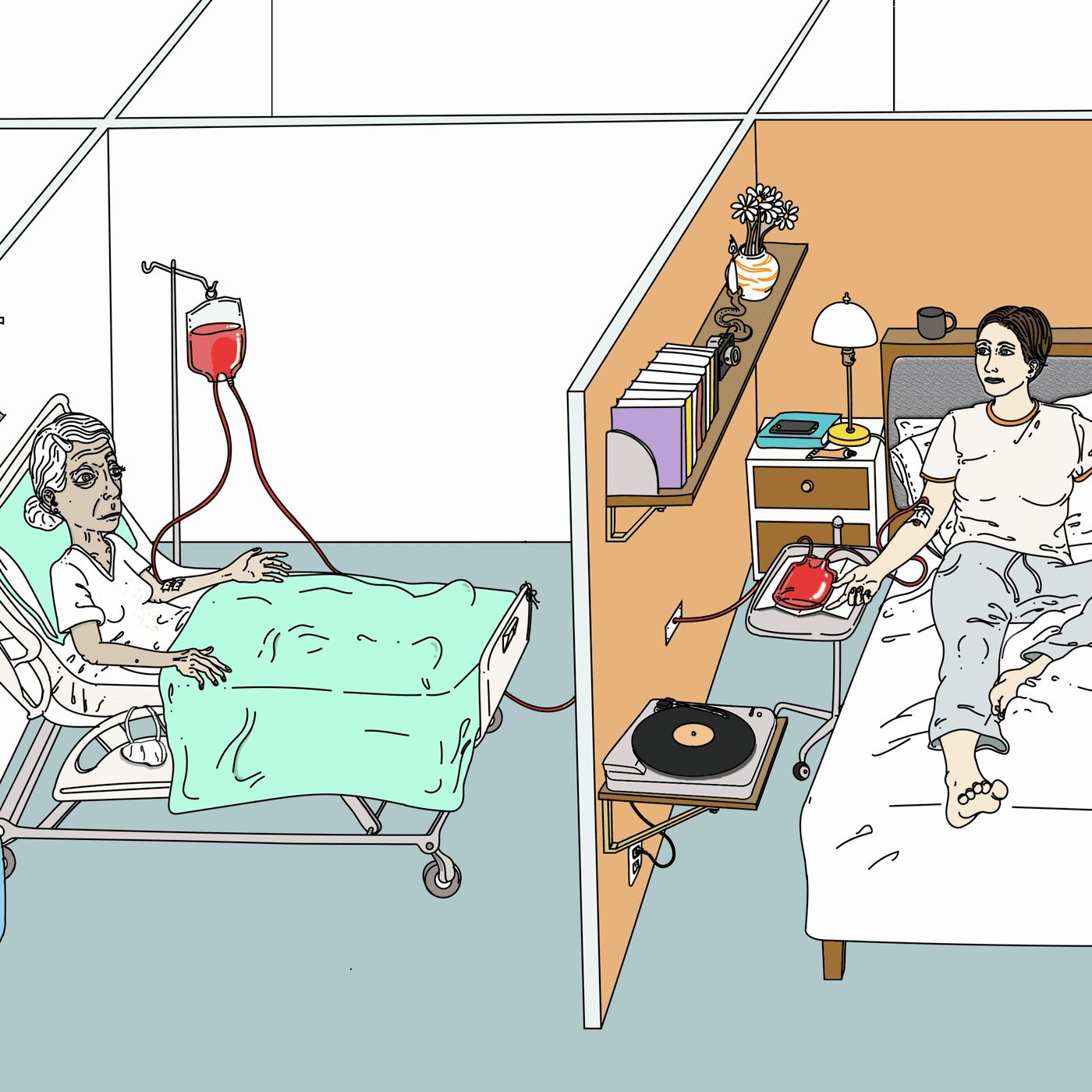
To my mind, when I hear the word blood transfusion, I think of those medical drawings from the 1700s where you see a tube running from one person's arm directly into another person's arm. The idea in this case, in brief, is that we're standing in this tragic gap, right? This is what I talked about in the last dispatch. We know a little bit about this virus, but not nearly enough to be able to fight it effectively.
And we need to do something now. All the while, we do notice this difference that some people on their own seem to fight off the virus just fine. They have very mild symptoms. Others get very, very sick.
We don't yet understand why there's that difference, but maybe we could use it. The thought is, okay, if there's a coronavirus, if there's someone who had coronavirus and they survived, they survived because of some reason, like their body did something well and scared off this virus and crushed it, and they lived. And so maybe if we tap into that body as a resource and take from it the thing, the part of it that fights off virus is literally get it out of a survivor into a sick person. Maybe we can save a sick person.
And so it's very crude. It's super crude. It's sounding super medieval, the way that you're saying it. I know.
I know. Like what century are we living in? We don't really know why this works, but it kind of works. So just get that in there.
It's like, and we know that it's safe in the sense that that blood was in another person. Like it's almost like you've already done a human trial. Like if you take my blood from me, it didn't hurt me. Right?
So I'm giving it to someone else. Couldn't be bad things in the blood. Couldn't there be like a bad stuff? Okay.
Let me explain how it works. So you would take somebody who has survived coronavirus, you would stick them in a chair, you would stick a needle in their arm, and then you would take their blood, you would filter out the blood plasma, leaving behind the red blood cells and the white blood cells. You would take that plasma and you would put it into a patient who currently has coronavirus. No, wait, what is plasma?
So, you know, plasma is the part of the blood that doesn't contain any living cells. So it doesn't have white blood cells. It doesn't have red blood cells, but it has the other stuff that makes up your blood. And the thought is, is that the blood plasma is the part of the blood that holds anything that might have fought against an illness, like the antibodies, right?
And so antibodies are the things that your body makes to fight an intruder. So a virus comes in and we make an antibody to attack that virus, and then you have, it's almost like your body makes its own drug. Now you see, so if I have survived the coronavirus, that means that, for reasons that we don't really understand, I have some special drug in my blood plasma that can maybe help someone else fight it off too. Yeah.
If you look at the different options that are out there, this has a good likelihood of working. This is Arturo Casadovall. He's an immunologist at Johns Hopkins University, and he was really the first person in the States to say, we should start doing this. I have been working on antibodies for my entire academic life, and I like history, and I read a lot about the history of how antibodies were used.
This is not the first time we've thought about doing something like this. We've actually been doing it since the 1890s. What was it used for initially? Like in the 1890s?
What was it like, tuberculosis, sir? They first used it for diphtheria. Ah. I'm not sure I know what diphtheria is.
Oh, here, let's look. I couldn't actually diphtheria. I couldn't actually explain what the diphtheria is. It was an infection caused by a bacterium.
Diphtheria causes a thick covering in the back of the throat. It can lead to difficulty breathing, heart failure, paralysis. And so they used it on that? Yeah.
And in that case, the serum didn't come from people. It came from horses. Did that work? It did work, but then they realized you could do it with human blood, too.
By the way, it was used in 1918 to influence the epidemic. I wonder why they got that idea then? Oh, because it was known at the time that people who recovered from infectious diseases made antibodies. That was known.
The first Nobel Prize, by the way, in 1901, was given to enel bone bearing for this discovery. That you could transfer immunity by transferring serum. Wow. They used it in the 20s for the scarlet fever.
They did it in a measles outbreak in Pennsylvania in the 30s. It seemed to stop an outbreak. Oh, so people got better? Oh, yeah.
However, that practice was largely abandoned after 1950 for two reasons. One, vaccines came aboard. And the other thing was that they discovered that blood in some circumstances could carry infectious diseases. Then you have an interesting thing where, like, the AIDS epidemic, if you think about HIV, that's definitely pathogen and blood.
So you see a bit of a pause. And any blood story, you see a pause around the AIDS crisis. But then technology improves. We have so many ways of screening blood and screening blood really quickly.
You start seeing them using it in the SARS epidemic. It's been used in MERS, that respiratory infection, which is a coronavirus. It's been used on other coronaviruses, basically. So when I saw that this was happening in the beginning of the story through the world, I knew that this could potentially be used.
This could provide an option. Obviously, like any therapy, it needs to be tested. And I reinforced that over and over again, that one needs to look at this as an experimental therapy. As of this week, which is the second to last week in March, the FDA has given emergency approval to both start investigating the plasma transfers with clinical trials and scientific protocol.
But then they've also okayed it for compassionate use, which is that if you have a case and they seem like they're failing, can you use it? You can now use it. That's what the FDA is saying. You now can use it.
This is happening in New York, right? It's just starting. Yeah, so Mount Sinai in New York and Albert Einstein Medical College have said that they hope to start using it in patients on the ground to the very beginning of April, essentially. And Arturo and the other scientists involved in this were saying one of the amazing things about doing the plasma transfers is you're going to find out really quick if it works.
This is going to be one of those trials that requires years to be completed on Sunday. I think that there is a good likelihood that we then want you to avoid this that you will know whether it's working in a few weeks, but this is something that can can be tried today. Okay. So, let's get back to something.
Wait a second. Wait a second. Wait a second. Wait a second.
Wait a second. Wait a second. Wait a second. I PDTL.
Shill out. Show out. Let me look at mine, too. Okay, we're doing good.
Okay. Why isn't it been like ramped up at scale? I mean, there's in the way for you to know this answer. for you to know the same story.
Because there's not really a scale. Like it's like, you have to find people who have the illness and you have to take their blood from them and you have to make sure that blood is healthy. Then if it is, you take their plasmid from them and then you give it to someone else. That's really kind of like a one to one.
But that is interesting, Molly, because it's like, maybe this is the, I mean, okay, I'm just gonna go wild with conjecture for a moment. Maybe this is the scale moment because you have so many people who are infected. There's so many. And they're all in the same place and some of them are getting better magically and some of them aren't.
And so you have like the ability to do like a massive natural experiment, you know? But the other thing is that, so China's actually been doing this, I think since January for their outbreak with this COVID-19. And they've been doing transfusions. They've been doing this serum transfusion, yeah.
And so, and the reports are that it's going well, though nothing's published yet. I mean, I guess I don't quite understand why it wouldn't work. It's like you say someone's blood that defeated the virus and you give it to someone else and it seems like we wouldn't do the same thing. So one of the problems with this type of therapy is that it works best early.
Antibodies work best early in the course of disease. And the question is, when is earlier? And with COVID-19, that's a tricky question because often you have a viral count that's growing before you have symptoms. And so a lot of times people aren't even seeing people until it's like really bad.
So it makes it like tricky. There's a big difference between really bad and the intensive care unit. Oh, okay, okay. And maybe this intervention, and again, I stress that this will be a clinical trial.
This is a hypothesis that needs to be tested. The administration of plasma, at that point of view, may prevent progression of the disease. So it's that people don't get into such trouble but they have to be in a respirator. And so it looks like in the States, they're gonna break it down.
Like in New York, they're gonna target like these three different groups. So they're gonna target severe patients who really need help and are at risk of dying. They're gonna target early patients who are just showing symptoms. And they also wanna use it prophylactically.
So actually giving it to doctors and nurses who have no viral count, who are coronavirus negative and see if it can actually be a preventative. Whoa. Yeah, and that's actually pretty cool. That's really cool.
That feels to me like, wow, that feels to me like if they could do that, they should just do that. I mean, I would take it now. Totally. And I'm in my closet.
No, I think about my sister-in-law who's a nurse who is treating COVID patients. And man, if there's something they could help her, it's like, whoa. Yeah. I mean, there's something kind of like just a pan out for a second.
It's like as a paradigm, it's such an interesting, intimate way to treat. Cause I mean, these days, the whole feel of medicine seems to be moving towards little pills that you pop in, you take these pills and they do something mysterious in your body and you feel better. This is so intimate in that it's one person having suffered and survived, then turning to the next person who's a few days behind them suffering and saying, let me help you. There's something very spiritual in a way about that.
Yeah, I find it, when Arturo and I were talking about on the phone, it felt very profound and like really beautiful in the sense that he talked about it as like sharing immunity. Like we can pass immunity to each other. And I thought, wow, short of social distancing where we're all staying in our houses to protect as many people as we can, that feels like such a golden gift. Like to be able to transfer something so profound to a person as like protection, it's like you can shepherd someone in, it's like you can offer them safe passage but in its safe passage, it's such a metaphorical level.
It's the same thing that I get when I hear about people donating kidneys, you know, but this is somehow different. Because they've had it. Like it's one thing to just like give a donation, it's another thing to say like, I had this experience and I'm gonna hold your hand through it and I'm not physically holding your hand because none of us are allowed, but I'm like spiritually holding your hand because I'm giving you my blood and I'm helping you walk this path. I'm helping you take this journey.
Coming up, we talk to somebody who in a way is taking that journey. That's after the break. Hi, my name is Gondaviolone and I'm currently quarantined in Champaign, Illinois. Radio Lab is reported in part by the Alfred P.
Sloan Foundation enhancing public understanding of science and technology in the modern world. More information about Sloan at www.slown.org. Each story you hear online at many starts with a question. What happens if we refund tariffs?
Why are grocery so expensive? At NPR, we stand for your right to be curious because the forces shaping our world can be hard to see. Follow NPR's planning money wherever you get your podcast and start seeing how the economy really works. Hello.
Hi, is this Tatiana? Yes, it is. Okay, hey, it's Molly from Radio Lab. How are you?
I'm good, can you hear me okay? Yeah, I can hear you fine, can you hear me? I can, yeah, there might be, there's like... Hey, I'm Chad, this is Radio Lab, we are back.
I'm just gonna play you now. An excerpt of an interview that Molly did with someone who was right in the thick of the stuff. So my name is Dr. Tatiana Prowel.
I'm an internist and medical oncologist on faculty at Johns Hopkins in the breast cancer program. And Molly ended up talking to Tatiana because of a tweet that she posted. Can you tell me in your own words what the tweet was about and what it said? Sure, so the tweet was about my brother-in-law's dad.
We call him Pop-a-Doc, he's actually an internist in California. I called him, I talked to my brother-in-law about something else actually, and I just said, how's everybody? And he said, oh, my dad's a little under the weather. And I said, wait, wait, how's the end of the weather?
He's 83, he's practicing medicine. He's high risk, right? And he said, oh, well, he's just been coughing a little bit. I don't think he's had fever or anything.
And I literally said, I'm going to call him, I'll call you back. And I hung up and I called him. And he said, oh, I'm fine. I just had a little bit of a cough, but I actually feel fine.
I'm not sure to breath at all. And his wife volunteered. Yeah, he seems fine. He looks fine.
He's just been napping more than usual. Normally, he doesn't just nap during the day. And he's been napping. He's been falling asleep in the couch and so forth.
And I said, all right, that's it. You guys are going to urgent care right now. I think you're hypoxic and your oxygen level is low. They thought I was being crazy.
And I said, we're just going to talk about one thing before you go. And that is whether or not you are willing to be intubated. And he actually laughed. He was like, I just have to drive cough.
Like, why are we talking about a ventilator? And I just said, I'm worried about you because you're falling asleep inappropriately in your 83. And your doctor, which means I'm sure you've been exposed to these patients. And he said, yeah, if you think I should do that.
And I just said, listen, we can support you, but you have to go right now because I think you have COVID-19. And he went to the urgent care straight from that call. He hung up. He went.
His oxygen saturation was 92%. It should be 100%. They sent him directly from there to the ER. And he has COVID-19 illness and has been hospitalized now for a little over a week.
And is in their intensive care unit in a community hospital, like back to the same community hospital, where he was on staff for many decades. And so my tweet was asking if there was anyone who had had COVID-19 and recovered and who was interested in serving as a potential donor of plasma in Southern California, where he's currently hospitalized. And how did you, I mean, I guess you're a doctor. So maybe you're in the zone, but you're about to tell me.
How did you know even to think about asking for plasma, or like think like maybe he could get a plasma transfusion? Yeah. I think it's a mix of things. So one is that I'm on faculty at Johns Hopkins.
And as I believe you know, a lot of the work that is going on with convalescent plasma has been centered there. And the other thing is that my husband is an infectious diseases physician in the Navy. And so he's a doctor. And also his family.
We've been bouncing a lot of ideas back and forth about how best to take care of people with this. And of course, it was not a new concept. No, no one just got the idea to give convalescent plasma right at this moment for the first time. This has been done going back more than 100 years.
And it's a way, honestly, for people whose experience has done this and recovered to contribute at a time that I feel like the public really wants to contribute. I think that that's the thing I spent so much from my friends and family and neighbors and everyone who's not in medicine is they're all rooting for us, who are in science and medicine. But they're all at the same time feeling kind of like they want to do something. They have this restlessness.
Everybody's quarantined. Everybody's kids are home. They're watching the news. They're watching social media.
And they're feeling like this catastrophe is unfolding. And they're just sitting there. I think that there is this sense that we're at war. And the war is being fought by a very small number of people.
There will be millions of cases in the US before this is over. Millions and millions. And not all of those people will be qualified to donate plasma. But many of them will.
And so it's a great opportunity. I have to. I'm like, what happened with your tweet? Did you give luck?
So oh gosh. Well, I tweeted that late at night. I can't recall what time it was. But it was late.
And honestly, I didn't expect it would get a lot of attention. And within minutes, I had hundreds of people commenting, retweeting, private messaging me, telling me, this is my blood type. This is how many days ago I was sick. Where exactly do you need me to go?
Which day? I can see if I can get off of work. I mean, people just came out of the woodwork. I had people messaging me with a PDF of their test result to show me what day it was positive.
I mean, I just got all kinds of stuff. And they were suddenly not just contacting me as a donor. Suddenly people realized, oh my gosh, there are hundreds of people that want to donate. My family member needs plasma.
So then suddenly I had people messaging me saying, we're looking for plasma help. Like, have you gotten anyone who's in New York? Have you gotten anyone who's in Louisiana? Do you have anyone who's this blood type?
So suddenly I was sitting on my bed trying to match these people up. And I spent pretty much three days in my cameras on my bed trying to match people up. It became complex because it's really impractical, right? That's not the way to do it.
Only one person. Exactly. I mean, how did you feel like having the weight of all of this on you? Like, were you like, am I going to find a donor?
Am I not going to find a donor? People think I'm going to find a donor? And what if I don't? I want to save this, but I can't.
You know, I think I was always confident that we'd find somebody. How come? Well, a few things. One is I'm an oncologist.
And you talked to a handful of oncologists. I think I think that you discover instantly is that oncologists are really optimists, like deeply optimistic people. Certainly oncologists have a certain age. And I put myself in that category.
I'm 47. I think anybody who's been doing oncology for 10 or 15 or 20 years has to be an optimist, because we were taking care of people with cancer when the treatments were really not very effective in a lot of cases. You know, we lost a lot of people. And you really have to, I think, come into it every day with the attitude of, I might be able to say, to save this person.
I think the other thing, though, is just kind of an understanding of statistics. I mean, it's a pandemic, right? It grows exponentially. The number of cases are doubling every three days or something.
So I realized, you know, the thing that it didn't take very long for this outbreak to get completely out of hand and essentially closed down the world. It also wasn't going to take very long for me to have a really large number of qualified donors who had been infected and recovered. Did you find a match? Did you find a match?
We did actually find a match. And we just found a match. And the person lives a few hours away from where my pop-a-dock is hospitalized. He actually has the first name as one of the patient's sons, which they felt was very symbolic.
And so the herbesis and transfusion is supposed to happen tomorrow, Tuesday. Wow. So last question. What do the next couple of days look like for you in the case of pop-a-dock?
Yeah. So his donor is coming tomorrow, and the blood draw will happen. And then that platform will be tested and processed and transfused into him tomorrow with the expectation. And then we wait, and we see.
I think that we're hoping that it will help him clear the virus pretty quickly. That's the hope. I think that having an infection, maybe even being critically ill from it, recovering, and then saying, I know how awful that was, how scary that was, how absolutely uncertain everything felt when I was sick. And I have the capacity to mean myself.
I can go give plasma. And if I give a plasma donation, like a plasma for recess donation, where they take off three units of plasma, I can treat three people with this. That's it. Because it's interesting, every virus has a number that we call R0P, like R sub 0, R0P is how it's pronounced.
And that number is how many people, an average infected person will themselves infect. So if you look at some of our less contagious things, like seasonal flu, those are closer to one. If you look at Spanish flu, it was about two or a little more than two. So each person that affected on average gave two other people the infection.
And this virus, SARS-CoV-2, is closer to three. So that means everybody on average who's got it is going to give it to three other people. So it feels kind of cool. Like there's some sort of order in the universe that each person who gets it, who donates plasma, can actually treat three people.
Wow. I didn't realize it was three. I thought it was at most two. Yeah, it's three.
And I just the, what do I call it? I don't know what, the symmetry of that in the universe, that they are not for this virus is three. And the number of people that a plasma donor can treat after they've been infected is three. It just feels like, I don't know, there's something beautiful about that.
Wow, you've given me a lot to think about it. And also just feels so good to just like share thoughts and ideas. So thank you for that, sharing your own, and listening, and responding back and stuff, like sort of in the middle of all this crazy. Oh, yeah, no, no, there wasn't.
That's the humanity in it, right? Like that's the, if something good comes from all this, it's that we kind of just distill down, like all the unnecessary stuff is gone, right? Like what's left is what really matters. Like you're down to, do we have sufficient nutrition to keep our bodies going?
Are we with the people that we love most, and are they safe? Are we able to do our most essential work, even if it's hard, and it's made more complex? You know, like we really, I mean, that is the little, tiny, tiny pearl at the center of all of this, is that it forces us to say, what is essential? And part of that essentialness is connecting with other people, meaningfully, deeply.
You know, that is a big part of it. The thing, the greatest tragedy in my mind, of this entire illness, which we didn't touch on at all, is the fact that people die alone. So, you know, in the case of Popadoc, a thing that has been really hard for our family was they sent him directly to the ER, and his wife called me and said, we went there and they heard what his oxygen level was, and that he had been coughing, and that he was a physician, and they took him right back into the isolation area, as a PUI, a person under investigation for COVID-19, and they won't let me come into the ER because I'm not symptomatic, and they don't want me to be exposed, and I can't be with him because he's now in this isolation unit, and that's the last time she's gone. Like she literally pulled up to the ER, and he went in, and she's never seen him again.
And if he died, she'd never seen him alive again. And that is the greatest tragedy. There's gonna be so much tragedy from this, right? We're gonna lose so much life.
We're gonna lose life with people better on the front lines, as first responders, and as physicians and nurses, and we're gonna lose people who are young, but I think that amidst all that other tragedy, the biggest tragedy is going to be that hundreds of thousands or millions of people, before this is over, will die alone. In many cases, these patients aren't even a ten-by-position when they're dying. You have a phone call with them from outside the room. You only go in the room if you need to lay hands on the patient to do a procedure or something.
These people are going into the hospital, they walk into the ER, they're coughing or something, and they don't know, they don't realize. I didn't even realize, I mean, I realized, but I didn't think of it. I knew if he went in there, that he would immediately put into a room as a person in an investigation, but it happened so fast that I didn't say, like, telling you love him. Like, spend ten minutes in the car before you send him in.
You've been living with him for weeks. Like, you've been exposed. Like, take ten minutes. He's not critical, he'll take ten minutes, and talk to each other.
Say what you need to say. Tell them the logistics stuff, like whatever you need to do. Like, do it. And I didn't think to do that.
And I'm a physician. I knew that these people were being isolated, and it didn't occur to me. But for somebody who doesn't realize that, they drive their family member up to the ER, and that's it. The people who died don't never lay eyes on them again.
You know, I think a lot about death. I've attended a lot of death as an oncologist a lot. Like, I can't, I've been a doctor for 21 years, and I've been an oncologist for, gosh, 17 of those? 16 of those are something a lot of years?
I can't even begin to get how many deaths I've pronounced. I've been a witness to death a lot of times, and there are a lot of things that distinguish a good death from a bad death, you know, being free of pain, and having closed all your loops, you know, not feeling like you're dying with unfinished business on either side on the part of the person who's dying or on the part of the survivors, like, that's the thing. You know, if you're prepared, if you aren't surprised by death, those are the people that have a good death, you know? I think there's just some sort of peace and resolution in the end of suffering.
These deaths are the exact opposite of that. It is the worst death. No one's prepared for it. No one has closed the loop.
No one got the logistics ready. No one did the emotional hard work of making sure that everyone said what they need to say, and people have forgiven who they need to forgive, and none of that's done. I don't know, it's a lot to think about people dying alone. Are you still there?
Hello? That was such a dramatic ending. Sorry. I know, I think that that's how you should end it, actually.
That's just, that's like the universe telling you that's the end. You've got isolated in the end while talking about ends of isolation, and I was like, I can hear you, and I can feel you, and I have tears in my eyes, and this is deeply moving, but there's some reason my microphone's not working. That's the universe telling you that's the end of that show. That's it.
Well, yeah, it's a lot. I so appreciate you. Thank you. Well, I like that.
I definitely want you to get back to saving people's lives, though. Thanks. I've gotten all these texts while we've been talking, actually. I was just looking.
I had just had another person while we've been, while you called me back. Oh, sorry, actually, hang on. This is actually CoppaDoc's doctor. Have to go.
Go, go, go, go. Bye. Bye. Bye.
What a crazy experience. We checked in with Tatiana after that conversation. Papa Doc had his transfusion on Wednesday night. As of Thursday night, when we finished this podcast, he was still on the ICU, still on a vent later, hanging on.
We will let you know more when we find it out. So I want to stress that there are a lot of people working on this right as we speak. And what I can tell you is that the current working criteria is that we're going to wait two weeks, two weeks after the symptoms stopped. Then at that point, you test them for the virus, make sure the virus is really gone.
And then you ask them to donate blood, and then you look for antibodies from the blood. And those people with high antibody become donors. If you've had COVID-19 and recovered, and you'd like to donate plasma, go to our website, radiolab.org. We've compiled a bunch of resources there for you.
We try to make it as clear as possible. You can also go to the website of the American Red Cross at redcrossblood.org. Redcrossblood.org to find out more information there. If you're in New York City, check out New York Blood Center to figure out how to donate.
Special thanks for this episode to Evan Block and Dr. Tim Bion. I'm Jad Abumrod. Thank you all for listening.
Stay safe. Keep taking care of each other. The maker calling from Woodland Park, New Jersey. Radiolab is created by Jad Abumrod with Robert Krollwich, and produced by Jordan Wheeler.
Dylan Keith is our director of Samsung. Susie Lechtenberg is our executive producer. Our staff includes Simon Adler, Becca Russeller, Rachel Cusick, David Gebel, Bethel Habte, Tracy Hunt, Matt Kielty, Annie McEwen, Liti Snafter, Sarah Kari, Harry Enlack, Pat Walters, and Miley Webster. With help from Shima Oliaghi, W.
Harry Fortuna, Sarah Sandback, Melissa O'Donnell, Tad Davis, and Russell Gregg. Our fact checker is Michelle Harris.