
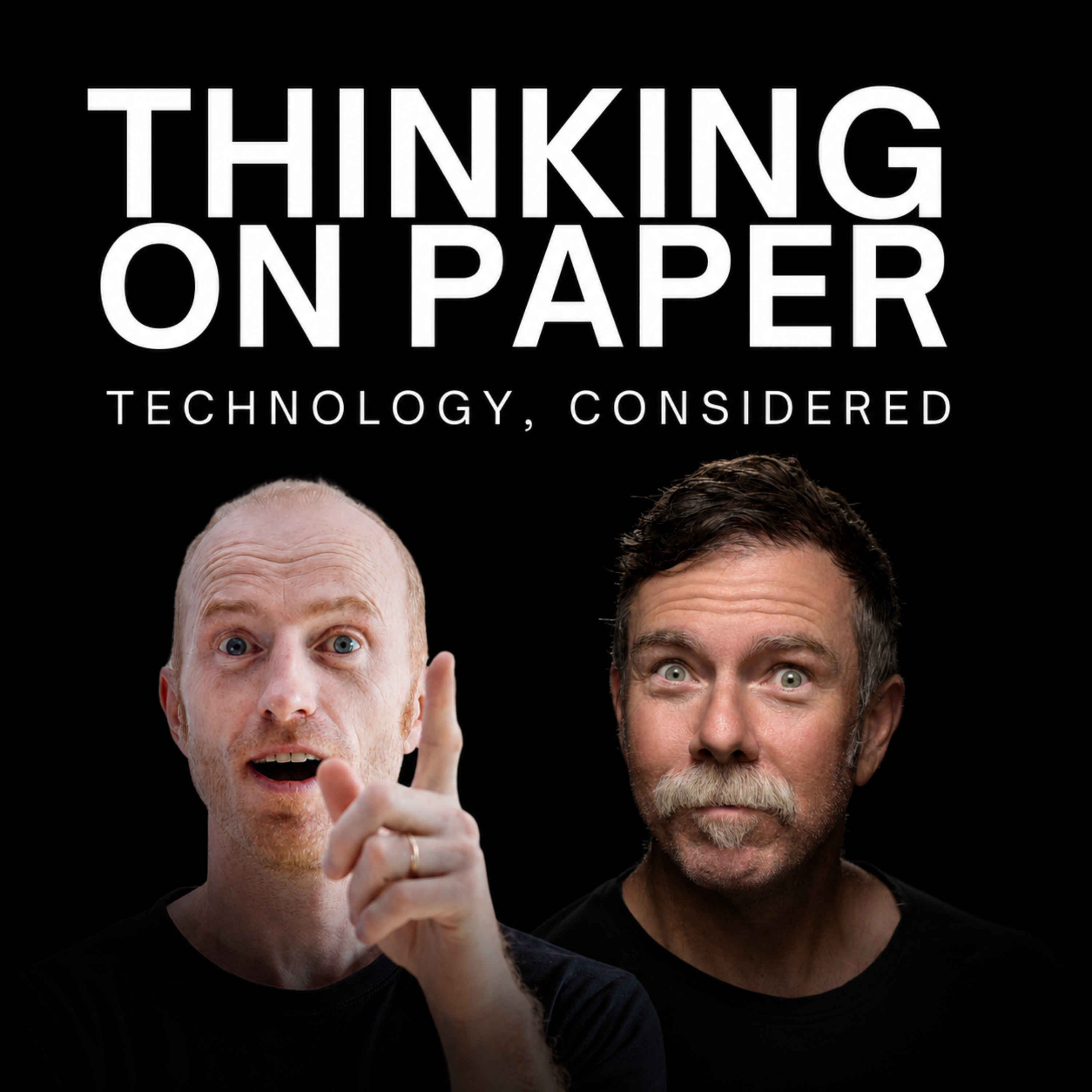
EPISODE · Nov 19, 2025 · 6 MIN
Our Last Design Choice
from Thinking On Paper · host Mark Fielding and Jeremy Gilbertson
We speak to Don Norman about humanity centered design. The godfather of design explains why we need Humanity-Centered Design—a shift from individual users to society, planet, and long-term impact.The problem: "What's wrong is what's left out."Every digital product relies on physical infrastructure. Power systems. Data centers. Electricity. Rare earth mining. You can't design a phone without designing its supply chain.Traditional human-centered design optimizes for the user. It ignores environmental and social consequences. Norman says we must widen the frame.We talk about:- Why designing for individual users is no longer enough- How hidden costs show up far from your device (mining, energy, waste)- Why efficiency isn't always a virtue (optimizing one thing breaks another)- How simple metrics distort real outcomes- What it means to design with communities instead of imposing solutions- Why responsible design must consider ecosystems, not just usability- How to avoid "colonial" patterns (extracting value, externalizing harm)Norman's core argument: The responsibility is collective. So is the impact.Humanity-Centered Design means:- Long-term impact over short-term convenience- Community collaboration instead of top-down solutions- Systemic thinking (not just product features)"We're all together," Norman says. Technology either strengthens communities—or weakens them. Design decides which.The future of design isn't better interfaces. It's understanding how products influence society, policy, and the planet.---Guest: Don Norman, Godfather of Design, AuthorTopics: Design, humanity-centered design, sustainability, systems thinking, communities, long-term impact--Other ways to connect with us:Listen to every podcastFollow us on InstagramFollow us on XFollow Mark on LinkedInFollow Jeremy on LinkedInRead our SubstackEmail: [email protected] On YouTube: https://www.youtube.com/@thinkingonpaper/videos
Embed this episode
NOW PLAYING
Our Last Design Choice
No transcript for this episode yet
Similar Episodes
No similar episodes found.
Similar Podcasts
No similar podcasts found.