
EPISODE · Dec 23, 2025 · 1H 3M
DORA 2025, the Psychology of Agentic Coding, and Value Stream Management
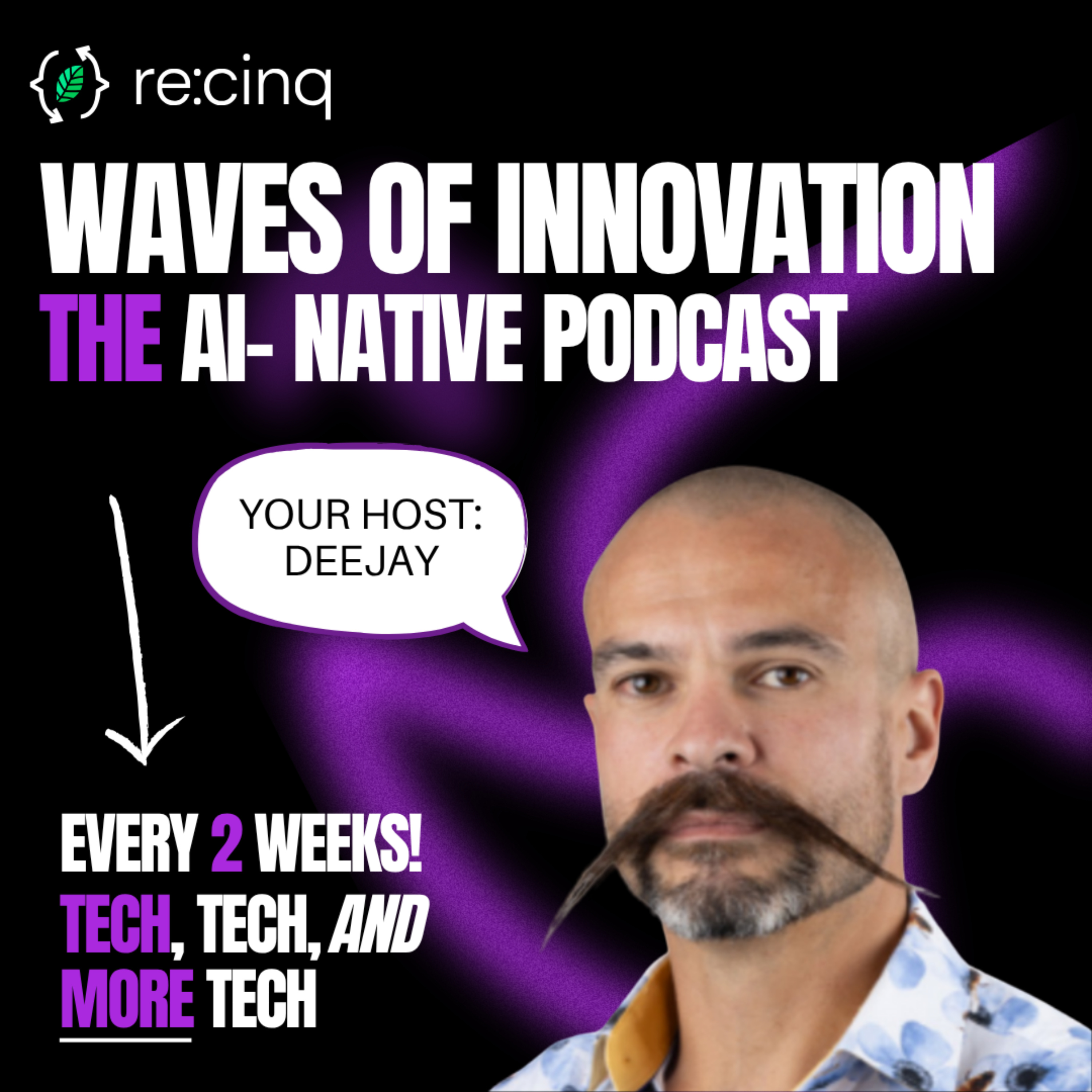
from Waves of Innovation by re:cinq · host Deejay
In this week's episode of Waves of Innovation, host Daniel Jones reconnects with "Big" Rob Edwards, a Google Cloud expert, DORA contributor, and long-time collaborator. Their history goes back a decade to the trenches of early cloud platform delivery, giving them a shared language for the massive shifts occurring in the industry today.Rob brings a rare dual perspective to the podcast. By day, he works with enterprises across North America to optimize their software delivery using Google Cloud. By night, he has recently completed a Master’s degree in Psychology, where his thesis focused specifically on "Developer Productivity in the Age of Generative AI."The conversation kicks off with a deep dive into Rob’s contributions to the upcoming DORA report. While the industry obsesses over code generation, Rob and Daniel argue that "writing code faster" is rarely the bottleneck.They explore the critical importance of Value Stream Management (VSM). Rob shares real-world anecdotes—including drawing process maps on glass windows in major banks—to illustrate how invisible friction points kill velocity.They discuss a specific case study where a customer thought they had a CI/CD problem, but VSM revealed they had five manual merges on the critical path to production. The key takeaway from the DORA research? AI is an amplifier. If applied to a bad process, it simply creates a larger pile of inventory at your bottlenecks. VSM is the "force multiplier" that allows AI teams to actually ship value rather than just generating PRs.The heart of the episode is a fascinating exploration of Rob’s academic thesis. Interviewing senior engineers, he uncovered that the identity of a developer is fundamentally changing from a "Coder"—measured by syntax and output—to a "Conductor."Rob explains the concept of "metacognition" (thinking about how we think). As developers move to agentic workflows, they are forced to stop thinking about the for loop and start thinking about system architecture and intent. Rob notes that participants in his study stopped reading technical manuals and started reading architectural books to better direct their AI agents.Key Themes Explored:The "Safe Space" of AI: Rob reveals a surprising psychological benefit: introverted developers are using AI as a non-judgmental "cognitive partner" to validate their ideas. This pre-validation gives them the confidence to speak up in group settings, leading to better team outcomes.The Baseline Trap & Burnout: The discussion takes a serious turn regarding mental health. As AI handles the grunt work, the "baseline" for productivity shifts upward. If you aren't doing 3x the work, you feel unproductive. Rob and Daniel discuss the dangers of this "new normal" and the "J-Curve of Learning" where productivity temporarily dips as we adjust to new tools.The Junior Developer Crisis: If senior engineers are operating at a high level of abstraction, how do juniors learn? The duo laments the loss of "learning by osmosis"—sitting next to a senior dev and watching them work—and questions if the next generation will miss out on foundational struggles that build resilience.Agentic Exhaustion: Daniel shares anecdotes about the mental load of managing multiple AI agents, comparing it to the intense focus required for pair programming. It’s not necessarily easier; it’s just different work.Whether you are a CTO looking to interpret the DORA metrics, or a developer trying to navigate your changing identity in an AI world, this episode offers a blend of hard data and human insight you won't find anywhere else.
Embed this episode
Ready to play
DORA 2025, the Psychology of Agentic Coding, and Value Stream Management
No transcript for this episode yet
Similar Episodes
No similar episodes found.
Similar Podcasts
No similar podcasts found.