
EPISODE · Mar 23, 2026 · 1H 28M
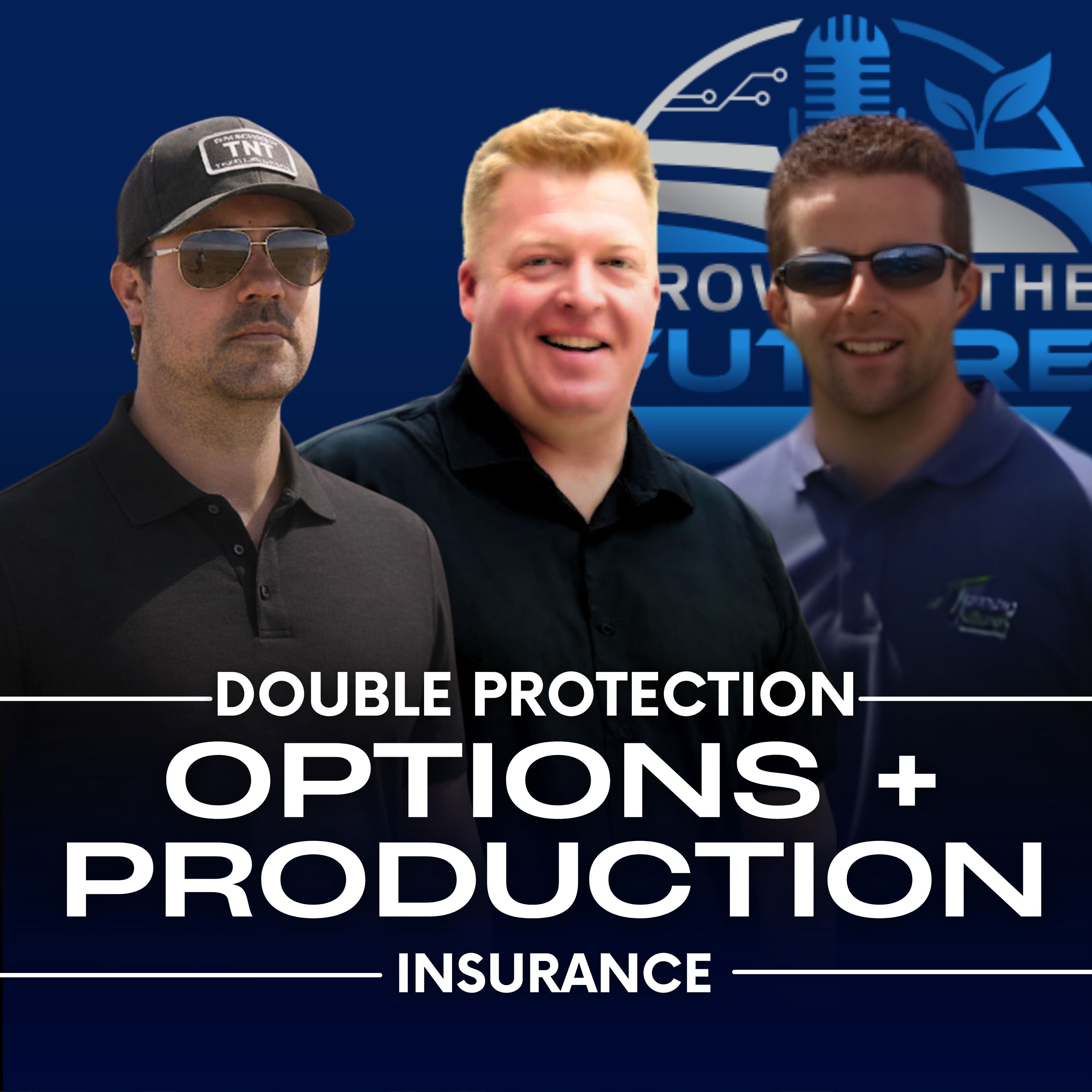
Double Protection Options + Production Insurance
from Growing the Future · host Dan Aberhart
Canola ran hard. The question wasn't whether to celebrate — it was whether to protect what you'd built. This session came out of a real conversation with a GARS advisor who pointed out something most producers have never heard explained clearly: options and production insurance don't just coexist — they can amplify each other. If you structure it right, you can protect your floor, leave your ceiling open, and potentially have the government subsidize the cost of the strategy through AgriStability. That's the thesis Ryan Bonnett walked through live. He's been trading futures and coaching producers through options for 20 years. He was joined by Derek Tallon — a central Saskatchewan grain farmer who sold 400 tons of canola the week before this session — for a real-world producer perspective on how these tools actually get used. And David Sullivan from Global Ag Risk Solutions rounded out the room with everything you need to know about where production insurance fits into the picture. Nobody was selling anything theoretical here. This was a working session. Topics covered: How to quantify your bullish or bearish position before you ever place a trade — and why gut feelings without numbers will get you burned The difference between call and put options, and when each one belongs in your marketing plan How a collar strategy works in practice: buying a $700 put and selling an $800 call for a net cost of around $10/ton — and what you're giving up to get it Why "I'll hold the option a little longer after I sell the grain" is where hedgers become speculators How paper trades through your RBC or STONEX account interact differently with your GARS policy than a delivery-tied contract does — and why that distinction matters The AgriStability angle: how your option strategy cost becomes an eligible expense, and what that means if you're one of the many producers sitting close to a claim this year What a "whole farm put" actually looks like and how it covers commodities you can't hedge on the exchange The fertilizer and fuel hedging conversation nobody else is having Useful timestamps: 00:04:17 — Ryan introduces the bullish/bearish framework and canola market context 00:07:00 — Crowd poll results: where producers' heads are at on canola prices 00:13:00 — Technical analysis walkthrough: support, resistance, and where this market could run to 00:26:22 — Call and put options explained cleanly 00:35:10 — How put options work as price insurance without elevator contracts 00:39:33 — The collar strategy: how to cheapen your protection 00:42:36 — Derek Tallon's producer perspective on using options as farm insurance 00:46:46 — David Sullivan: how options interact with your GARS production insurance 00:50:00 — The AgriStability layer: how your option cost could be 80% subsidized 00:59:32 — When and how to exit the strategy properly 01:04:29 — Fertilizer and fuel: the hedging conversation farmers aren't having yet 01:17:00 — The hardest part: closing your hedge the same day you make your physical sale Guests in this episode: Ryan Bonnett — independent commodity trading advisor, 20 years of experience coaching Western Canadian producers through options and futures strategies. Derek Tallon — grain producer, central Saskatchewan. Grows canola, wheat, and durum. Brings a grounded, practical lens on how these tools work at the farm level. David Sullivan — production insurance advisor, Global Ag Risk Solutions (GARS). Expert in how production insurance, AgriStability, and marketing strategies interact. One thing that stuck: David put it plainly — a 5,000-acre producer is sitting long on $2.5 to $3 million of grain the moment they plant. Most traders would never carry a position that size unhedged. Most producers do it every single year without thinking about it that way. That framing alone is worth the listen. Follow Growing the Future: Instagram: @growingthefutureproductions LinkedIn: Growing the Future Productions YouTube: Growing the Future Website: growingthefuture.ca Register for the Convergence Conference at convergence.ag and stay updated by subscribing to the Growing the Future Podcast at growingthefuturepodcast.ca.
Embed this episode
What this episode covers
Most producers are long on grain the moment they put seed in the ground — and they know it. This session is about what you can actually do about it, using options and production insurance together to protect the downside without giving up the upside.
Ready to play
Double Protection Options + Production Insurance
No transcript for this episode yet
Similar Episodes
No similar episodes found.
Similar Podcasts
No similar podcasts found.