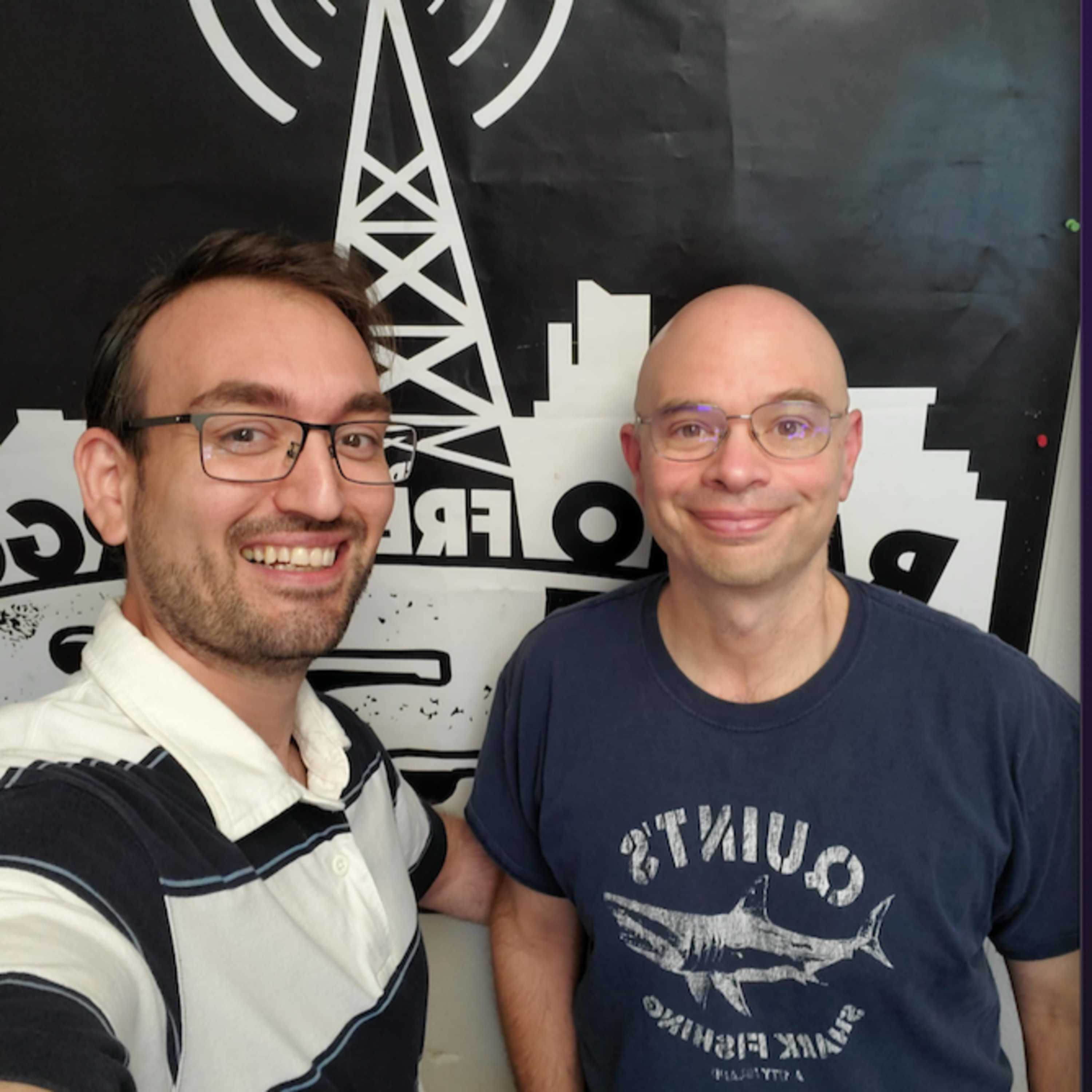
Dr.Thomas Ambrosio Explores Authoritarianism, Cynicism, And Board Games As Political Science At NDSU episode artwork

EPISODE · Aug 20, 2025 · 47 MIN

Dr.Thomas Ambrosio Explores Authoritarianism, Cynicism, And Board Games As Political Science At NDSU

from The Fargo Five with Conrad Fargo · host Conrad Fargo

In this episode of The Fargo Five, we sit down with Dr. Thomas Ambrosio, professor of political science and international politics at NDSU, to explore the complexities of academia, the Cold War, authoritarianism, and how history continues to rhyme in today’s world.he discussion quickly establishes a relaxed and candid tone as Conrad recounts their mutual ties to Wayne and Cheryl, community figures known for their gatherings, role-playing games, and conversations about politics. Tom recalls his own early days in New Jersey where his family was politically aware, deeply cynical, and shaped by the Cold War environment. He graduated high school in 1989, just as the Berlin Wall fell and the Soviet bloc collapsed, marking a seismic shift in world history and cementing his lifelong focus on international politics.The episode dives into how the fall of the Berlin Wall and eventual collapse of the Soviet Union shocked the world, including intelligence agencies like the CIA, and how these events illustrate both the unpredictability and the human-driven nature of politics. Tom explains that political science is not about predicting one specific revolution or war, but about asking why revolutions and wars happen in general, drawing patterns from history to understand the present. He compares the discipline to economics in its attempt to make sense of complex dynamic systems where countless moving parts make predictions difficult, but analysis rewarding.Conrad pushes further into Tom’s perspective as a professor at NDSU. Tom outlines the “three legs” of academic life: teaching, research, and service. Teaching brings the satisfaction of helping students realize they can understand complex international issues. Research ranges from publishing on authoritarianism and Russia to more unusual explorations such as the political and historical themes represented in board games. Service, on the other hand, often boils down to meetings—many of which Tom considers the least enjoyable part of the job. He explains the peer review process, the grind of publishing, and the tension created by academic journals profiting off unpaid scholarly labor. Despite this, Tom embraces his freedom as a tenured professor to pursue research that fascinates him, whether it is authoritarian diffusion, Russian geopolitics, or board game studies.The conversation also touches on the structure of academia, contrasting research-focused institutions like NDSU with teaching-focused colleges such as Concordia. Tom and Conrad discuss the pressures of “publish or perish,” the differences between adjunct and tenured faculty, and the troubling rise of administrative overhead in higher education. Tom candidly reflects on how many academics lack self-awareness of their own ideological biases, describing the academy as far-left while emphasizing his own cynical Gen X sensibility as a safeguard against dogma. He discusses the challenges of maintaining balance between advocacy and teaching, and the importance of acknowledging both complexity and uncertainty in political science.From reflections on the Reagan Revolution and the Cold War of the 1980s to his views on the inevitability of societal collapse, Tom’s insights weave together history, cynicism, and scholarship. He explains why international politics feels like home to him, why he sees patterns stretching back to Muscovy’s revolt against the Golden Horde, and how board games can act as models of reality. By the end of the episode, listeners hear not only Tom’s academic journey—from studying ethnic conflicts in the 1990s to writing a book on authoritarianism—but also his broader worldview that politics is ultimately a story shaped by human unpredictability.

In this episode of The Fargo Five, we sit down with Dr. Thomas Ambrosio, professor of political science and international politics at NDSU, to explore the complexities of academia, the Cold War, authoritarianism, and how history continues to rhyme in today’s world.he discussion quickly establishes a relaxed and candid tone as Conrad recounts their mutual ties to Wayne and Cheryl, community figures known for their gatherings, role-playing games, and conversations about politics. Tom recalls his own early days in New Jersey where his family was politically aware, deeply cynical, and shaped by the Cold War environment. He graduated high school in 1989, just as the Berlin Wall fell and the Soviet bloc collapsed, marking a seismic shift in world history and cementing his lifelong focus on international politics.The episode dives into how the fall of the Berlin Wall and eventual collapse of the Soviet Union shocked the world, including intelligence agencies like the CIA, and how these events illustrate both the unpredictability and the human-driven nature of politics. Tom explains that political science is not about predicting one specific revolution or war, but about asking why revolutions and wars happen in general, drawing patterns from history to understand the present. He compares the discipline to economics in its attempt to make sense of complex dynamic systems where countless moving parts make predictions difficult, but analysis rewarding.Conrad pushes further into Tom’s perspective as a professor at NDSU. Tom outlines the “three legs” of academic life: teaching, research, and service. Teaching brings the satisfaction of helping students realize they can understand complex international issues. Research ranges from publishing on authoritarianism and Russia to more unusual explorations such as the political and historical themes represented in board games. Service, on the other hand, often boils down to meetings—many of which Tom considers the least enjoyable part of the job. He explains the peer review process, the grind of publishing, and the tension created by academic journals profiting off unpaid scholarly labor. Despite this, Tom embraces his freedom as a tenured professor to pursue research that fascinates him, whether it is authoritarian diffusion, Russian geopolitics, or board game studies.The conversation also touches on the structure of academia, contrasting research-focused institutions like NDSU with teaching-focused colleges such as Concordia. Tom and Conrad discuss the pressures of “publish or perish,” the differences between adjunct and tenured faculty, and the troubling rise of administrative overhead in higher education. Tom candidly reflects on how many academics lack self-awareness of their own ideological biases, describing the academy as far-left while emphasizing his own cynical Gen X sensibility as a safeguard against dogma. He discusses the challenges of maintaining balance between advocacy and teaching, and the importance of acknowledging both complexity and uncertainty in political science.From reflections on the Reagan Revolution and the Cold War of the 1980s to his views on the inevitability of societal collapse, Tom’s insights weave together history, cynicism, and scholarship. He explains why international politics feels like home to him, why he sees patterns stretching back to Muscovy’s revolt against the Golden Horde, and how board games can act as models of reality. By the end of the episode, listeners hear not only Tom’s academic journey—from studying ethnic conflicts in the 1990s to writing a book on authoritarianism—but also his broader worldview that politics is ultimately a story shaped by human unpredictability.

NOW PLAYING

Dr.Thomas Ambrosio Explores Authoritarianism, Cynicism, And Board Games As Political Science At NDSU

0:00 47:12

No transcript for this episode yet

We transcribe on demand. Request one and we'll notify you when it's ready — usually under 10 minutes.

Frequently Asked Questions

How long is this episode of The Fargo Five with Conrad Fargo?

This episode is 47 minutes long.

When was this The Fargo Five with Conrad Fargo episode published?

This episode was published on August 20, 2025.

What is this episode about?

In this episode of The Fargo Five, we sit down with Dr. Thomas Ambrosio, professor of political science and international politics at NDSU, to explore the complexities of academia, the Cold War, authoritarianism, and how history continues to rhyme...

Can I download this The Fargo Five with Conrad Fargo episode?

Yes, you can download this episode by clicking the download button on the episode player, or subscribe to the podcast in your preferred podcast app for automatic downloads.
URL copied to clipboard!