PodParley PodParley

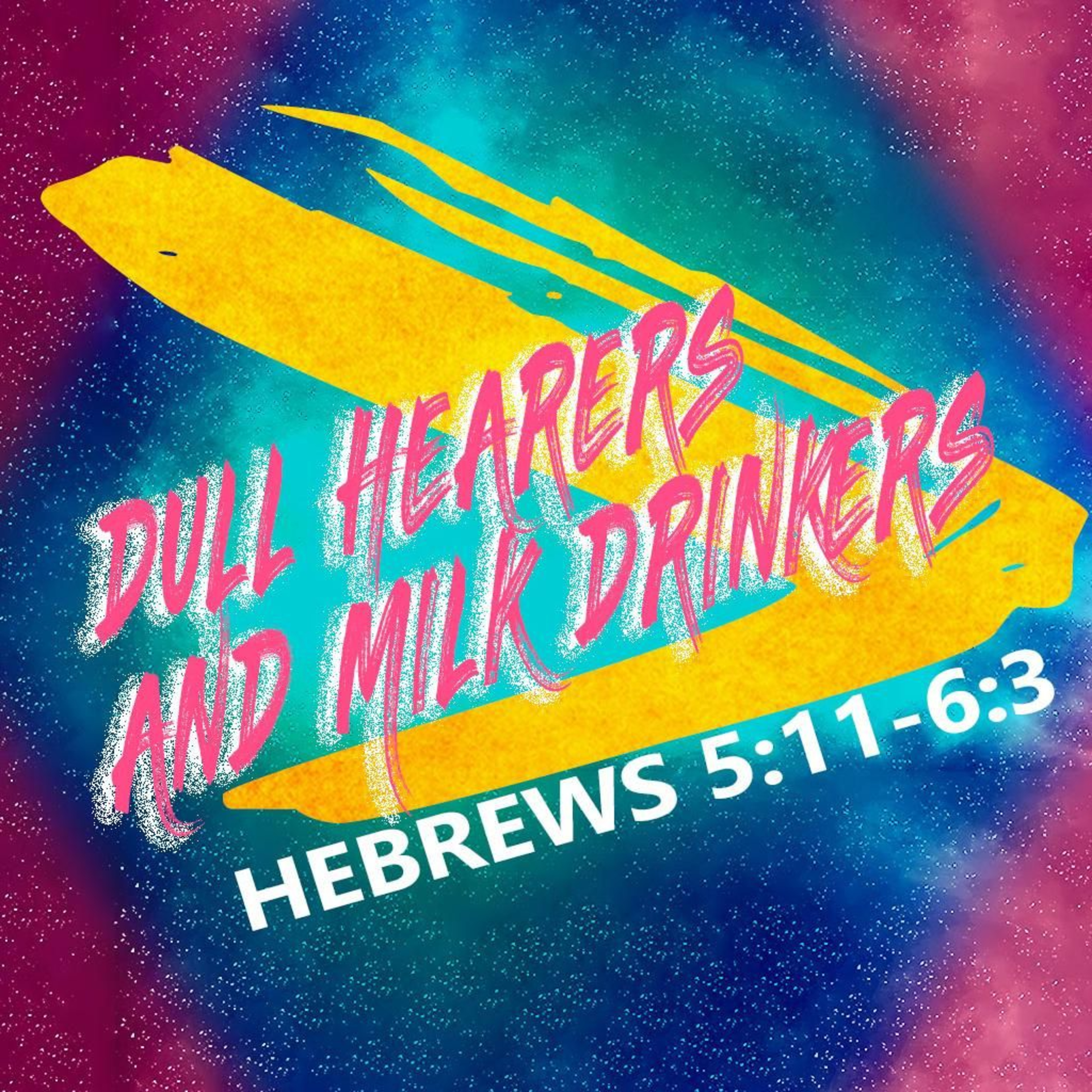
Dull Hearers And Milk Drinkers

An episode of the Warsaw Evangelical Presbyterian Church podcast, hosted by WEPC, titled "Dull Hearers And Milk Drinkers" was published on April 17, 2023 and runs 46 minutes.

April 17, 2023 ·46m · Warsaw Evangelical Presbyterian Church

0:00 / 0:00

If someone calls you a "milk drinker," they probably don't intend it as a compliment.The author of Hebrews certainly wasn't trying to compliment the spiritual condition of his listeners when he compared them to children who were not ready for solid food. To be fair, he probably didn't intend to insult them, either. Instead, he wanted to send them a clear warning that their lack of knowledge was a sign that they were in spiritual danger. Likening them to spiritual milk drinkers probably got their attention! Even though Jesus commended a faith that is childlike in its sincerity, wonder, and trust, He does not want us to remain in a state of perpetual immaturity when it comes to our knowledge of spiritual matters or our readiness to serve Him. Living the life He desires for us requires the strength and maturity that comes from eating solid food. If we never move past spiritual milk, we will be unprepared for the demands of authentic discipleship. Just as we may hear people say, "You are what you eat," to encourage a healthy diet, our passage this Sunday reminds us that what we feed upon spiritually determines what kind of people we will become.I invite you to read Hebrews 5:11-6:3 and think about the difference between those who drink spiritual milk and those who eat solid food. Ask Jesus to show you areas in your life where He would like to wean you onto a richer and more sustaining relationship with Him.

If someone calls you a "milk drinker," they probably don't intend it as a compliment.
The author of Hebrews certainly wasn't trying to compliment the spiritual condition of his listeners when he compared them to children who were not ready for solid food. To be fair, he probably didn't intend to insult them, either. Instead, he wanted to send them a clear warning that their lack of knowledge was a sign that they were in spiritual danger. Likening them to spiritual milk drinkers probably got their attention! Even though Jesus commended a faith that is childlike in its sincerity, wonder, and trust, He does not want us to remain in a state of perpetual immaturity when it comes to our knowledge of spiritual matters or our readiness to serve Him. Living the life He desires for us requires the strength and maturity that comes from eating solid food. If we never move past spiritual milk, we will be unprepared for the demands of authentic discipleship. Just as we may hear people say, "You are what you eat," to encourage a healthy diet, our passage this Sunday reminds us that what we feed upon spiritually determines what kind of people we will become.
I invite you to read Hebrews 5:11-6:3 and think about the difference between those who drink spiritual milk and those who eat solid food. Ask Jesus to show you areas in your life where He would like to wean you onto a richer and more sustaining relationship with Him.

Dr. Esperanto’s International Language, Introduction and Complete Grammar L. L. Zamenhof In July 1887, Esperanto made its debut as a 40-page pamphlet from Warsaw, published in Russian, Polish, French and German: all written by a Polish eye-doctor under the pen-name of Dr. Esperanto (“one who hopes”). Ludovic Lazarus Zamenhof (1859-1917) had a gift for languages, and a calling to help foster world amity: by a neutral “Internacia Lingvo” that anyone anywhere could readily use as a second language: neither forsaking a mother tongue, nor imposing it. In 1889 Zamenhof published an English translation by Richard H. Geoghegan, a young Irish linguist. All five are respectively considered the “First Book”. This classic sets forth Esperanto pretty much as we know it today (except that we no longer use internal apostrophes for composite words). Its original repertoire of 900 root words has grown tenfold in the past century, but you can still almost make do with the vocabulary herein. -- Summary by Gene Keyes אצל Etsel אורי ניסן גנסין Uri Nissan Gnessin Uri Nissan Gnessin was a Russian Jewish writer, generally considered a pioneer of modern Hebrew literature. His first book was published in 1904. In 1906 he co-founded the Hebrew-language publishing house Nisyonot (Attempts), and after moving to London in 1907, he co-edited (with Hayim Yosef Brenner) Ha'Meorer, a Hebrew periodical. Later he emigrated to Palestine but returned to Russia, then moved to Warsaw, where he died in 1913 of a heart attack. Gnessin wrote in a unique style of prose notable for its expressionistic language form. The story "Etsel" is about a young man suffering severe heart disease, unable to love or accept the love of several women around him. (Summary by Wikipedia and Omri Lernau) The Ramsey Show Highlights Ramsey Network The Ramsey Show Highlights is a quick, daily dose of advice on life and money in under ten minutes. Hear from experts like Dave Ramsey, Ken Coleman, Rachel Cruze, Dr. John Delony, George Kamel & Jade Warshaw. Part of the Ramsey Network. Delivered to you seven days a week.
URL copied to clipboard!