PodParley PodParley

Ecology and evolution

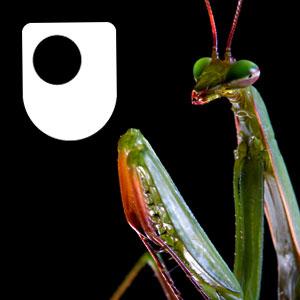
If evolution is a drama, then ecology provides the theatre and Darwinian Demons are the potential villains of the piece. Darwian Demons are species that try to dominate everything - so what stops them?

An episode of the Darwinian Demons - Audio podcast, hosted by The Open University, titled "Ecology and evolution" was published on November 9, 2009 and runs 5 minutes.

November 9, 2009 ·5m · Darwinian Demons - Audio

0:00 / 0:00

If evolution is a drama, then ecology provides the theatre and Darwinian Demons are the potential villains of the piece. Darwian Demons are species that try to dominate everything - so what stops them?

If evolution is a drama, then ecology provides the theatre and Darwinian Demons are the potential villains of the piece. Darwian Demons are species that try to dominate everything - so what stops them?
Darwinian Diva Viviana Weekes-Shackelford This podcast will typically be conversation based with topics ranging from anything science to anything “you name it” (within reason of course). Guests will join me to discuss their field of expertise, dabble in some current topics, and address questions that you have submitted The Theory of Anything Bruce Nielson and Peter Johansen A podcast that explores the unseen and surprising connections between nearly everything, with special emphasis on intelligence and the search for Artificial General Intelligence (AGI) through the lens of Karl Popper's Theory of Knowledge. David Deutsch argued that Quantum Mechanics, Darwinian Evolution, Karl Popper's Theory of Knowledge, and Computational Theory (aka "The Four Strands") represent an early 'theory of everything' be it science, philosophy, computation, religion, politics, or art. So we explore everything.Support us on Patreon:https://www.patreon.com/brucenielson/membership Evolution and the human family - Audio The Open University Can Darwin's theory of evolution be applied to cultural institutions like the family? If so, how can it help us to understand how family structures have evolved? If not, what are the limitations of a Darwinian approach? In this album, Ruth Mace, Professor of Evolutionary Biology at UCL in London, reveals how she uses a Darwinian approach to study diverse human populations. In particular, she focuses her discussion on family size, exploring how Darwinian concepts such as evolutionary trade-offs can help explain why modern families are getting smaller and smaller. The tracks on this album were produced by The Open University in collaboration with the British Council. They form part of Darwin Now, a global initiative celebrating the life and work of Charles Darwin and the impact his ideas about evolution continue to have on today’s world. © The British Council 2009. Duel, The by Anton Chekhov (1860 - 1904) LibriVox The plot centres around Laevsky, who is living in a small seaside town in the Caucasus after running away with another man's wife, Nadyezhda Fyodorovna, amid dreams of starting a new life.The dreams have come to nothing as Laevsky idles away his life drinking and playing cards, and Nadyezhda begins to have other affairs.Laevsky's scheme to run away again, this time without his mistress, brings him into conflict with the rationalist Von Koren, who believes in Darwinian principles of natural selection and extinction of the weak and useless.Matters come to a head when an outburst from Laevsky leads to a duel. Von Koren is determined to teach Laevksy a lesson. (Introduction by Phil)
URL copied to clipboard!