
EPISODE · Jun 30, 2022 · 35 MIN
Encore! EP308: How Financial Toxicity Wreaks Havoc on Value-Based Payment Success, With Mark Fendrick, MD
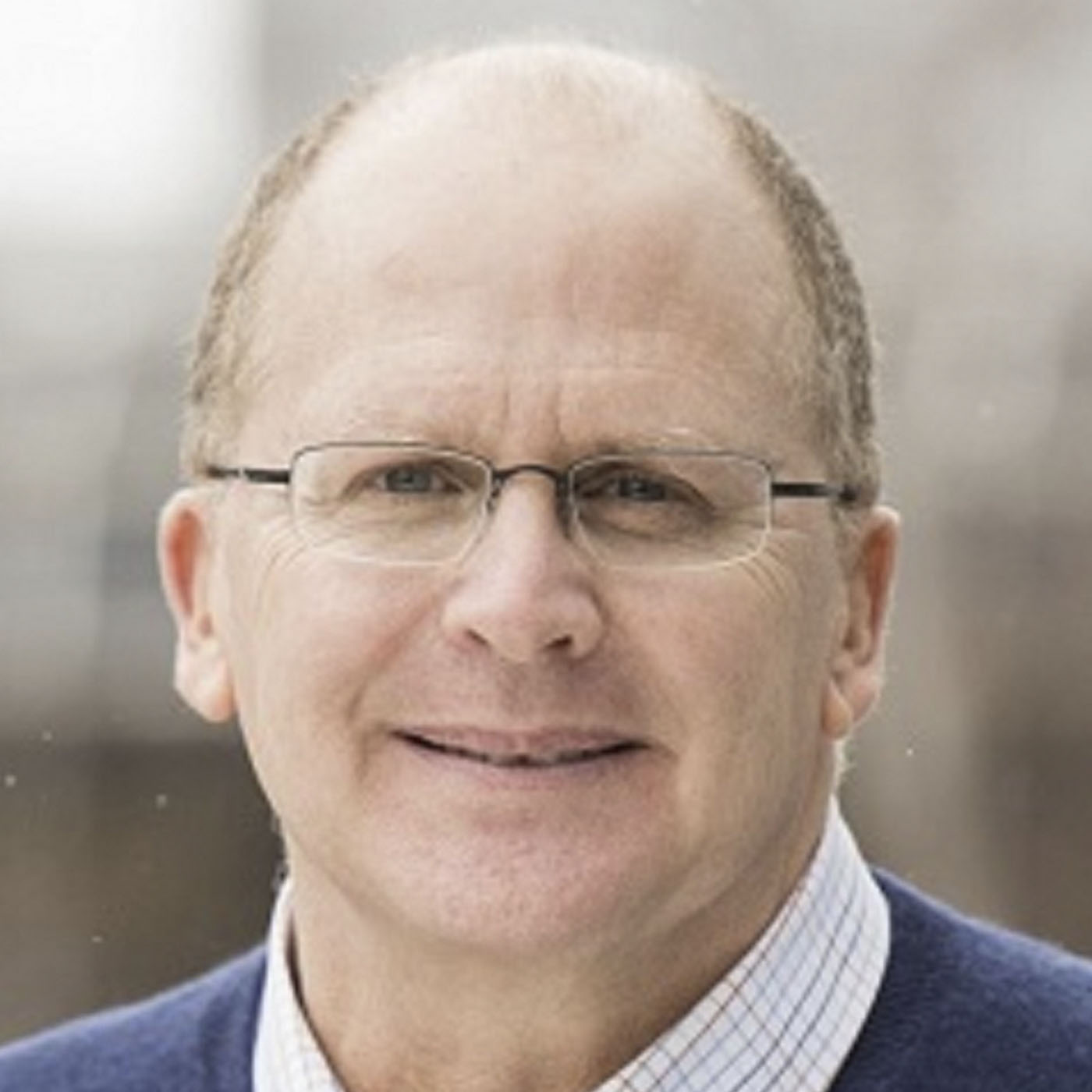
I wanted to remind everyone about this show from last year because it's becoming increasingly relevant. We have this weird thing going on where everybody seems to be talking about physician incentives and payments and financial implications but so often disregards patient incentives and payments and financial implications. Consider that we're at a place in the time-space continuum where it is inarguable that financial toxicity has become clinical toxicity. Patients are increasingly in huge numbers abandoning care, splitting pills, doing all kinds of things to save money that are clinically toxic. And these are patients with "good insurance" that we are talking about here. So, here's a role play: Provider organization is actually paying doctors for outcomes. In wanders a patient with a huge deductible. Doc says, "Wow, Patient … so important that you take your insulin or med as directed or get a follow-up on that scary colonoscopy finding." Patient says, "Sorry, Doc. Can't afford it." And the doc gets dinged because the patient outcomes are avoidably poor. That's what this show with Dr. Mark Fendrick digs into: aligning patient incentives (aka benefit designs etc) with value-based payments on the provider side. And with that, here's your encore: And here I thought I knew a lot about value-based care. In this healthcare podcast, I am speaking with Mark Fendrick, MD, who is the director over at the University of Michigan Center for Value-Based Insurance Design. This conversation is for those of you who already know pretty much about value-based care concepts. If you do not, I'd go back and listen to, say, Encore! EP206, with Ashok Subramanian, before this one. Dr. Fendrick talks in this healthcare podcast about what it takes for value-based care to happen in the real world. No kidding, it's about making sure that reimbursement is aligned with good things (no great surprise there). But two light bulb moments I had in this conversation with Dr. Fendrick: At the beginning of the year, how many doctors and nurses, inspired to do the right thing, have told their patients with diabetes, say, to go get an eye exam to check for diabetic retinopathy? No one would disagree that this is definitely a good idea. Diabetic retinopathy causes blindness. But here's the reality of that conversation. Doc says, "Go get an eye exam." And patient says, "I can't. My deductible is huge, and I can't afford it." So, the patient doesn't get the follow-up care and winds up in the hospital or blind. And the doctor gets dinged on his or her quality scores. Suboptimal outcomes all around, I'd say. This also happens on the pharmacy side of the equation, but I think a lot of us are a little bit more familiar with that scenario—like type 1 diabetics who can't afford to pick up their insulin because of a Medicare Part D or commercial deductible that they haven't met yet. I just never really connected the dots back to the provider getting black marks because their patient has a benefit design that's not aligned with the quality measures. In a majority of benefit designs, consumer price sharing is based not on the value of the service but on how expensive the service just happens to be. Wow! So, we're trying to get our plan members to be consumers and use the power of their wallets to make good healthcare choices. And what we're really doing is driving them toward cheap things or no care and discouraging them from indulging—and I say that sarcastically—in expensive things. But the expensive things might be the high-value care, and the relatively cheap things might be crap that's fully unnecessary or harmful and, over a whole population, adds up to a lot of zeros. Healthcare is not like a consumer market where the expensive things are usually a better version of the cheap things. For all you economists out there, you don't want the demand curve to be elastic when what's cheap and what's expensive has no correlation to quality or necessity. Nobody should be super flabbergasted when a $35 cure-all supplement peddled on YouTube makes some random influencer a millionaire. That's how supply and demand works. Much to ponder in this episode. You can learn more at vbidcenter.org. There's also a great newsletter you can sign up for there. A. Mark Fendrick, MD, is a professor of internal medicine in the School of Medicine and a professor of health management and policy in the School of Public Health at the University of Michigan. Dr. Fendrick received a bachelor's degree in economics and chemistry from the University of Pennsylvania and his medical degree from Harvard Medical School. He completed his residency in internal medicine at the University of Pennsylvania, where he was a fellow in the Robert Wood Johnson Foundation Clinical Scholars Program. Dr. Fendrick conceptualized and coined the term Value-Based Insurance Design (V-BID) and currently directs the V-BID Center at the University of Michigan (vbidcenter.org), the leading advocate for development, implementation, and evaluation of innovative health benefit plans. His research focuses on how clinician payment and consumer engagement initiatives impact access to care, quality of care, and healthcare costs. Dr. Fendrick has authored over 250 articles and book chapters and has received numerous awards for the creation and implementation of value-based insurance design. His perspective and understanding of clinical and economic issues have fostered collaborations with numerous government agencies, health plans, professional societies, and healthcare companies. Dr. Fendrick is an elected member of the National Academy of Medicine (formerly IOM), serves on the Medicare Coverage Advisory Committee, and has been invited to present testimony before the US Senate Committee on Health, Education, Labor and Pensions; the US House of Representatives Ways and Means Subcommittee on Health; and the US Senate Committee on Armed Services Subcommittee on Personnel. 05:00 Is back surgery high-value care? 05:51 If care is patient to patient, how is high-value care decided upon? 06:40 "Flintstones delivery: We have to move from the sledgehammer to the scalpel." 11:14 "Almost all of the services that we recommend to reduce cost sharing … do not save money." 12:30 "I didn't go to medical school to learn how to save people money." 17:03 "When a patient and their clinician agree … the patient should be able to get that [service] easily, and the clinician should be paid generously." 18:01 "When patients and providers are aligned, they do much better." 19:59 What services are deemed high value, and what services should be pre-deductible? 21:50 "Are primary care visits high value? … The answer is, it depends." 25:55 What are V-BID's core pillars to address value-based care? 28:04 How does Dr. Fendrick's method of value-based care and reimbursement actually enable better consumerism? 29:51 What do providers think about changing reimbursement on low-value and high-value care? 30:58 "We have incentives that are run amok." 32:12 EP176 with Dr. Robert Pearl. 32:49 "It's all about incentives." 33:43 "You do have the funding; you just have to have the courage." You can learn more at vbidcenter.org. There's also a great newsletter you can sign up for there. Mark Fendrick, MD, of @UM_VBID discusses #valuebasedcare on our #healthcarepodcast. #healthcare #podcast #vbc #digitalhealth If care is patient to patient, how is high-value care decided upon? Mark Fendrick, MD, of @UM_VBID discusses #valuebasedcare on our #healthcarepodcast. #healthcare #podcast #vbc #digitalhealth "Flintstones delivery: We have to move from the sledgehammer to the scalpel." Mark Fendrick, MD, of @UM_VBID discusses #valuebasedcare on our #healthcarepodcast. #healthcare #podcast #vbc #digitalhealth "Almost all of the services that we recommend to reduce cost sharing … do not save money." Mark Fendrick, MD, of @UM_VBID discusses #valuebasedcare on our #healthcarepodcast. #healthcare #podcast #vbc #digitalhealth "I didn't go to medical school to learn how to save people money." Mark Fendrick, MD, of @UM_VBID discusses #valuebasedcare on our #healthcarepodcast. #healthcare #podcast #vbc #digitalhealth "When patients and providers are aligned, they do much better." Mark Fendrick, MD, of @UM_VBID discusses #valuebasedcare on our #healthcarepodcast. #healthcare #podcast #vbc #digitalhealth "Are primary care visits high value? … The answer is, it depends." Mark Fendrick, MD, of @UM_VBID discusses #valuebasedcare on our #healthcarepodcast. #healthcare #podcast #vbc #digitalhealth "We have incentives that are run amok." Mark Fendrick, MD, of @UM_VBID discusses #valuebasedcare on our #healthcarepodcast. #healthcare #podcast #vbc #digitalhealth "You do have the funding; you just have to have the courage." Mark Fendrick, MD, of @UM_VBID discusses #valuebasedcare on our #healthcarepodcast. #healthcare #podcast #vbc #digitalhealth Recent past interviews: Click a guest's name for their latest RHV episode! Erik Davis and Autumn Yongchu (EP371), Erik Davis and Autumn Yongchu (EP370), Keith Hartman, Dr Aaron Mitchell (Encore! EP282), Stacey Richter (INBW34), Ashleigh Gunter, Doug Hetherington, Dr Kevin Schulman, Scott Haas, David Muhlestein, David Scheinker, Ali Ucar, Dr Carly Eckert, Jeb Dunkelberger (EP360), Dan O'Neill, Dr Wayne Jenkins, Liliana Petrova, Ge Bai, Nikhil Krishnan, Shawn Rhodes, Pramod John (EP353), Pramod John (EP352), Dr Eric Bricker, Katy Talento, Stacey Richter (INBW33), Stacey Richter (INBW32), Dr Steve Schutzer (Encore! EP294), Lisa Trumble
Embed this episode
NOW PLAYING
Encore! EP308: How Financial Toxicity Wreaks Havoc on Value-Based Payment Success, With Mark Fendrick, MD
No transcript for this episode yet
Similar Episodes
No similar episodes found.
Similar Podcasts
No similar podcasts found.