
EPISODE · Feb 20, 2026 · 28 MIN
English Speaking Practice: Mastering Household Chores Vocabulary
from SpeakSmart English · host Norse Studio
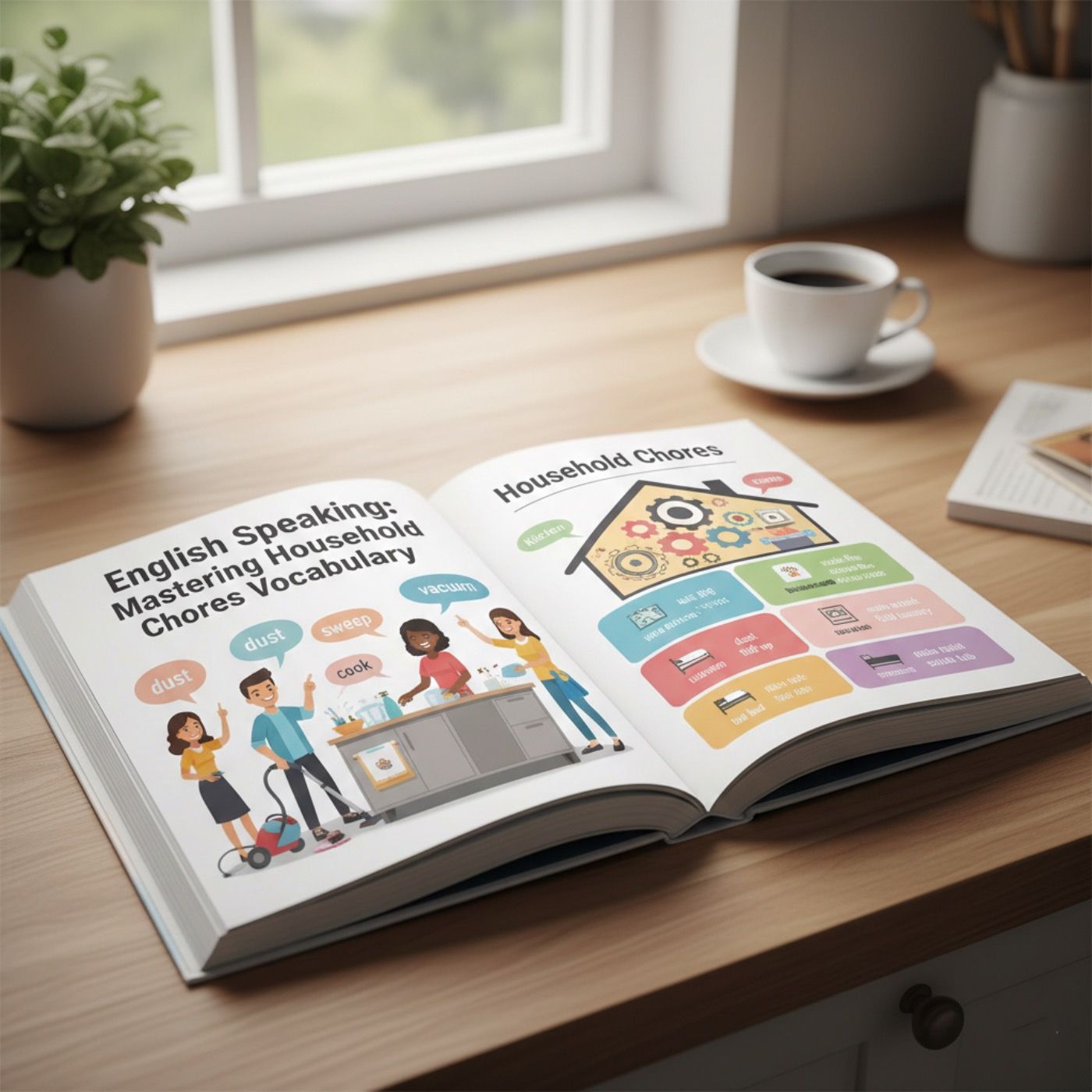
The material is structured into four distinct parts designed to improve listening comprehension, vocabulary retention, and speaking fluency.Core Vocabulary and ContextThe lesson centers on a conversation between two siblings, Mark and his sister, who decide to help their busy mother by dividing various tasks around the house. The sources define and illustrate several key household chores:• Cleaning and Tidying: This includes "cleaning up" to remove clutter from areas like the living room, "vacuuming the carpets" to remove dust, and "sweeping the floors" in the kitchen and dining area using a broom.• Kitchen Tasks: Key activities mentioned are "washing the dishes" (plates, glasses, and utensils) and preparing a meal, which involves "cooking dinner" and "cutting vegetables".• Bedroom Maintenance: The siblings discuss "making the bed" (arranging sheets and pillows) and "changing the sheets" to replace old ones with fresh linens.• General Upkeep and Pet Care: Other chores include "watering the plants," "taking out the trash," and "feeding the cat".• Laundry and Seasonal Work: The transcript covers "doing the laundry" (washing and folding), "ironing the clothes" to remove wrinkles, and "raking the leaves" in the backyard during the fall.Educational MethodologyThe source employs a multi-step interactive approach to help learners "train your brain to speak English fluently":1. Listening Practice: Learners first hear a natural conversation to focus on the general meaning and real-life context.2. Vocabulary Explanation: Specific terms are defined with example sentences, such as explaining that "household chores" are tasks involved in maintaining a clean home.3. Listen and Answer: This section tests comprehension by asking questions about the dialogue, such as "Who suggested cleaning up the living room?" or "What did Mark agree to do regarding the plants?".4. Shadowing Practice: This final stage encourages learners to read lines out loud immediately after the speakers to master the rhythm, intonation, and pronunciation of the sentences.The material emphasizes the concept that "Teamwork Makes the chores easier and faster" and encourages daily repetition of these exercises for at least one week to see significant improvements in English skills.AI tools were used in the translation. Hosted on Acast. See acast.com/privacy for more information.Become a supporter of this podcast: https://www.spreaker.com/podcast/speaksmart-english--6886546/support.
What this episode covers
The material is structured into four distinct parts designed to improve listening comprehension, vocabulary retention, and speaking fluency.Core Vocabulary and ContextThe lesson centers on a conversation between two siblings, Mark and his sister, who decide to help their busy mother by dividing various tasks around the house. The sources define and illustrate several key household chores:• Cleaning and Tidying: This includes "cleaning up" to remove clutter from areas like the living room, "vacuuming the carpets" to remove dust, and "sweeping the floors" in the kitchen and dining area using a broom.• Kitchen Tasks: Key activities mentioned are "washing the dishes" (plates, glasses, and utensils) and preparing a meal, which involves "cooking dinner" and "cutting vegetables".• Bedroom Maintenance: The siblings discuss "making the bed" (arranging sheets and pillows) and "changing the sheets" to replace old ones with fresh linens.• General Upkeep and Pet Care: Other chores include "watering the plants," "taking out the trash," and "feeding the cat".• Laundry and Seasonal Work: The transcript covers "doing the laundry" (washing and folding), "ironing the clothes" to remove wrinkles, and "raking the leaves" in the backyard during the fall.Educational MethodologyThe source employs a multi-step interactive approach to help learners "train your brain to speak English fluently":1. Listening Practice: Learners first hear a natural conversation to focus on the general meaning and real-life context.2. Vocabulary Explanation: Specific terms are defined with example sentences, such as explaining that "household chores" are tasks involved in maintaining a clean home.3. Listen and Answer: This section tests comprehension by asking questions about the dialogue, such as "Who suggested cleaning up the living room?" or "What did Mark agree to do regarding the plants?".4. Shadowing Practice: This final stage encourages learners to read lines out loud immediately after the speakers to master the rhythm, intonation, and pronunciation of the sentences.The material emphasizes the concept that "Teamwork Makes the chores easier and faster" and encourages daily repetition of these exercises for at least one week to see significant improvements in English skills.AI tools were used in the translation. Hosted on Acast. See acast.com/privacy for more information.Become a supporter of this podcast: https://www.spreaker.com/podcast/speaksmart-english--6886546/support.
NOW PLAYING
English Speaking Practice: Mastering Household Chores Vocabulary
No transcript for this episode yet
Similar Episodes
Mar 31, 2026 ·143m
Mar 24, 2026 ·88m
Feb 27, 2025 ·73m