
EPISODE · May 26, 2026 · 1H 36M
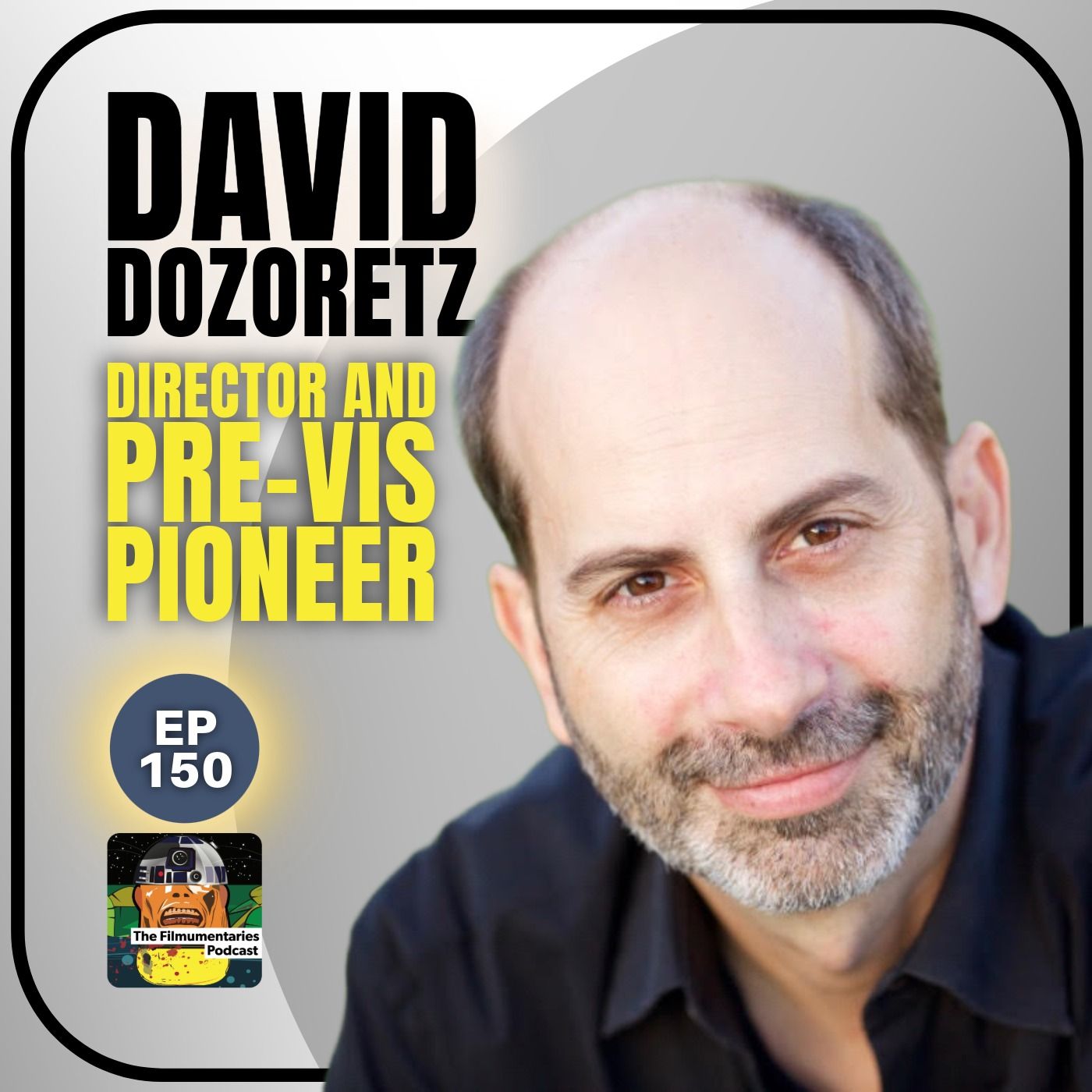
Ep 150 | David Dozoretz - Pre-vis Pioneer, VFX Supervisor and Director
from The Filmumentaries Podcast · host Jamie Benning
In this episode I chat with visual effects supervisor, second unit director and digital pre-visualisation pioneer David Dozoretz about a career that traces the entire arc of how modern filmmaking shifted from analogue to digital — and how, somewhere in the middle of that shift, pre-vis went from a curious side experiment to a fundamental part of how films get planned and shot. David talks about growing up in Phoenix, falling in love with cinema the day his sister snuck him into the projection booth at the Cine Capri during The Empire Strikes Back asteroid sequence, and how a chance encounter with a Lucasfilm coffee-table book in a university bookstore set him on the path to ILM. He arrived at ILM in 1991 as an intern, became known as "the computer nerd in the art department and the art nerd in the computer department," and ended up bridging the gap between the two as digital began to take over.We get into his first feature — the original Jurassic Park — his year-long apprenticeship in the legendary ILM art department alongside Doug Chiang, Ty Ellingson, Harley Jessup, Mark Moore and Stefan Dechant, and the time he had to split a $1,400 piece of 3D software into two $700 purchase orders to get round ILM's general-manager sign-off threshold. It's a small story but it tells you everything about the era — digital tools were arriving faster than the institutions running things knew what to do with them.A big part of the conversation focuses on the early years of digital pre-visualisation. David did the first major digital previs sequence in mainstream cinema — the train and helicopter sequence in Brian De Palma's Mission: Impossible, the work John Knoll asked him to do that's now credited as one of the reasons the sequence got greenlit. From there he went on to spend four years working with George Lucas on The Phantom Menace, building the entire pod race in previs (a 25-minute version that almost no one has ever seen got whittled down to the 9-and-a-half-minute final), establishing his now-famous three rules of previs (no textures, no motion blur, no shadows) and then immediately having to break all three of them to convey the sense of speed and floating in the pod race itself.There are some lovely George Lucas stories too, including the time George walked into the editing room and reacted to David's droid-factory post-vis with "honestly, I was a little worried about that one — looks like it's gonna work," and the moment when George trailed off mid-sentence trying to describe a desert landscape and David — a 21-year-old kid — finished the thought with "John Ford?", which David thinks is the moment Lucas decided he could trust him. Later in the conversation we move into David's own company, Persistence of Vision, and his work on Titan A.E., Behind Enemy Lines, JJ Abrams' Mission: Impossible III, the 2009 Star Trek reboot (including the previs realisation that Vulcan being orange meant the costumes — originally designed to evoke 70s NASA — had to be completely redesigned) and Journey to the Center of the Earth 3D, where David served as second unit director on the first digital stereoscopic film and the production was effectively beta-testing the cameras Jim Cameron was building for Avatar. We finish on Zafari, David's 52-episode children's animated series rendered almost entirely in Unreal Engine — one of the earliest large-scale uses of real-time rendering in mainstream animation, which saved 30% of the production budget — and on a wider conversation about AI, the future of filmmaking, the importance of human authenticity, and David's lovely closing thought: study the art and history of cinema, study the drawing, not just the pencil. The tools will keep changing. The language won't. Topics coveredGrowing up in Phoenix and the Cine Capri projection-booth moment during EmpireDiscovering The Art of Special Effects book and the road to an ILM internshipJoining the ILM art department in 1991 alongside Doug Chiang, Ty Ellingson, Harley Jessup and Mark MooreBridging the art and computer departments as digital arrived at ILMThe $1,400 / two-$700-purchase-orders workaround for buying 3D softwareWorking on the original Jurassic Park as his first featureDoing previs for the Star Wars Special Editions (the dewback shots, Mos Eisley fly-bys)John Knoll asking him to previsualise the train-and-helicopter sequence on Mission: ImpossibleHow that previs is credited as one of the reasons the sequence got greenlitJoining the new Skywalker Ranch art department under George LucasFour years on The Phantom Menace and the 25-minute version of the pod raceThe three rules of previs (no textures, no motion blur, no shadows) — and breaking all of them to make the pod race workGeorge Lucas reacting to the droid factory post-vis ("looks like it's gonna work")The Jake Lloyd head-turn morph that saved a reshootWhy pod racers go 500 mph in some shots and 2,000 mph in othersThe cinematographer who declared previs "shit" — and was overruled by the studioFounding Persistence of Vision and the move from Lucas to wider HollywoodTitan A.E. and the Don Bluth / Gary Goldman Phoenix animation studioBehind Enemy Lines and pre-vising aerial actionMission: Impossible III with JJ Abrams — the Shanghai building swing and the windmill helicopter sequenceThe Star Trek reboot orbital skydive — and how previs forced a costume redesign because Vulcan was orangeJourney to the Center of the Earth 3D as second unit director, using Jim Cameron's pre-Avatar camerasZafari, Unreal Engine, and saving 30% of an animated TV budget through real-time renderingThe shift from analogue to digital to 3D to real-time to AI — and what stays constantDennis Muren's wisdom on authenticity at the Jurassic Park wrap partyWhy a human premium will remain in an AI-augmented filmmaking worldGeorge Lucas, John Ford and the moment a 21-year-old earned a director's trustThe advice David gives to young filmmakers: study the drawing, not just the pencilSupport the Podcast This podcast is completely independent and made possible by listener support. If you'd like to help me keep making these episodes, you can join my Patreon community here: patreon.com/jamiebenning Watch on YouTube Check out the Filmumentaries YouTube channel for behind-the-scenes clips and extra content: youtube.com/filmumentariesThis podcast is completely independent and made possible by listener support. If you’d like to help me keep making these episodes, you can join my Patreon community here: https://patreon.com/jamiebenning Watch more on YouTube:Check out the Filmumentaries YouTube channel for behind-the-scenes clips and extra content: https://youtube.com/filmumentariesAll my links
Embed this episode
NOW PLAYING
Ep 150 | David Dozoretz - Pre-vis Pioneer, VFX Supervisor and Director
No transcript for this episode yet
Similar Episodes
No similar episodes found.
Similar Podcasts
No similar podcasts found.