
EPISODE · May 27, 2025 · 13 MIN
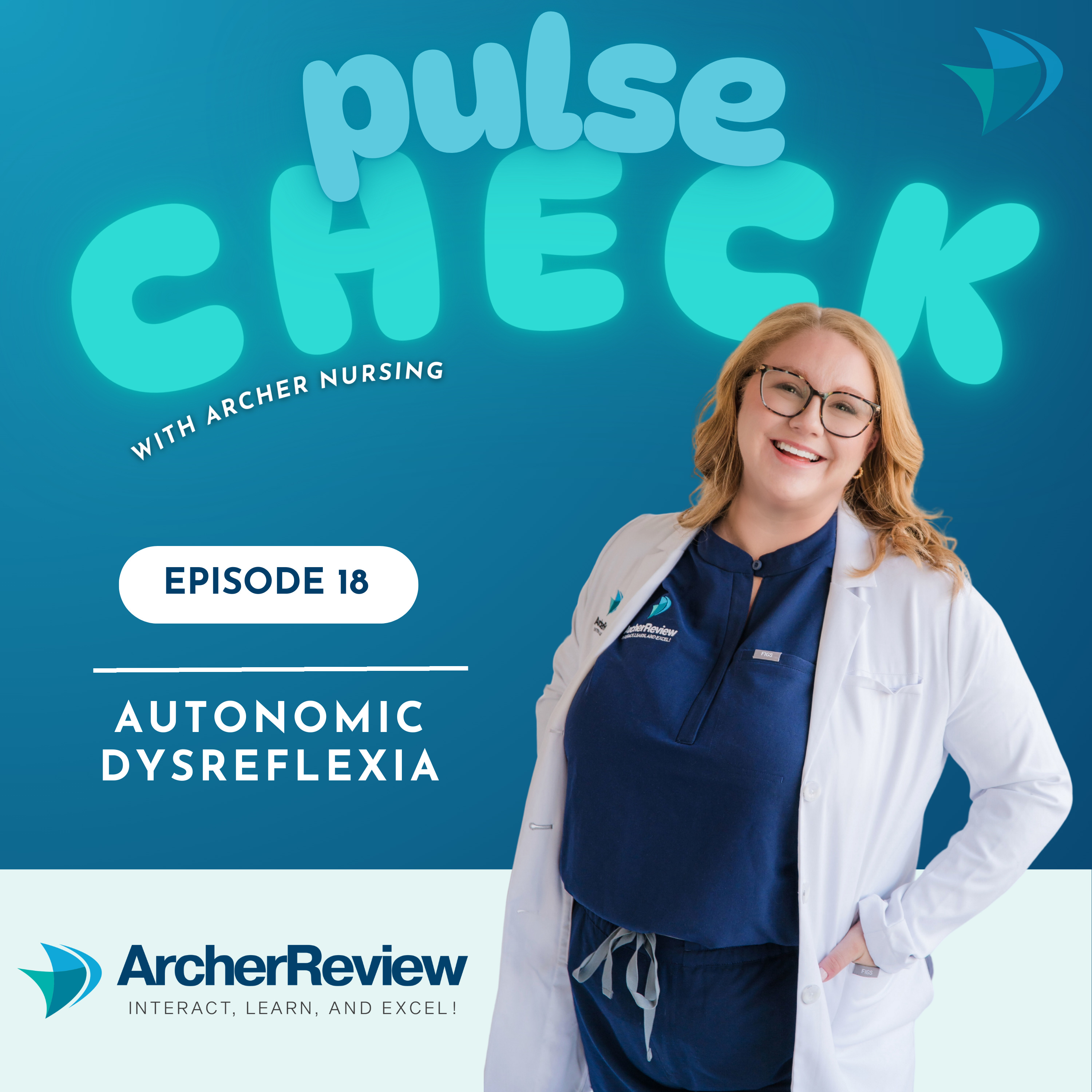
EP 18 - Autonomic Dysreflexia
from Pulse Check with Archer Nursing · host Archer Review
Autonomic dysreflexia is a true nursing emergency, and knowing how to respond can save your client from life-threatening complications. In this episode, Dr. Morgan Taylor, DNP, CPNP, CCRN, breaks down what happens when a noxious stimulus below a spinal cord injury sets off an unregulated sympathetic response. You’ll learn how to recognize the key signs—sudden hypertension, bradycardia, facial flushing, and a pounding headache—and why your first move shouldn’t be to grab the meds. From elevating the head of the bed to troubleshooting catheters, this episode walks you through what to do first, what to check next, and why this condition can escalate fast. Morgan shares a real-life story of a teen with a T4 spinal cord injury and how one missed detail almost led to serious complications—and what turned it around. Topics covered in this episode: What autonomic dysreflexia is and why it’s a medical emergency The anatomy behind sympathetic overdrive and parasympathetic response Classic signs and symptoms: headache, high BP, bradycardia, flushing above injury The #1 priority nursing intervention—and what to do after NCLEX-style question breakdown and rationale for test day Whether you're reviewing for neuro exams or brushing up for clinicals, this one’s a must-listen. Because when it comes to autonomic dysreflexia, recognition and rapid response save lives. Find everything Archer Review has to offer: archerreview.link/PulseCheck Use code PULSECHECK10 - an exclusive discount just for our listeners! Connect with us! 📸 Instagram: @archernursing 📘 Facebook: Archer NCLEX Review 🎵 TikTok: @archernursing ▶️ YouTube: Archer Review NCLEX, USMLE, TEAS7, and FNP
What this episode covers
Autonomic dysreflexia is a true nursing emergency, and knowing how to respond can save your client from life-threatening complications. In this episode, Dr. Morgan Taylor, DNP, CPNP, CCRN, breaks down what happens when a noxious stimulus below a spinal cord injury sets off an unregulated sympathetic response. You’ll learn how to recognize the key signs—sudden hypertension, bradycardia, facial flushing, and a pounding headache—and why your first move shouldn’t be to grab the meds. From elevating the head of the bed to troubleshooting catheters, this episode walks you through what to do first, what to check next, and why this condition can escalate fast. Morgan shares a real-life story of a teen with a T4 spinal cord injury and how one missed detail almost led to serious complications—and what turned it around. Topics covered in this episode: What autonomic dysreflexia is and why it’s a medical emergency The anatomy behind sympathetic overdrive and parasympathetic response Classic signs and symptoms: headache, high BP, bradycardia, flushing above injury The #1 priority nursing intervention—and what to do after NCLEX-style question breakdown and rationale for test day Whether you're reviewing for neuro exams or brushing up for clinicals, this one’s a must-listen. Because when it comes to autonomic dysreflexia, recognition and rapid response save lives. Find everything Archer Review has to offer: archerreview.link/PulseCheck Use code PULSECHECK10 - an exclusive discount just for our listeners! Connect with us! 📸 Instagram: @archernursing 📘 Facebook: Archer NCLEX Review 🎵 TikTok: @archernursing ▶️ YouTube: Archer Review NCLEX, USMLE, TEAS7, and FNP
NOW PLAYING
EP 18 - Autonomic Dysreflexia
No transcript for this episode yet
Similar Episodes
No similar episodes found.
Similar Podcasts
No similar podcasts found.